
Bring calm and clearer air to your workspace with Office Desk Plants and other smart greenery choices. Research from Australian sources shows that incorporating office desk plants into office environments can lift focus and productivity by up to 15%. The University of Technology Sydney also found a 37% drop in tension and anxiety in workplaces where plants are present, making Office Desk Plants a simple but powerful upgrade for daily work life.
Choose hardy species that suit typical light and care routines. Top picks like Snake Plant, ZZ Plant and Peace Lily are tough, look great and help reduce pollutants such as benzene and formaldehyde.
Quick wins include fresher air and a more welcoming vibe. Simple care—match light, let some soils dry, dust leaves and avoid A/C blasts—keeps office desk plants thriving. For busy teams, self-watering pots and moisture sensors save time, while preserved moss walls add biophilic impact with almost no upkeep.
Table of Contents
Key Takeaways
- Office Desk Plants can boost focus and cut anxiety in modern work settings.
- Pick hardy, low-care species that suit your light levels.
- Good choices improve air quality and reduce common pollutants.
- Simple routines—rotate, dust and match watering—extend plant life.
- Use self-watering planters or preserved moss for low-maintenance green.
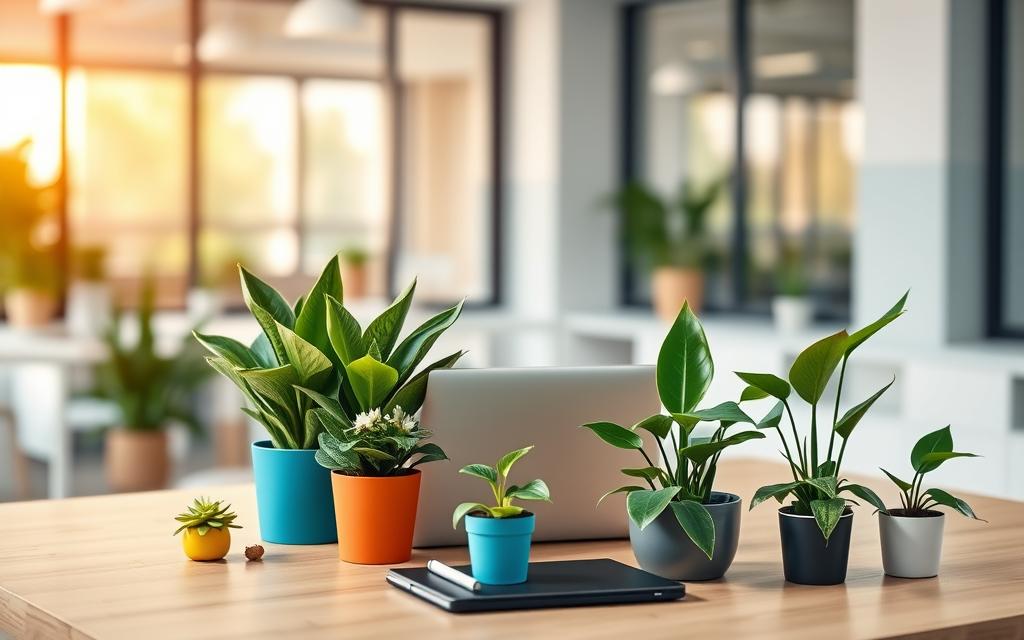
Why office desk plants matters right now: wellbeing, productivity and air quality in Australian offices
Bringing living office desk plants into work areas lifts wellbeing and eases cognitive load. Research shows adding vegetation can increase focus and productivity by up to 15%. A University of Technology Sydney study also recorded a 37% drop in tension and anxiety where office desk plants was present.
Cleaner air: removing toxins for clearer heads
Certain species help with removing toxins such as benzene, formaldehyde and carbon monoxide. That leads to better air quality and fewer fatigue-related complaints.
Focus and creativity boosts in modern workspaces
Office Desk Plants supports steady focus and sparks creativity. Teams report fewer headaches and improved problem-solving in zones with living greenery.
Setting a calming ambiance in open-plan spaces
Plants soften edges and reduce visual noise in large areas. They pair well with acoustic measures and soft furnishings to cut late-afternoon fatigue.
| Benefit | Best rooms | Maintenance level |
|---|---|---|
| Improved concentration | Meeting rooms, collaboration zones | Low–medium |
| Cleaner air | Break-out nooks, reception | Low |
| Reduced stress | Quiet rooms, lounges | Low |
How to choose the best indoor plants for your desk and workspace
Start by mapping the light your workspace actually gets—this single check narrows choices fast.
Light levels: note window direction, distance and glare to pick species for low light, bright indirect light or fluorescent conditions. For dim spots, consider ZZ Plant, Snake Plant or Peace Lily. Bright, indirect zones suit Monstera, Philodendron and Spider Plant. If fluorescents run the room, Dracaena and Air Plants cope well.
Maintenance reality check
Be honest about how much time you have. Check topsoil dryness before watering. Bottom watering helps avoid overwatering mistakes.
Tip: self-watering planters and drought-tolerant varieties work best if you travel or have busy weeks.
Space and growth
Measure your footprint and vertical space. Choose compact forms or trailing vines that can be trained along shelves or monitor arms. This keeps growth manageable and style consistent.
Office environment
Factor in A/C drafts, humidity dips and temperature swings. Group species with similar requirements so care is simpler and more reliable.
- Start with light: map real levels first.
- Match maintenance: pick according to travel and time.
- Keep watering simple: dry topsoil check and bottom water.
- Assess space: compact vs trailing forms.
- Group by conditions: reduce fuss and improve survival.
Shortlist by care requirements and make a practical aesthetic choice so the office desk plants you buy thrives in your exact conditions.
Office desk plants: our curated list for easy care and style
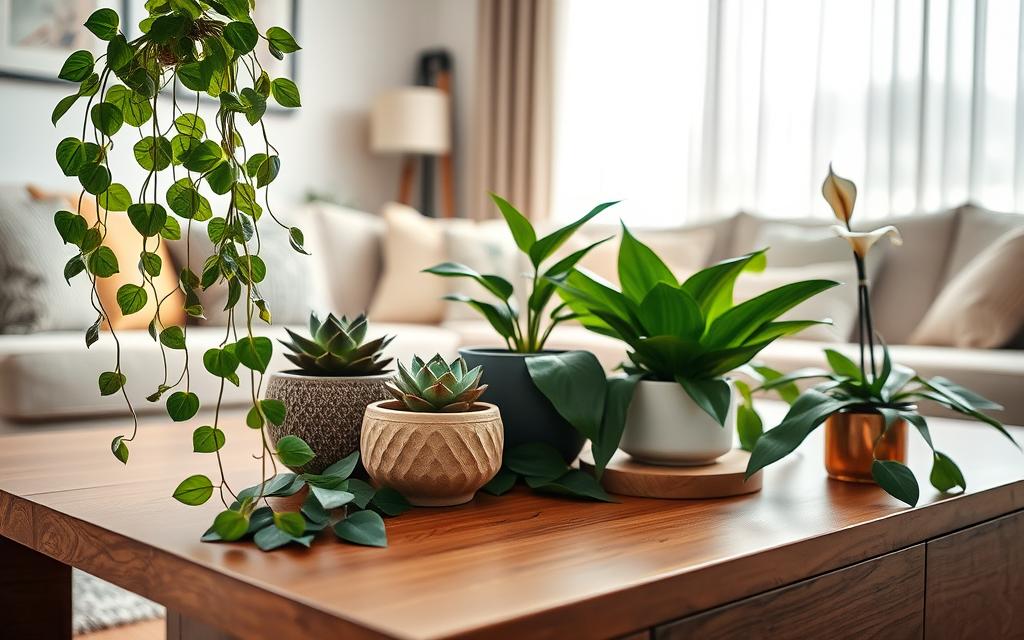
This curated line-up highlights resilient office desk plants that looks great and asks for very little fuss.
Handpicked favourites include Snake Plant, ZZ Plant, Peace Lily, Spider Plant, Philodendron, Pothos, Monstera and Dracaena (Happy Plant and Golden Heart).
Air Plants, Succulents and preserved moss walls offer modern styling with minimal upkeep. Many tolerate low to moderate light and infrequent watering. They suit shared zones, shelves and small workstations.
“Choose hardy varieties that match your light and care routine for the best long-term results.”
Quick comparison at a glance:
| Species | Light | Maintenance | Visual form |
|---|---|---|---|
| Snake Plant | Low–bright indirect | Very low | Upright, architectural |
| ZZ Plant | Low–moderate | Very low | Glossy, compact |
| Peace Lily | Moderate indirect | Low | Flowering, soft leaves |
| Pothos / Philodendron | Low–bright indirect | Low | Trailing cascades |
- Match light first, then pick form to suit your layout.
- Expect simple routines: occasional watering, leaf dusting and the odd trim.
- Add small succulents for sunny sills or preserved moss panels for zero-maintenance green.
This selection helps you build a starter set that looks fresh from day one and continues to perform week after week with minimal care. Make a considered choice to keep growth tidy and stress low across your space.
Snake Plant (Sansevieria): the contemporary, low-maintenance air purifier
If you want a tough, stylish green that asks for almost nothing, the Snake Plant tops the list. It suits busy people and dim corners, yet looks striking in bright, indirect light.
Let the soil dry between waterings
The golden rule is simple: let the soil dry before you water again. This prevents root rot and keeps the plant healthy.
Use a well-draining mix and a pot with drainage holes. Water sparingly and avoid soggy soil to help the plant thrives year-round.
Light flexibility from dim corners to bright, indirect light
Snake plants handle a wide range of light. Move it as seasons change and it will adapt.
“A near-unkillable hero that handles forgetful watering and still looks sharp.”
Practical care notes
- Allow topsoil to dry before watering.
- Choose bright, indirect light if possible; tolerates low light.
- Trim damaged leaves and dust foliage occasionally for clean, architectural leaves.
| Feature | Requirement | Benefit |
|---|---|---|
| Light | Low to bright, indirect light | Flexible placement |
| Water | Let soil dry between waterings | Prevents root rot |
| Soil & pot | Well-draining mix, drainage hole | Healthy roots, low fuss |
| Form | Upright leaves | Contemporary aesthetic, space-saving |
Rely on its air quality benefits and low care needs as you add one to your workspace. For ideas on other choices that boost focus, see plants that boost productivity.
ZZ Plant (Zamioculcas zamiifolia): glossy green leaves and effortless care
For a low-fuss interior green that keeps its shine, the zamioculcas zamiifolia is a top pick. Its glossy leaflets create a refined feel while tolerating light changes and missed waterings. This makes it ideal for a busy office or shared hot-desking zone.
Low to moderate light champion for busy spaces
The ZZ tolerates low to moderate light, so place it a few metres from a window or beneath standard fluorescents. It keeps its tidy habit without fuss and adds neat green leaves without crowding your layout.
Watering and routine: water lightly and infrequently, allowing the soil dry between drinks. That pattern suits teams who travel or rotate spaces. Give leaflets a quick wipe to keep that glossy sheen.
“A forgiving, compact choice that suits first-time owners and high-traffic work zones.”
- Sturdy all-rounder for irregular watering.
- Works well a few metres from windows or under office lights.
- Compact, upright form fits an office desk without dominating space.
| Feature | Requirement | Why it suits busy spaces |
|---|---|---|
| Light | Low–moderate | Handles fluorescents and varied placement |
| Water | Infrequent; let soil dry | Forfits neglect and travel-friendly care |
| Form | Compact, upright | Stylish without taking much space |
| Maintenance | Low | Quick leaf wipes keep it looking polished |
For styling and placement ideas that pair well with the ZZ, see workspace plant decor ideas.
Peace Lily: elegant flowers, peace of mind and better air quality
A Peace Lily can revive a dim corner and quietly improve indoor air quality. Its glossy foliage and white blooms add a calm visual touch while doing useful air-filtering work.
Water cues and simple routines
The plant signals thirst with a gentle droop in its leaves. When that happens, give it a moderate drink and watch it perk up within hours.
Light, blooms and spent flowers
Keep the pot in moderate to low, indirect light to encourage steady flowers. Trim spent blooms to focus energy on new ones and keep the plant tidy.
“A few easy checks—light, a quick water cue and spent-flower removal—deliver long-lasting rewards.”
- Bring glossy foliage and graceful flowers to meeting rooms and quiet pods.
- Read the leaf droop as a simple watering cue and avoid overwatering.
- Place away from A/C vents and heaters so the potting mix does not dry too fast.
- Enjoy the bonus of cleaner air and a calmer work area.
| Feature | Need | Benefit |
|---|---|---|
| Light | Low–moderate, indirect light | Reliable flowering |
| Watering cue | Leaves droop slightly | Simple to read and act on |
| Maintenance | Trim spent flowers | Encourages new blooms |
For step-by-step tips on keeping a Peace Lily thriving, see Peace Lily care indoors.
Spider Plant: playful ‘spiderettes’ and stress-busting foliage
Add instant movement to a workspace with a Spider Plant’s cascading leaves and baby ‘spiderettes’. It adapts well and is forgiving of varied care routines.
Place it in bright, indirect light for the best colour and steady growth, though it tolerates a range of everyday setups.
Easy propagation: pot up the spiderettes to share with colleagues or refresh other spots. This makes team gifting simple and satisfying.
- Add movement and a friendly vibe with arching foliage that softens tech-heavy areas.
- Keep the potting mix lightly moist and ease off in winter; trim brown tips to stay tidy.
- Hang near a partition, on a shelf, or let it trail from a monitor riser without crowding your desk.
“A hardy choice that brightens shared hubs and quiet zones with minimal fuss.”
| Feature | Need | Benefit |
|---|---|---|
| Light | Bright, indirect | Best foliage colour and steady growth |
| Watering | Keep lightly moist; reduce in winter | Healthy roots, fewer brown tips |
| Propagation | Pot spiderettes | Easy extras for sharing |
For styling ideas that pair well with a compact green, see desk plant decor.
Philodendron and Pothos: trailing vines for shelves, monitors and partitions
Trailing vines add a relaxed, green frame to shelves and screen edges, softening hard lines in shared zones. They suit small footprints and bring dynamic foliage without clutter.
Heartleaf vs variegated options: looks and care
The Heartleaf Philodendron offers classic heart-shaped leaves and a clean silhouette. Pothos presents marbled or golden splashes for a livelier colour contrast.
Training, trimming and healthy growth
Both handle low to bright indirect light. Place vines where their stems can trail or be trained along shelves and partitions.
- Aesthetic choice: go classic green or pick variegation.
- Train stems along cable channels or screens for a neat line.
- Prune lightly to encourage bushy growth and avoid tangles near equipment.
- Water when the top layer feels dry and use pots with good drainage.
- Mix varieties across the workspace for an easy, cohesive thread of green.
“Choose trailing vines to frame your layout and keep care simple.”
| Feature | Philodendron | Pothos |
|---|---|---|
| Look | Heart-shaped green leaves | Variegated or golden splashes |
| Light | Low–bright indirect | Low–bright indirect |
| Care | Trim to shape, water when topsoil dries | Same—prune and train for fuller growth |
Monstera and Dracaena varieties: statement plants for reception and shared spaces
Bold office desk plants creates a clear visual anchor that guides traffic and softens hard surfaces. Use large-leaf species to set a relaxed, design-forward tone in communal areas.
Monstera’s split leaves for bright, indirect light areas
Monstera thrives in bright, indirect light and shows off iconic split leaves. Water when the top few centimetres of soil dry for steady growth and strong form.
Happy Plant and Dracaena Golden Heart for bold, upright foliage
Dracaena fragrans (Happy Plant) and Golden Heart bring tall, clean lines. They suit indirect to moderate light, need minimal watering and perform well in reception corners.
“Position statement planters to soften walkways and make circulation feel intuitive.”
- Anchor reception or collaboration zones with large, split leaves for impact.
- Rely on forgiving Dracaena forms where light varies but care must be simple.
- Pair with smaller species nearby to carry the green theme through the space.
| Species | Light | Watering | Best use |
|---|---|---|---|
| Monstera | Bright, indirect light | When top 2–3cm dry | Reception anchor, collaboration zones |
| Dracaena (Happy Plant) | Indirect–moderate | Low; avoid waterlogging | Upright statement in foyers |
| Dracaena Golden Heart | Indirect–moderate | Infrequent, steady | Corners, guiding walkways |
Air Plants, Succulents and preserved moss: modern displays with minimal fuss
Small, soil-free displays and compact succulents let you add green without extra chores. This trio suits indoor zones where low upkeep and clean lines matter. Use them to refresh shelves, quiet rooms and shared spaces with minimal effort.
Tillandsia styling: terrariums, wall mounts and occasional soaking
Tillandsia need no soil and work well in glass globes, mounted frames or hanging displays. Mist them now and then or give a short soak every few weeks.
After soaking, let them dry completely before returning them to a holder to avoid rot and keep the air circulation healthy.
Succulents and Aloe: bright spots, sparse watering and compact appeal
Succulents and Aloe prefer bright light and only a little water. Wait until the potting mix is bone dry before you water again—this makes them ideal for sunny sills and small indoor corners.
Choose compact forms that sit neatly by keyboards or screens, adding texture without crowding your desk.
Preserved moss walls: zero-maintenance biophilic impact
Preserved moss panels deliver a lush look without ongoing care. They soften acoustics and create a calm focal point for wellness zones.
“Mix minimal displays through high-traffic spaces for modern impact that complements clean, tech-led interiors.”
- Style Tillandsia in glass globes or mounted frames for soil-free interest.
- Mist or soak Tillandsia occasionally, then dry thoroughly.
- Place succulents and Aloe in bright spots and water only when soil is dry.
- Add preserved moss panels to quiet rooms for acoustic and visual benefits.
Set-up and placement tips for Australian office spaces
Smart layout choices make office desk plants an asset that moves with your team, not a fixed feature. Use movable planters to reconfigure zones as team sizes and projects change.
Modular layouts, living green walls and wellness zones
Position living walls or preserved moss panels as visual anchors in high-traffic corridors. They lift mood, improve acoustics and create clear wellness pockets without cluttering circulation.
Smart tech: moisture sensors and self-watering planters
Pairing sensors with self-watering pots reduces daily fuss. These tools keep care steady during public holidays and travel-heavy weeks, and they cut water waste.
Go native and eco-conscious: hardy choices and recycled planters
Choose hardy Australian natives where light and humidity suit the conditions. They need less water and suit sustainable fit-outs.
Tip: select recycled or reclaimed planters to align with ESG goals while keeping a premium look in receptions and meeting zones.
“Map greenery to your layout—highlight zones for focus, collaboration and recovery without blocking walkways.”
- Use modular planters to flex with changing teams.
- Install living walls or moss features for ambience and sound control.
- Deploy moisture sensors and self-watering pots to simplify care.
Care made simple: watering, light and common mistakes to avoid
A few steady habits keep office desk plants thriving without adding to your to-do list.
Watering schedules and bottom watering basics
Overwatering is the top cause of decline. Check the top inch of soil—if it feels dry, it’s time for watering; if it’s damp, wait a few days.
Try bottom watering by sitting pots in a shallow tray so roots drink what they need. This reduces soggy topsoil and gnats and helps root health.
Lighting matches: grouping by conditions
Group office desk plants by light needs to make care obvious. Low-light tolerant options like ZZ, Snake and Peace Lily stay together. Bright-indirect lovers such as Monstera, Philodendron and Spider Plant sit in brighter spots.
Dusting leaves, rotating pots and avoiding A/C blasts
Wipe leaves to keep pores clear and improve photosynthesis. Rotate pots a quarter turn weekly for even growth.
Keep green life away from direct A/C blasts and heaters. Match pot size to root space and the plant’s moisture requirements. Note what works in your office so you can repeat success across more plants.
“Simple checks—touch soil, group by light, and rotate—cut common mistakes fast.”
Wrap up by choosing mixes that suit light, time and style so each plant feels at home. Start with reliable winners — Snake Plant, ZZ (zamioculcas zamiifolia), Peace Lily and Spider Plant — and add character with Monstera or Pothos for variety.
Match placement to real light levels and let topsoil go soil dry between drinks for drought-tolerant picks. Group by needs, keep watering simple and watch leaves for quick feedback.
Small, repeatable habits — dusting, rotating and avoiding A/C blasts — keep care low effort. For evidence on wellbeing and air quality gains, see this study on workplace office desk plants: greenery and workspace benefits.
Good choices lift air, calm visuals and make your workspace feel better every day.