
You want the best place to put a snake plant so it thrives in your Australian home, not just survives. These hardy plants like bright, indirect light and tolerate low light, but they don’t love harsh, direct sun.
Think of what you’re aiming for: healthy growth, cleaner air and a look that fits your space and design. Their upright leaves save room, so they suit tight corners and slim shelves.
We’ll guide you in a simple order: light first, then temperature and drafts, then room-by-room practicality, and finally some Feng Shui tips if you’re into that. Anywhere indoors is possible, but performance depends on a few key things.
Quick safety notes: good drainage matters. Keep placement in mind around kids, pets and high-traffic areas. You’ll get clear, scannable examples of near-window spots, cosy corners and where not to keep this plant.
Table of Contents
Key Takeaways
- Bright, indirect light gives the healthiest growth.
- Upright leaves save space and suit many design styles.
- Avoid direct sun and cold drafts for best results.
- Check drainage and safe spots around kids and pets.
- We’ll show simple room-by-room placement examples next.
Why placement matters for snake plants in Australian homes
A thoughtful spot makes the snake plant more than décor: it becomes a living air filter and design ally. When a plant is healthy, its growth and air benefits are real and lasting.
Air and night‑time oxygen
“Snake plants can help remove harmful toxins and may release oxygen at night.”
This is most meaningful when the soil drains well and the leaves get enough light. If the pot sits soggy or in dimness, that clean‑air claim weakens.
Upright, space‑saving shape
The plant’s upright leaves give an architectural shape that suits narrow rooms and awkward corners. You gain vertical impact without stealing floor space.
Feng Shui and upward energy
In Feng Shui, sword‑like leaves symbolise protection and boundaries. The wood element of upward growth can feel like momentum and vitality in your space.
- Practical note: strong Australian sun, air‑conditioning and big temperature swings mean smart positioning matters more than you think.
How to choose the best place to put a snake plant based on light
How much light your plant gets will set its form, leaf health and growth rate. Start by checking the room at different times of day. That gives you a real sense of the light conditions rather than a one‑off glance.
The “Goldilocks zone”: bright, indirect light for stronger growth
Bright, indirect light is where your snake plant grows stronger and more upright. In these conditions leaves stay firm and colours stay vivid. Low light is tolerated but growth slows.
Near window positioning: what “close but not in sun” looks like
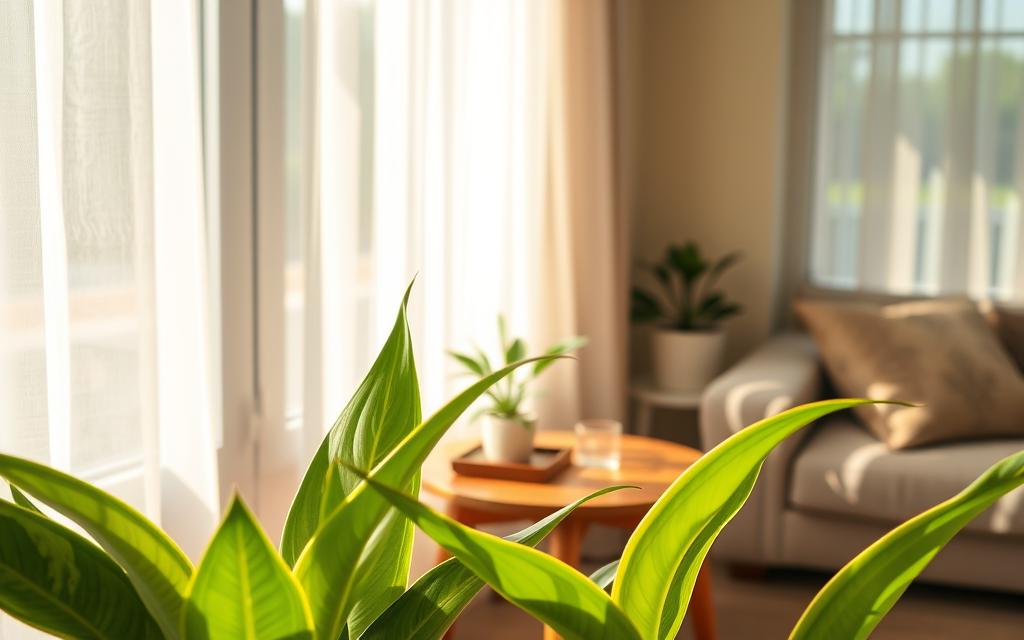
Think of “near window” as a few steps back from the glass or slightly to the side. Sunbeams should not hit the leaves directly. If you see hot spots on foliage, move the pot further away by 30–50 cm and wait a couple of weeks for changes.
Best window aspects for gentle light in Australia
East-facing windows give gentle morning rays. North and west aspects can be intense. South-facing windows are softer but may be dim in some homes. Use a sheer curtain or shift the pot back when sun is strong.
How to spot light stress in leaves
“Scorched patches mean too much direct sun; yellowing can signal light and watering mismatch.”
| Sign | What it means | Quick fix |
|---|---|---|
| Brown, crispy patches | Sun scorch | Move back or add sheer curtain |
| Pale or yellow leaves | Too little light or overwatering | Increase bright indirect light; check soil |
| Drooping or soft leaves | Stress from poor conditions | Stabilise temperature and light; avoid drafts |
Small moves over time are best. Shift the pot in 30–50 cm steps and observe changes over a couple of weeks. That gives you confidence that the chosen spot supports steady growth and healthy leaves in your home.
Avoid these spots that quietly stress your snake plant
Small hazards—hot sun, cold drafts and dim hallways—are often invisible until damage appears.
Direct sun hot spots can act like a “window sauna.” Leaves can brown and crisp fast in strong sun that funnels through glass.
Direct sun hot spots: the “window sauna” effect
Why it hurts: concentrated rays raise leaf temperature quickly and scorch foliage.
Drafts and blasts: air-cons, heaters, and frequently opened doors
Blasts of cold or hot air unsettle roots and leaves. Even with good light, constant drafts cause stress.
Common oops spots are above vents, next to split systems, or in corridors near an external door.
Too-dark areas: when “low light tolerant” becomes “no growth”
Low light means survival, not vigorous growth. You’ll see slower growth and fewer new leaves.
“If you can’t read a page there during the day without extra lights, it’s probably too dark.”
- Sunny windowsill that gets trapped heat — risk: scorch.
- Right above or beside vents — risk: temperature swings.
- Hallways with no natural light — risk: stalled growth.
| Problem | Typical signs | Common cause | Quick fix |
|---|---|---|---|
| Window sauna | Brown, crispy leaf patches | Direct sun through glass | Move back; use sheer curtain |
| Drafts | Drooping, soft or split leaves | Air‑con, heater, or door blasts | Relocate away from vents; stabilise temp |
| Too dark | Slow growth; pale leaves | Insufficient bright light | Shift nearer a bright window |
| Traffic zone | Damaged or bruised leaves | High‑traffic corridor | Choose a quieter corner |
Quick reassurance: one small move often restores healthy growth. Check light and drafts first, then watch leaves for steady improvement.
Room-by-room placement ideas that suit real life
Try simple, room-specific spots that match how you live and where light naturally falls. These quick ideas fit everyday use and help your snake plant stay healthy.
Living room locations: bright corners, stands and feature spots
Choose a bright corner a few feet from big windows. A slim stand lifts the plant and keeps leaves out of foot traffic. This helps the plant look like a living feature without scorch risk.
Bedroom placement: air benefits vs keeping the energy calm
Some experts note night-time air benefits, while others prefer softer energy near a bed. Try an eastern corner away from the mattress. That keeps air gains but keeps sharp leaves out of the sleeping zone.
Bathroom options: humidity help when there’s decent natural light
Humidity from showers suits these plants, but only if the room gets real light. In dim bathrooms the plant will survive, not thrive.
Home office placement: desk and bookshelf spots that stay stable and bright
Place it beside your desk or on a shelf behind your camera. Pick a steady spot away from vents and drafts for stable growth and tidy video backgrounds.
Real-life constraints: avoid wobbly stands, narrow walkways, and places children or pets can reach leaves or soil.
Quick placement checklist
- Light: steady bright indirect light
- Stability: solid stand or floor pot
- Airflow: no constant drafts
- Access: easy watering and cleaning
| Room | Ideal location | Why it works |
|---|---|---|
| Living room | Bright corner, on stand | Good light, visual focus, safe from traffic |
| Bedroom | Corner, away from bed | Night air benefits with calm energy |
| Bathroom | Near window or shelf with light | Humidity boost; needs natural light |
| Home office | Beside desk or bookshelf | Stable light, video background, fewer drafts |
For living room styling ideas, see living room plant decor for inspired locations and stands.
Snake plant placement in Feng Shui: where it supports energy flow
Plants act like silent guides for qi; their spot changes how your home feels. In Feng Shui, where you place greenery shapes how energy moves through your home and daily life. Keep things healthy: strong light and good drainage matter because an unhealthy plant weakens any intention.
Entryway as a protective portal
The entry is the main qi portal. One snake plant near the entry, or two flanking the door, creates a clear protective boundary. Choose sturdy pots and avoid crowded thresholds so movement stays calm.
Southeast — wealth and upward growth
In the southeast wealth area, upward growth symbolises abundance. Use this area for placing snake plants to support abundance intentions, and keep the foliage healthy for the best effect. For more on this idea see Southeast wealth guidance.
East — health and family
Position a specimen in the east area to boost vitality and harmony. Aim for a calm corner with steady light, not a busy corridor, so the energy stays restorative rather than stressed.
Workspace — focus and protection
In your workspace, a plant can act as subtle shielding and focus support. Place one where you need a boundary from demanding clients or office chatter. It helps create a sense of calm and concentrated energy.
South — fame and reputation
Use the south area to strengthen visibility and clear boundaries. Balance the look with surrounding décor so the arrangement feels intentional and not aggressive. Healthy foliage sends the right visual signal.
“Place with purpose: a thriving plant supports intention; a neglected one does not.”
- Why it works: healthy plants help qi flow better.
- Quick tip: light + drainage = good Feng Shui returns.
- Design note: match scale and texture for harmony.
Where not to place a snake plant if you follow Feng Shui principles
Some spots indoors quietly disrupt energy; the home centre is one of them.
Why many Feng Shui guides avoid the centre.
The central area, also known as Tai Chi, acts as a calm hub for movement and balance. Sharp, upright leaves can read as visually busy. That interrupts smooth flow and unsettles balance in the home.
Why the centre of the home is often discouraged for spiky-leaf specimens
Practically speaking, the centre already channels traffic and light. A strong sword-like shape competes with that flow. The result can feel crowded rather than calming.
“Sharp leaves may disrupt energy balance.”
How to “soften” the look and keep calm in peaceful rooms
If you love the look, try these simple tweaks 😊
- Choose a lower variety or move the pot slightly off-centre.
- Pair with rounded-leaf plants and curved furniture for contrast.
- Use a soft-coloured pot or textured basket to reduce the harsh silhouette.
Quick rule: if foliage points at where you rest, shift it aside. Trust your hand and how the space feels.
For more on placing snake plant with Feng Shui in mind see this Homes & Gardens FAQ.
Set up the spot so your plant thrives long-term
Start with the essentials — pot, soil and a sensible watering rhythm — and the rest falls into place. Use a sturdy pot with drainage holes so excess water leaves the mix quickly.
Pot, drainage holes and free-draining soil
Pick a fast, free-draining soil such as a cactus/succulent blend (for example, Yates Specialty Potting Mix Cacti & Succulents). This reduces the risk of soggy roots and root rot.
Humidity and temperature targets
Aim for steady indoor conditions. Keep room temperatures around 15–26°C and avoid sudden drafts from vents or doors. Normal indoor humidity is fine, though a brighter, slightly humid bathroom helps if light is good.
Watering rhythm
Let the soil dry almost completely before you water again. Water less in winter when growth slows. This simple rhythm is the most reliable way to prevent overwatering and encourage steady growth.
Feeding and maintenance
Feed in spring through autumn for steady growth. Yates Thrive Plant Food Spikes Cacti & Succulents can feed for up to two months and suit indoor care routines.
Quick care checklist:
- Use a pot with drainage holes.
- Choose a free-draining soil mix.
- Let mix dry before you water again; cut back in winter.
- Keep temps steady (15–26°C) and wipe dusty leaves with a damp cloth.
For a simple indoor care guide, see indoor care tips and routines.
Small placement tweaks that make a big difference to growth and design
Little changes often solve big problems. Shift height, clear surrounding space and mind traffic lines and you’ll see faster growth and a neater look. These small moves help your pot and soil perform, and they elevate the overall design of the room.
Using corners, negative space and height for balance
Upright leaves suit corners and narrow spaces. Lift the pot onto a stand to catch better light and keep it safe from knocks. That extra height protects the soil and reduces accidental bumps in busy rooms.
Give your plant breathing room. Negative space lets the foliage read as an intentional feature rather than clutter. In open-plan homes, a single corner anchor can stabilise visual balance without crowding the room.
Keeping leaves clean and upright for an architectural look
Clean leaves look sharper and work better. Wipe foliage with a damp cloth now and then to remove dust and help photosynthesis. Upright, tidy leaves make the whole pot appear healthier and more sculptural.
Making it safer around pets, kids and high-traffic areas
Mother-in-law’s Tongue can upset pets if chewed (nausea, vomiting, diarrhoea). For safety, choose higher spots, rooms off-limits to kids, or a sturdy barrier.
Avoid narrow walkways. Leaves get bruised and pots can tip when traffic is tight. Move a bit further into a corner or onto a stable stand for peace of mind and better growth.
- Raise the pot for light and protection.
- Leave negative space so leaves read clearly.
- Adjust water timing: darker spots need less water; check the soil before you water.
- Keep leaves clean with a quick damp cloth wipe.
For Feng Shui office ideas and subtle placement tips, see feng shui office plants. For styling that emphasises air and form, try this air-purifying plant decor.
Conclusion
Wrap up by choosing one steady spot and watching the leaves — they’ll tell you what works.
For healthy growth, aim for bright, filtered light, steady indoor temps and no harsh drafts. Avoid direct sun through glass and soggy roots from poor drainage or overwatering.
These plants tolerate lower light, but you’ll see better growth when light improves. If unsure, start near a window with filtered rays and move the pot in small steps based on leaf response.
Quick next step: pick one room, choose one stable spot, and follow a simple dry-down water rhythm. Need ideas? See optimal growth locations for extra guidance 🌱