
Quick answer: this common indoor plant is often sold sitting in water for display, yet it naturally thrives in soil for longer-term health.
We’ll give you a clear, practical verdict that matches your home, time and style. You’ll learn how day-to-day care, mess and forgiveness differ between a water setup and a pot with soil.
The display appeal of a glass pot is real. It makes stems pop and keeps things minimal. But if you want steady growth and stronger roots, a planted approach usually wins for longevity.
Expect simple routines: keep roots covered (not the stalk), avoid harsh fertilisers and poor-quality water, and place the plant where it gets bright, indirect light. That prevents yellowing and rot and keeps leaves healthy.
Table of Contents
Key Takeaways
- Both methods work; choose glass for style and pots for long-term strength.
- Short, simple care beats complex schedules—check roots and light first.
- Avoid overfeeding and keep the roots clean to prevent rot.
- Indoor Australian conditions favour bright, indirect light and moderate humidity.
- You can switch between setups if you follow clear steps for acclimation.
What lucky bamboo is and what “grows better” really means
This plant is often sold like a stalk from the garden, but its care is closer to indoor dracaena than to true cane species. Understanding that difference stops you following the wrong care tips.
Botany: not a true bamboo
Dracaena sanderiana (also called Ribbon Dracaena) is the botanical name. That means feeding, light and root needs match dracaena care more than bamboo plant advice.
Realistic growth and lifespan indoors
In good indoor conditions this houseplant can add about 30 cm in six months. Low light slows growth and causes thin, leggy offshoots that lean toward brightness.
Many setups are trained into spirals or braids by guiding light. That shaping gives neat display results but doesn’t change basic growth rates.
- What “grows better” can mean: faster stems, longer life, stronger roots, or healthier leaves.
- Expect steady, modest growth—not rapid jungle cane expansion.
- Feng shui and luck traditions add meaning, but practical care still matters for longevity.
| Feature | Dracaena traits | Common bamboo traits | What to expect indoors |
|---|---|---|---|
| Botanical family | Dracaenaceae | Poaceae | Houseplant care, not grass-like care |
| Typical indoor growth | ~30+ cm / 6 months in good light | Varies; many are much faster | Moderate, steady growth with training |
| Care focus | Light balance, clean roots, mild feeding | High light, rich ground in many species | Keep expectations realistic for a houseplant |
Lucky bamboo soil or water: which option suits your home best?
Deciding between a clear vase and a pot comes down to how much time and mess you want to manage.
Quick decision guide based on maintenance, mess and display style
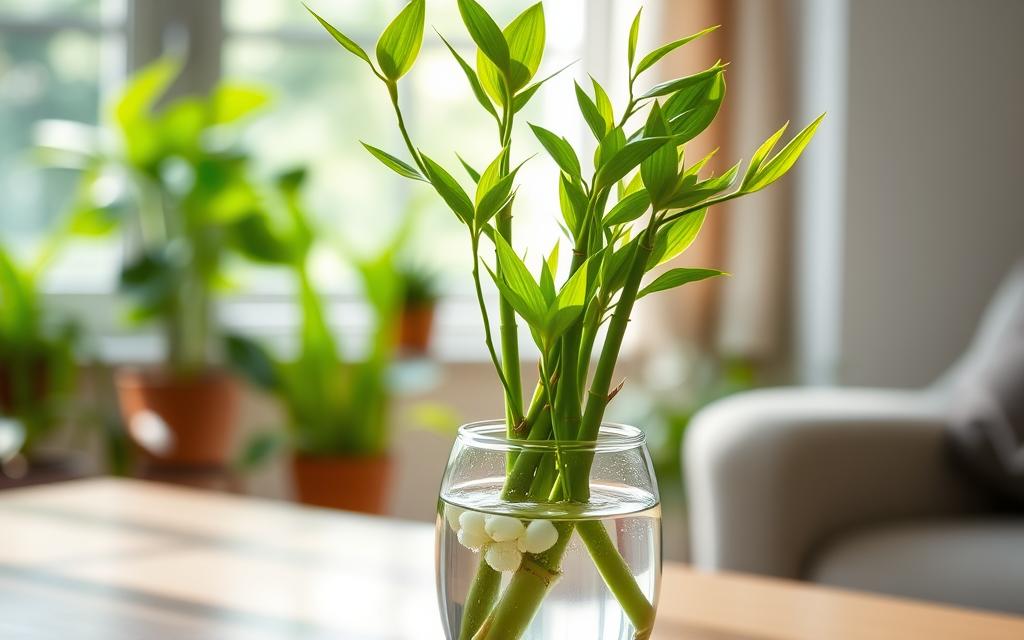
If you want low fuss and a neat display, choose a vase setup. It looks tidy and suits minimalist rooms. But it needs regular rinsing and occasional pebble cleaning to avoid odour and algae.
If you want longer life and stronger roots, choose a planted pot. A poted plant gets steadier nutrients and oxygen around the roots. That usually means years more growth compared with a simple glass display.
Lifespan differences: why soil can last longer than water
Reality check: stems kept only in jars often survive 1–2 years for some households. Planted specimens commonly live several years longer.
The main reason is steady nutrition and fewer daily chemistry swings. A planted medium buffers salts and keeps oxygen near the roots, which extends lifespan.
Root health and rot risk in each method
Rot usually starts when the stalk is left submerged instead of just the roots. Keep liquid level at the root zone only.
In a pot, good drainage prevents soggy roots. In a vase, regular water changes and cleaning reduce bacteria that cause soft, black roots.
Best choice for Australian homes: heat, dry air and bright windows
Hot glass near direct sunlight can scorch leaves in summer. Bright, filtered light is safest.
Temperatures between 18–35°C suit this plant, and you should keep it away from cold drafts and strong vents to avoid stress.
| Factor | Vase setup | Planted pot |
|---|---|---|
| Maintenance | Frequent rinsing, water changes | Occasional watering, repotting |
| Lifespan | Often 1–2 years | Several years longer with care |
| Rot risk | Higher if stalk submerged | Lower with drainage and airflow |
| Mess factor | Low mess, algae possible | Soil handling and drainage needed |
How to grow lucky bamboo in water (vase and pebbles method)
A clear vase can look stunning, but it needs the right setup to keep stems healthy. Start with a stable container that won’t tip as the display grows.
Choose a steady container and anchoring pebbles
Pick a heavy vase with a wide base. Smooth pebbles or glass chips hold stalks upright and allow airflow at the base.
Water level basics
Keep water about 1–2 inches above the roots. Make sure the stalk stays dry above that line to avoid rot.
Tap water vs filtered or distilled
This plant dislikes chlorine, salts and fluoride in some tap supplies. Use filtered or bottled water, or let tap sit 24 hours so chlorine dissipates (fluoride stays).
When to top up and change the water
Top up every few days as it evaporates. Fully rinse and replace the water weekly to stop cloudy smells and bacteria.
Prevent algae and manage light
Algae forms in clear vases in bright sunlight. Move the display to bright, indirect sunlight and clean pebbles during each change.
Light feeding
Feed very lightly—only a tiny, diluted dose now and then. Overfeeding burns roots and yellowing follows.
| Step | Action | Why it matters |
|---|---|---|
| Container | Wide, heavy vase | Prevents tipping as stalks grow |
| Anchoring | Smooth pebbles/glass chips | Keeps stalks upright and allows airflow |
| Water level | 1–2 inches above roots | Protects stalk from rot |
| Water care | Filtered/distilled or rested tap; weekly change | Reduces chlorine, salts, bacteria and odour |
How to grow lucky bamboo in soil (pot method for longer-term growth)
A pot gives you a simple route from showroom display to a robust, long-lived plant. Move it into a roomy container and you’ll see steadier growth and stronger roots over months and years.
Pick a well-draining potting mix. Aim for a mix that holds gentle moisture but drains fast so roots breathe. Use a container with drainage holes to stop standing moisture and reduce rot risk.
Watering is a feel thing: keep the medium slightly damp — never soggy, never bone dry. Check the top 2 cm; if it feels dry, give a light soak. In warm Australian homes, evaporation can be fast, so adjust frequency rather than volume.
Know when to repot. Roots need space. Repot when they crowd the pot, when stalks lean, or when there’s less than about an inch for root spread. If the container wobbles or the plant feels top-heavy, it’s time to size up.
- Switching to a pot supports longer lifespan and steadier growth.
- Drainage holes and a fast-draining mix protect roots and leaves.
- Repotting keeps stalks stable and prevents root-bound stress.
For step-by-step tips on moving from a display vase to a planted setup, see growing lucky bamboo for practical guidance and checks to make sure your change goes smoothly.
Light, temperature and placement for steady growth
Where you place your plant near a window has a bigger effect than how often you feed it. In most Australian homes, bright, filtered light gives steady growth without drama.
Indirect vs direct sunlight: prevent scorched leaves
Indirect sunlight is best. Move the pot a few metres back from hot glass or use a sheer curtain. Direct sunlight through afternoon panes can scorch leaves quickly. Keep distance and filter light to avoid browning and stinging leaf tips.
Too little light: the leggy look
In low light the stalks slow and side shoots stretch toward the nearest window. Leaves thin and growth is slow. Rotate the pot weekly so one side doesn’t reach more than the other.
Warmth matters: drafts, vents and steady temperatures
Ideal temperatures sit between about 18–35°C. Avoid cold draughts from windows, air conditioners and heating vents. Sudden hot or cold blasts stress leaves and reduce growth over time.
- Quick checklist: bright, indirect light; rotate weekly; keep away from vents and drafty windows.
- Need more detail? See zz plant care indoors for practical placement tips.
Common problems and fixes (yellow leaves, brown tips, mushy stalks)
Spotting issues early keeps most plants healthy. Below is a quick troubleshooting map so you can match what you see—leaves, roots, stalks, or liquid—to the likely cause and fix it fast.
Yellow leaves: too much sun, overfeeding or poor water quality
Signs: whole leaves paling, sometimes starting at the tips and moving inward. If leaves turn yellow after bright sun exposure, move the pot away from direct sunlight.
If yellowing follows a recent feed, flush the system with fresh liquid and cut back feeding. Poor tap water with chlorine, salts or fluoride also makes leaves yellow; try filtered or rested supply for a week to check improvement.
Brown tips: minerals in tap supplies and dry indoor air
Brown, crunchy tips often mean mineral build-up and dry air from air conditioning or heating. Trim tips clean with sharp scissors, then raise humidity by grouping plants or using a small humidifier.
Black roots, fungus and “funky” liquid
Cloudy, smelly liquid signals bacteria. Rinse the container, clean pebbles, trim black roots with sterilised snips and reset with fresh liquid. Change water urgently when it smells or turns cloudy.
Mushy stalks and when to remove a cane
Mushy, soft or rapidly yellowing stalks are rot. Remove the affected cane quickly to stop spread. Trim any nearby dark roots and disinfect the container before returning the rest.
Pests and pet safety
Check leaves and nodes for spider mites and mealybugs in warm rooms. Wipe pests off early with a damp cloth or use a mild insecticidal spray.
Pet warning: dracaena sanderiana is toxic to cats and dogs—make sure curious pets can’t chew leaves or stems.
- Quick fixes: move from direct sunlight, reduce feeding, use filtered tap, clean containers, trim black roots, remove rotten stalks, treat pests early.
- For detailed tips on yellowing leaves, see this guide on turning yellow.
- Need basic, low-fuss care reminders? Check a short guide to low-maintenance plant care.
Conclusion
Pick the approach you’ll stick with, and the plant will reward you. Choose soil for longevity and resilience, or a clear water display for low-fuss style — then follow the matching routine.
Non-negotiables: steady light, warm placement and avoiding harsh conditions keep most plants thriving. Rotate the container, watch leaves and roots, and don’t let extremes stress the stems.
Quick checklist: top up or inspect weekly, do a deeper clean every fortnight, and repot or refresh the medium every few months. Rule of thumb: roots can sit in liquid, stalks shouldn’t.
Whether you value good luck and feng shui or simple happiness, you can keep this little houseplant healthy. For a concise how-to, see this lucky bamboo grow and care guide for extra tips. 😊