
Quick answer: these bright, tropical foliage plants can thrive either way, but the best choice depends on your soil, sun and how you like to garden.
You’ll learn whether caladiums do best in containers or garden beds and why pots win when drainage and flexibility matter most. The ground wins when soil is warm, moisture is steady and you want large sweeps of colour.
In many parts of Australia, waiting for genuinely warm late-spring or summer conditions makes the difference between fast growth and a sulky start.
We’ll compare soil and drainage, light and shade control, watering work in heat, and the visual impact of bold leaves. Expect practical tips, a simple decision checklist and a clear plan for planting, feeding and avoiding common mistakes.
Tone: friendly, curious and encouraging — try a pot here and a patch in the garden there to find what suits your microclimate.
Table of Contents
Key Takeaways
- Pots are best where drainage or flexibility matters most.
- In warm, well-drained soil, planting in beds gives bigger displays.
- Wait until air and soil are reliably warm in spring for strong starts.
- Watch moisture and avoid waterlogged soil to prevent rot.
- You’ll finish with a simple checklist to pick site, soil and care tips.
Caladiums in pots vs in the ground: what actually changes
Deciding between a container and planting in the soil changes how much control you have over drainage, light and watering. A container gives you quick fixes; the open bed gives steady, large displays.
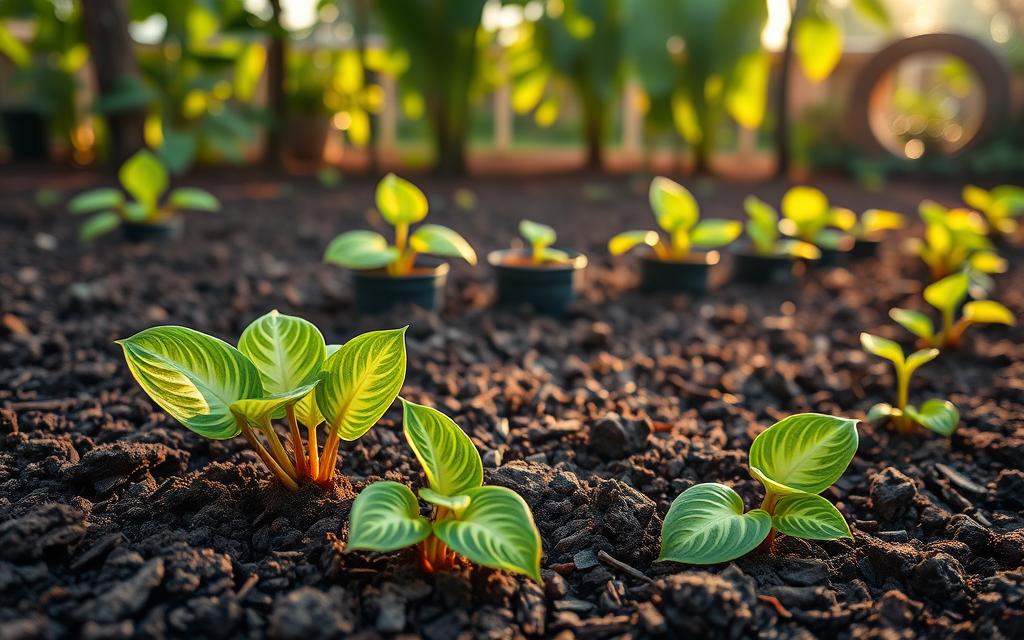
Drainage and soil type
If your soil is heavy clay or stays soggy after rain, use a container or raised bed. Clay holds water and risks tuber rot. Containers let water flow away and keep tubers from sitting in cold, wet muck.
Well-drained means soil that keeps moisture but never stays soggy — roots can breathe and tubers stay healthy.
Light flexibility
Most plants do best in partial shade (about 4–6 hours). Some varieties handle full sun (6+ hours) and others prefer full shade (
Move a pot to manage morning sun, afternoon shade or a cooler spot as the season warms. If you see “melting” — holes or brown edges between veins — it usually means too much sun; shifting to shade fixes it quickly 🌤️.
Display impact
Use bold foliage as a thriller in a mixed container for immediate impact. Pair with mounded and trailing plants for contrast.
Conversely, planting in the ground suits massing the same colour for lush areas and bigger tropical sweeps.
“Pots give you control; the ground gives you scale.”
Choosing between caladiums pots or ground for Australian gardens
Timing and local warmth decide how fast your plants will get going. Wait until nights stay around 16°C and the soil reaches roughly 18°C before you plant outside. Planting earlier stalls shoots and raises the risk of tuber rot in cool, wet soil.
When to plant: late spring into summer is the safest window across most Australian areas. Coastal spots warm sooner; sheltered courtyards and warm walls can bring the right temperature forward by weeks.
Sun exposure: match varieties to light
Think of part shade as easy mode for most varieties. Choose full-shade spots for darker corners. Reserve labelled full-sun tolerant types for brighter positions, but remember much sun increases watering needs.
Water access and heat
The hotter and brighter the spot, the faster pots and beds dry. If you can’t keep up with watering during a heatwave, pick a cooler position or start in pots so you can move plants to shade.
- Start in pots if nights are still cool or soil feels chilly.
- Aim for consistent air temps ~16°C+ and soil temp ~18°C+ before planting out.
- Use taller neighbours to shield against harsh afternoon sun in sunny areas.
“Trial a couple of locations in pots for a week to see where the leaves look happiest.”
How to plant and care for caladiums for best growth
Choosing between bulbs and already-sprouted plants changes how fast you see results in the garden.
Start point: plant bulbs/tubers if you want a budget-friendly start and don’t mind waiting. Buy sprouted plants when you want instant colour and less fuss. Sprouted stock skips the 6–8 week sprouting window and gives a quicker display.
Soil and potting mix
Use a rich, free-draining mix. Combine quality potting mix with compost to hold moisture without becoming swampy. In heavy clay, choose raised beds or containers to protect roots from waterlogging.
Planting depth, orientation and spacing
Set tubers about 4–5cm (1.5–2″) deep. If you can’t tell which side is up, lay the tuber on its side — shoots will find the light and roots will go down.
| Bulb size | Spacing | Plants per m² | Expected spread |
|---|---|---|---|
| #1 (small) | 20–25cm | ≈2 per sq ft | 8–14cm wide |
| Jumbo (2.5–3.5″) | 25–30cm | ≈1 per sq ft | 10–35cm wide |
| Sprouted plant | Depends on pot size | Variable — fuller sooner | 8–14″ (20–35cm) |
Growth timeline, watering and feeding
In warm soil you may see leaves in ~3 weeks. Cooler spring starts take 6–8 weeks. Expect full foliage around 9 weeks.
Keep soil consistently moist, not soggy. Water more often in much sun and heat. Early morning watering reduces stress and sunburn risk. For a simple guide, see this watering schedule.
Feed lightly: a slow-release at planting and a monthly dilute liquid feed is enough for strong foliage. Too much fertiliser can harm tubers.
“Cold, wet soil invites rot; too much sun causes leaf ‘melting’ — change one factor at a time.”
Season wrap-up: treat plants as annuals in frost-prone areas, or lift and store tubers warm and dry (~21°C). Don’t wash soil off stored tubers — it helps protect them.
For container-specific tips, check this container care guide.
Conclusion
Conclusion
Choose containers when you need better drainage, easy light control and quick patio impact. Choose the ground when your soil drains well and you want large, mass-planted showiness.
Non-negotiables: warm conditions, well-draining soil and steady moisture. Nail those three and you’ll beat most common problems.
Partial shade is the sweet spot for most plants; sun-tolerant varieties need more attention in hot weather. If you’re unsure, trial one pot and one in-ground planting this season and compare leaf size, colour and watering effort.
For practical steps, see this care guide, try these easy planting tips, or read about helpful productivity plants to pair in shade. Once you dial in the right spot, that lush tropical look arrives with surprisingly low fuss — enjoy your garden! 😊