
Lavender—just the name brings a sense of calm and beauty, right? It’s no wonder this fragrant and elegant plant is a staple in gardens around the world. Whether you’re planting it for its soothing aroma, eye-catching purple blooms, or its amazing versatility in cooking and skincare, lavender plants is a must-have. But let’s be real: even though it’s known to be a hardy plant, it doesn’t mean you can just plant it and forget it. Want that lush, blooming, thriving lavender bush? It takes some TLC.
In this guide, we’re going to dig deep—pun intended—into the best ways to care for your lavender plants. Whether you’re a first-time gardener or someone with a green thumb, you’ll get practical, actionable tips that actually work. From selecting the right variety to avoiding the dreaded root rot, we’ve got everything you need to grow happy, healthy lavender plants.
So grab your gardening gloves and let’s get started!
Table of Contents
Understanding Lavender Plants: A Quick Overview
Lavender plants isn’t just one plant—it’s a whole family. The lavender genus, Lavandula, includes around 45 different species and even more hybrids. What most people recognize as lavender is typically English lavender (Lavandula angustifolia), but that’s just the tip of the iceberg. There’s also French lavender (Lavandula dentata) and Spanish lavender (Lavandula stoechas), each with unique traits, fragrances, and care requirements.
Understanding these differences is step one in mastering lavender care. For example, English lavender is more cold-hardy, while French and Spanish types prefer warmer, milder winters. So if you’re living in a region that gets real winters, English might be your best bet. On the flip side, if you’re in a hotter climate, French and Spanish lavenders will thrive with less fuss.
Also worth noting: Lavender is a Mediterranean plant. That means it loves sun, hates wet feet, and thrives in poor soil. Think of it like a desert-loving diva. Once you understand where it comes from, caring for it starts to make a lot more sense.
Choosing the Right Lavender Variety
Not all lavender is created equal. Choosing the right variety for your climate, space, and purpose makes all the difference. Let’s break it down:
- English Lavender Plants (Lavandula angustifolia)
- Great for colder climates (USDA zones 5–9)
- Strong scent, perfect for culinary uses
- More compact and tidy growth habit
- French Lavender Plants (Lavandula dentata)
- Loves warm, dry climates (zones 8–11)
- Softer scent, more decorative
- Delicate toothed leaves
- Spanish Lavender Plants (Lavandula stoechas)
- Known for its unique “rabbit ear” petals
- Less fragrant but very showy
- Ideal for container gardening
If you’re aiming for a beautiful hedge, go with English lavender plants. Want something a little different for pots on your patio? Spanish lavender plants might be the winner. For mild winters and constant blooms, French lavender plants could be your go-to.
Make your decision based on your climate first, then your goals. That way, you’re not constantly battling nature to keep your plant alive.
Best Time to Plant Lavender
Timing is everything, especially when it comes to planting lavender. The best time to plant is in spring, after the last frost has passed and the soil is warming up. This gives the plant time to establish roots before the heat of summer kicks in.
If you live in a warmer climate (zones 8 and up), you can also plant lavender in the fall. The cooler temperatures reduce transplant shock, and the plant will get a head start for spring growth.
Planting lavender in winter or during a heatwave? Not a great idea. Extreme conditions stress the plant and can lead to poor growth—or worse, death.
Here are a few extra planting tips:
- Soil temperature should be around 60°F (15°C) for ideal root development.
- Give each plant 12 to 18 inches of space, depending on the variety.
- Make sure the area gets at least 6 to 8 hours of sunlight daily.
Get the timing right, and you’ll give your lavender the head start it needs to thrive all season long.
Selecting the Ideal Location
Lavender plants are like that friend who always needs the best seat in the house—sunny, breezy, and dry. Choosing the right location is a game-changer for the health of your plant.
Here’s what lavender needs:
- Full Sun: This is non-negotiable. Lavender needs at least 6 hours of direct sunlight each day, but 8+ is better.
- Good Airflow: Poor circulation can lead to fungal issues, especially in humid climates. Avoid crowded areas.
- Wind Protection: A light breeze is fine (even helpful), but harsh, drying winds can damage young plants.
If you’re planting near other plants or structures, make sure your lavender isn’t in the shade for half the day. It may survive in partial sun, but it won’t thrive—and thriving is what we’re after.
Raised beds and south-facing slopes are excellent choices. If you’re tight on garden space, containers on a sunny patio can work wonders too.
Soil Requirements for Healthy Lavender Plants
If you want your lavender to grow like a champ, don’t underestimate the power of soil. Think of it like a foundation for a house—if it’s shaky, everything else falls apart. Lavender is native to the rocky, dry soils of the Mediterranean, which means it absolutely hates soggy, dense, or overly rich soil.
Here’s exactly what lavender wants in its soil:
- Excellent drainage: This is lavender’s number one priority. Waterlogged roots = root rot = dead plant. Sandy or gritty soils are ideal.
- Slightly alkaline to neutral pH: Lavender thrives in soil with a pH between 6.5 and 7.5. Acidic soil? Add some lime to balance it out.
- Low to moderate fertility: Unlike tomatoes or roses, lavender doesn’t need nutrient-rich soil. In fact, too much nitrogen leads to leggy growth with fewer blooms.
How can you test your soil? Grab an inexpensive pH test kit online or from a garden center. For drainage, try this: dig a hole about 12 inches deep, fill it with water, and time how long it takes to drain. If it takes longer than an hour, you’ve got drainage issues.
To fix heavy clay soil:
- Mix in coarse sand, perlite, or small gravel
- Build raised beds or use containers
- Avoid composting directly around the root zone—compost retains moisture
Bottom line? Don’t try to pamper lavender with rich, moist soil. Give it what it loves: dry, well-draining ground, and it’ll reward you with a bounty of blooms.
How to Properly Water Lavender Plants
Watering lavender plants is a bit of a balancing act. While it’s drought-tolerant once established, young plants still need consistent moisture—just not too much. Overwatering is the fastest way to send your lavender to an early grave, so it’s all about moderation and timing.
Here’s a foolproof watering approach:
- New plants (first year): Water deeply once or twice a week, depending on your soil and climate. Let the soil dry out between watering.
- Established plants: Water every 2–3 weeks during dry periods. In humid or rainy climates, you might not need to water at all.
- Potted lavender: These dry out faster, so check the soil every few days. Stick your finger an inch into the soil—if it’s dry, it’s time to water.
Warning signs to watch for:
- Overwatered lavender: Yellowing leaves, mushy roots, wilting even when soil is wet.
- Underwatered lavender: Dry, brittle leaves, drooping stems, no new growth.
Pro tip: Water in the morning to allow foliage and soil to dry out before nightfall, reducing the risk of fungal diseases.
Always remember—lavender is not a fan of wet feet. When in doubt, it’s better to underwater than overdo it.
Mulching Techniques for Lavender Plants
Mulching can be both a blessing and a curse for lavender plants, depending on how you do it. In general, lavender plants doesn’t like anything that holds too much moisture, so your usual go-to mulch like wood chips or compost? Not ideal.
But don’t worry, the right kind of mulch can still help your plant thrive. Let’s break it down:
Benefits of mulching lavender plants:
- Suppresses weeds (which compete for water and nutrients)
- Keeps roots cool in summer and warm in winter
- Reduces soil erosion in windy areas
Best mulch materials for lavender plants:
- Gravel or small rocks: These allow excellent drainage and reflect sunlight back to the plant—lavender loves this.
- White sand: Adds a clean look and helps with water evaporation.
- Crushed oyster shells (if available): These slowly raise pH and improve drainage.
Avoid:
- Bark mulch
- Straw or hay
- Compost-heavy mulch
Apply mulch sparingly. Keep it 2–3 inches away from the base of the plant to prevent stem rot. You only need about a 1–2 inch layer of rock mulch to see benefits without overdoing it.
Mulching lavender plants is all about working with nature, not against it. Give it air, space, and sunlight—and avoid anything that stays soggy.
Fertilizing Lavender the Right Way
This may sound strange, but lavender doesn’t need a gourmet diet. In fact, it’s happiest with just the basics. Overfeeding lavender leads to lots of lush, green leaves—and disappointingly few flowers.
Here’s what you need to know:
- Use low-nitrogen fertilizer: A 5-10-10 or similar NPK ratio works well. Look for fertilizers labeled for “flowering plants” rather than “leafy vegetables.”
- Fertilize only once or twice a year: Early spring is ideal for the first dose to support new growth. If desired, a second dose in midsummer is optional.
- Skip the compost pile: While compost is great for many plants, it can hold too much moisture and encourage excess nitrogen for lavender.
For potted lavender plants, you can use a diluted liquid fertilizer every 4–6 weeks during the growing season, but even then, less is more.
Signs of over-fertilization:
- Excessive leafy growth
- Fewer or smaller blooms
- Floppy or leggy stems
So what’s the takeaway? Lavender is a minimalist—it doesn’t want a feast. Feed it lightly, and it’ll thank you with fragrant, colorful blooms.
Pruning Lavender Plants for Shape and Health
Think pruning is just for roses and fruit trees? Think again. Pruning is essential for lavender—not just to make it look pretty, but to keep it healthy and blooming year after year.
Why prune?
- Encourages bushier, more compact growth
- Prevents woody, leggy stems
- Boosts flower production
Here’s how to prune like a pro:
- First year: Lightly pinch off the top few inches to encourage branching. Don’t go too hard—baby plants are still delicate.
- After blooming: Once flowering stops (usually late summer), cut back about one-third of the plant, making sure not to cut into old wood.
- Spring cleanup: In early spring, tidy up by removing dead or damaged branches.
Tools you’ll need:
- Sharp pruning shears
- Rubbing alcohol (to sterilize blades between plants)
Warning: Never cut into the woody base of the plant. Lavender doesn’t regenerate from old wood, and it could die back if you go too deep.
Pruning might sound intimidating, but once you do it once or twice, it becomes second nature—and your lavender will be stronger, fuller, and far more beautiful because of it.
Container Growing: Lavender Plants in Pots
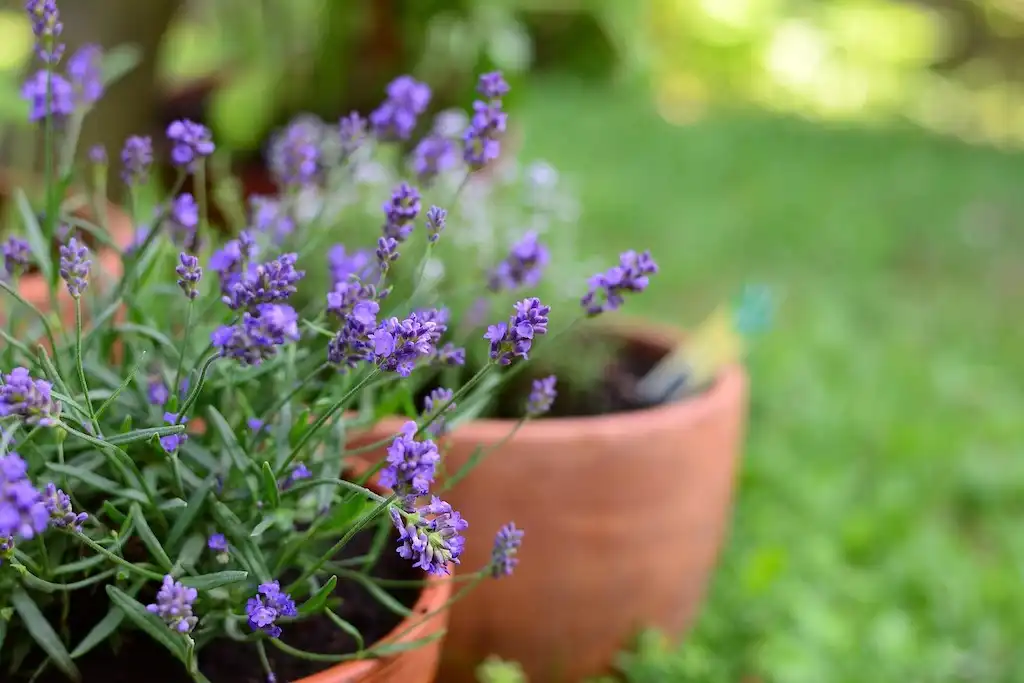
Short on space? No problem! Lavender plants actually does great in containers, making it perfect for patios, balconies, or even sunny windowsills. Growing lavender in pots isn’t just convenient—it also helps you control soil conditions, drainage, and placement much more easily than in-ground planting.
Here’s how to get started the right way:
Choose the right container
- Go for a pot that’s at least 12-16 inches wide and has excellent drainage holes. Terracotta pots are ideal—they breathe and help wick away excess moisture.
- Avoid deep pots that trap water at the bottom.
Pick the right soil
- Use a well-draining potting mix. Add sand, perlite, or small gravel to a standard mix to improve aeration.
- Do not use garden soil—it’s too heavy and holds moisture.
Watering container lavender plants
- Potted lavender plants dries out faster than garden lavender, so check moisture often.
- Water deeply, but allow the soil to dry out completely before watering again.
- Tip: Lift the pot—if it feels light, it’s time to water.
Positioning the pot
- Place your lavender where it’ll get 6–8 hours of sun daily.
- Turn the pot every week or so to make sure all sides get equal light and the plant grows evenly.
Feeding and pruning
- Apply a diluted liquid fertilizer (low nitrogen) once a month during the growing season.
- Prune as you would in-ground lavender—about one-third back after blooming.
Overwintering potted lavender plants
- If you’re in a cold climate, bring your pots indoors before the first frost.
- Place them near a sunny window and reduce watering during winter.
Container lavender can be just as productive and gorgeous as garden lavender plants—plus, it’s easier to control pests, soil, and even design aesthetics. Just don’t forget to give it the same love and light!
Common Pests and Diseases
Lavender plants may be tough, but like all plants, it’s not completely immune to pests and diseases. Luckily, most problems are easy to prevent and treat once you know what to watch for.
Common pests:
- Aphids
- Tiny green, black, or white bugs that suck sap from new growth.
- They cluster around buds and stems.
- Treatment: Blast them off with water, or spray with neem oil.
- Spittlebugs
- Leave foamy white blobs (like spit) on stems.
- They rarely cause serious harm but can be unsightly.
- Treatment: Remove with water spray; neem oil also works.
- Whiteflies
- Small white flying insects under leaves.
- They weaken plants by feeding on sap.
- Treatment: Yellow sticky traps or insecticidal soap.
Common diseases:
- Root Rot
- Caused by overwatering or poor drainage.
- Symptoms: Yellowing leaves, mushy roots, sudden collapse.
- Prevention: Use well-draining soil, avoid overwatering.
- Fungal Leaf Spot
- Shows up as black or brown spots on leaves.
- Typically occurs in humid conditions.
- Treatment: Remove infected leaves, improve airflow, use fungicide if needed.
- Shab Disease (Phomopsis lavandulae)
- A fungal disease mostly found in Europe.
- Causes stems to wither and die back.
- Prevention: Prune carefully, avoid cutting in wet conditions, destroy infected plants.
General prevention tips:
- Plant with space between lavenders for air circulation.
- Water early in the day to avoid overnight moisture.
- Inspect regularly for early signs of issues.
- Use natural pest control whenever possible—lavender’s fragrant oils usually deter many insects naturally.
Keep your plants stress-free with proper care, and they’ll stay strong enough to fight off most pests on their own.
Overwintering Lavender Plants
Winter can be rough on lavender, especially if you’re growing a variety that’s not cold-hardy. But with the right prep, your lavender can come back stronger every spring—even after snow and frost.
In-ground lavender:
- English lavender is hardy down to USDA zone 5, so it can survive most winters if the soil drains well.
- In late fall, stop fertilizing and reduce watering to help the plant go dormant.
- Do not prune in fall—pruning stimulates new growth that can be damaged by frost.
- If you’re in a very cold region, mulch lightly with straw or pine needles to protect the roots. Remove the mulch in early spring.
Container lavender:
- Move pots indoors before the first hard frost.
- Place near a south-facing window with lots of light.
- Water sparingly—only when the top inch of soil is dry.
- Avoid fertilizing during winter.
In areas with mild winters, lavender may stay semi-active all year. Just don’t forget: the key to overwintering success is drainage and dryness. Wet roots during winter? That’s a death sentence for lavender.
Come spring, start trimming, feeding, and watering again to wake your plants up for a new season of fragrant blooms.
Harvesting Lavender for Use
One of the best things about growing lavender is harvesting it. Whether you’re drying it for sachets, making essential oil, or adding it to cookies (yes, really!), knowing when and how to harvest is key.
Best time to harvest:
- Morning, after dew has dried but before the heat of the day.
- Wait until buds are just starting to open—this is when essential oil content is highest.
How to harvest:
- Use sharp scissors or pruners.
- Cut the stems about 2–3 inches above the woody part, making sure not to cut into the old wood.
- Gather in small bunches and tie them together with twine.
Drying lavender plants:
- Hang bunches upside down in a dry, dark place with good air circulation.
- Avoid drying in direct sunlight—it fades color and scent.
- After 1–2 weeks, your lavender should be fully dry.
Storing:
- Keep dried lavender in glass jars or fabric sachets.
- Store in a cool, dark place to preserve scent and color.
Lavender lasts for months when properly dried and stored, making it one of the most rewarding herbs you can grow at home.
Creative Uses for Lavender Plants
Lavender isn’t just pretty—it’s also super versatile. Once you’ve harvested and dried your flowers, the sky’s the limit in how you use them. Here’s a roundup of creative, fun, and practical ideas.
Culinary uses:
- Add a few buds to lemonade or tea for a floral twist.
- Use in baked goods like cookies, scones, or shortbread.
- Infuse in honey, vinegar, or oil for a gourmet touch.
Tip: Use English lavender for cooking—other types can taste too perfumy.
Aromatherapy and home:
- Make lavender sachets to freshen drawers or closets.
- Craft DIY candles or wax melts with dried buds.
- Add to a homemade bath soak with Epsom salts and essential oil.
Skincare and wellness:
- Use infused oil for homemade lotions or salves.
- Add dried lavender to a sugar scrub.
- Combine with chamomile for a calming sleep pillow.
From your kitchen to your bathroom, lavender brings beauty, fragrance, and calm to almost every part of your life. It’s more than just a pretty flower—it’s a lifestyle!
Troubleshooting Common Problems
Even with the best care, lavender can sometimes throw a tantrum. Yellowing leaves, leggy growth, or lack of flowers can leave even the most experienced gardeners scratching their heads. But don’t worry—most issues have simple fixes. Let’s troubleshoot the most common lavender problems and how to solve them fast.
1. Yellowing Leaves
If your lavender’s leaves are turning yellow, especially near the bottom, it’s usually a sign of one thing: overwatering. Remember, lavender hates wet feet.
Fix it:
- Check soil drainage—amend with sand or perlite if needed.
- Water only when the soil is dry 1–2 inches down.
- If in a pot, make sure there are drainage holes and no standing water.
2. Leggy, Spindly Growth
Lavender plants that looks like it’s reaching for the sky with long, thin stems is likely not getting enough sunlight or hasn’t been pruned.
Fix it:
- Move your plant to a full sun location—at least 6 hours per day.
- Prune back by one-third after flowering to encourage bushiness.
3. No Blooms or Sparse Flowers
If you’re getting lots of leaves but no blooms, the issue could be too much nitrogen, lack of pruning, or insufficient light.
Fix it:
- Stop fertilizing with high-nitrogen plant food.
- Prune regularly to direct energy toward flowering.
- Ensure full sun exposure.
4. Woody Base and Sparse Growth
All lavenders get woody at the base as they age, but if left unchecked, it can dominate the plant and lead to sparse, uneven growth.
Fix it:
- Regular pruning each year helps delay the woodiness.
- Don’t cut into old wood, but shape the plant to keep it compact.
5. Mold or Mildew
White powdery residue on leaves usually means too much moisture and not enough air circulation.
Fix it:
- Prune to increase airflow.
- Water at the base of the plant, not from overhead.
- Apply neem oil or baking soda spray if needed.
Quick Tips to Avoid Problems:
- Stick to a “soak and dry” watering routine
- Choose the right variety for your climate
- Prune annually for better structure and longevity
- Use gritty soil with excellent drainage
- Ensure full sun exposure
Stay alert, check on your plants weekly, and address issues as soon as they pop up. Lavender doesn’t demand a lot—but ignoring its few needs is where most problems begin.
Growing lavender isn’t just about cultivating a plant—it’s about creating a little pocket of peace in your garden or on your balcony. With its calming scent, stunning purple blooms, and endless uses, lavender is one of the most rewarding herbs to grow. But it does ask for a few things in return: sun, well-draining soil, a little pruning love, and a dry seat at the table.
Now you know exactly how to give your lavender the care it needs—from choosing the right variety and planting it in the perfect spot, to pruning, watering, and protecting it through winter. Whether you’re growing it in containers or in the ground, following these simple but essential steps will ensure your lavender thrives year after year.
And the reward? A beautiful, fragrant, buzzing-with-bees lavender plants that not only looks stunning but also brings a sense of calm to your everyday life.
Go ahead—plant that lavender. Your future self (and your nose) will thank you.
FAQs
1. Can I grow lavender plants indoors year-round?
Yes, but it’s tricky. Lavender needs a lot of sunlight—ideally 6 to 8 hours daily. Use a south-facing window or supplement with a grow light. Avoid overwatering, and keep the air dry.
2. How long do lavender plants live?
With proper care, English lavender can live 10–15 years. Regular pruning, good drainage, and full sun are key to long life.
3. Why does my lavender keep dying in the pot?
Most likely, the problem is overwatering or poor drainage. Make sure your pot has holes, use gritty soil, and only water when the soil is dry.
4. When should I prune lavender plants?
Prune right after flowering (late summer or early fall), and again lightly in early spring if needed. Avoid cutting into old wood.
5. Which lavender is best for cooking?
English lavender (Lavandula angustifolia) is the best culinary variety. It has a sweet, mild flavor that works well in teas, desserts, and savory dishes.