
Quick answer: Yes, you can use aloe vera straight from the plant for quick skin relief, but a few simple steps stop the mess and the irritation.
The clear inner gel is the bit you want. Cut a fat leaf, drain the yellow sap, then scoop the cool gel. That inner gel gives fast cooling and a moisturising feel for minor skin moments.
Be sensible. Most people find raw gel generally safe. Still, do a patch test first. If you get redness or stinging, stop and seek advice.
We’ll walk you through choice of leaf, easy prep, safe application and when a commercial product might suit better. Think sun-smart, tidy benches and practical first aid for the Aussie outdoors.
Table of Contents
Key Takeaways
- Fresh gel works: the clear inner gel soothes and moisturises quickly.
- Prep matters: pick a healthy leaf, drain sap, scoop gel to avoid sticky benches.
- Patch test: always try a small area first to check for irritation.
- Sun care: fresh gel helps cooling, but seek proper first aid for severe burns.
- When to buy: go commercial for preservatives or targeted treatments.
What “fresh aloe vera gel” actually is and which part of the leaf to use
The transparent inner flesh is the part most people apply to skin. This clear pulp is the usable gel, not the bitter yellow sap that sits just beneath the rind.
Aloe vera gel vs aloe vera latex
Clear gel is watery, cooling and rich in mucilage. The yellow latex is bitter and can irritate sensitive skin. Most people avoid the latex for topical care.
Why a mature vera plant matters
When a specimen is several years old, active compounds tend to be more concentrated. That often boosts the soothing properties and may improve how the gel feels on skin.
Fresh gel or shop-bought products?
Fresh gel gives fast, minimal-ingredient relief. Packaged products can offer stability and tailored formulas because products contain extras such as thickeners, preservatives or other actives.
“Choose the leaf when you want just the clear gel; pick products for consistency and targeted treatments.”
- Fresh leaf: simple, natural, great for quick soothing.
- Products: consistent concentration, longer shelf life, specific benefits.
How to harvest aloe vera leaves without damaging the plant
Pick strong side leaves near the base to keep the pot healthy. Aim for mature specimens that have been growing for a few years; older plants handle cuts far better than young ones.
How many to remove: Take 3–4 thick outer leaves at a time. This gives you good gel while leaving the centre to keep supplying water and nutrients.
Cut close to the stem and avoid the roots
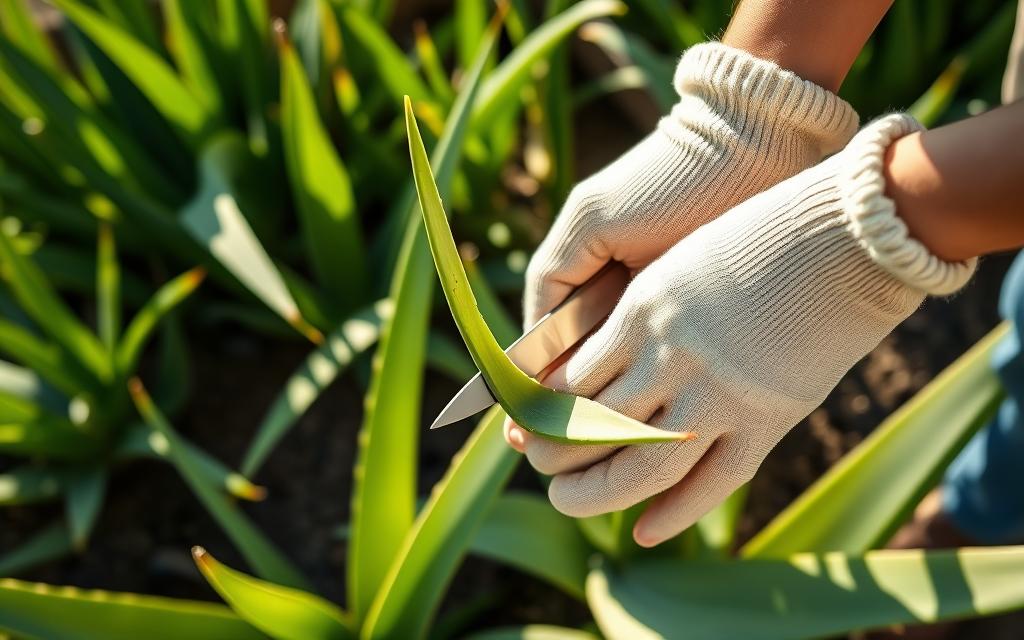
Make a clean cut near the stem with a sharp knife. Don’t dig around the roots—slicing low at the base keeps the rootball intact and helps the vera leaves regrow.
Washing, drying and trimming prickly edges
Rinse each leaf under cool water and pat dry. Trim the toothed sides carefully so you can work on a clean bench without scratching yourself.
Let the yellow sap drain before handling the gel
Stand the cut leaf upright for 10–15 minutes and let the yellow latex drain away. This reduces irritation on sensitive skin and gives you clearer inner gel to apply.
Quick tips: clean tools, clean hands, and rotate harvests so the vera recovers between cuts.
| Step | What to do | Why it matters |
|---|---|---|
| Choose leaf | Pick 3–4 thick outer leaves | Protects centre growth and ensures regrowth |
| Cut | Slice close to stem, avoid roots | Prevents root damage and infection |
| Clean | Wash, dry, trim edges | Keeps gel clean for skin use |
| Drain | Let yellow sap drip for 10–15 mins | Reduces irritation and improves gel quality |
How to use aloe vera straight from plant on skin
Start with a tiny trial patch — try a dab on the inner arm and wait 24 hours. Topical aloe vera is generally safe for many people, but reactions can happen. If you see redness or stinging, stop and seek advice.
Sunburn and mild burns
Cool the area first with cool water, then smooth a thin layer of gel over the skin. Reapply a few times a day for comfort and moisturising relief.
Seek medical care for blistering or large burns — home care is for minor cases only.
Skin conditions and inflammation
For red, inflamed spots, a light dab can calm irritation. Aloe vera may help reduce inflammation linked to acne, but it is not a replacement for dermatologist-prescribed treatments.
Minor cuts, grazes and wound healing
Only apply to clean, superficial wounds. For deep, infected or slow-healing cuts, consult a GP before applying gel.
Face and neck tips
Facial skin is more reactive. Use smaller amounts, avoid the eye area and wait for the gel to absorb before adding moisturiser or sunscreen.
Thin layers, short tests and steady observation are the easiest ways to get the benefits without surprises.
How to use fresh aloe vera gel for hair and scalp care
Start small: dab a pea-sized amount into one scalp section to test tolerance. If that feels fine, repeat across the crown. This helps you avoid greasy build-up and shows how vera hair responds.
How to apply gel to the scalp and lengths without leaving residue
Massage a thin layer into the scalp, then comb the remaining gel through mid-lengths to ends. Leave it on 10–20 minutes for a quick boost, or overnight as a deeper treatment.
Rinse and shampoo as usual to remove any tacky residue. Less is more—too much gel makes hair feel heavy or crunchy.
Dry hair and itchy scalp support: what aloe may help soothe
Light topical gel may help soothe tight, flaky scalps and offer gentle hydration to dry lengths. It can calm mild irritation but is not a cure for scalp conditions.
“Try short treatments first and pause if the scalp gets red or sore.”
When to pick products vs leaf gel
Fresh gel gives minimal-ingredient benefits. Packaged products offer consistency and easier rinsing. Check product labels for heavy silicones or strong fragrances if your skin is sensitive.
- Quick fix: raw gel for simple soothing and light hydration.
- Reliable routine: choose formulated products for colour-treated or very dry hair.
For more guidance on topical hair options, see this aloe vera for hair guide.
How to prepare, blend, and store vera gel so it stays fresh
Prepare your gel so it’s ready to dab, spread or blend into a smooth treatment. Two simple paths work well: slice neat cubes for spot dabs, or blend for a smooth, spreadable vera gel that glides over skin and hair.
Slicing cubes vs blending and straining
After you separate the clear flesh, cut it into cubes for quick cooling dabs. Cubes are tidy and perfect for first aid or small patches.
For a smoother finish, blend the gel with a little water, then pass it through a fine sieve to remove pulp. This gives a silkier texture that spreads easily.
Fridge timeframes and keeping cut leaves fresh
Fresh gel kept in a sealed jar lasts only a few days in the fridge. Whole cut leaves can remain fine for around two weeks if you wrap the cut end and seal it to stop fridge smells and drying.
Freezing and texture changes
Freezing extends shelf life but expect a thinner, watery feel when thawed. Ice crystals break the gel structure, so thawed batches may need gentle stirring before use.
- Seal cut ends tightly to preserve moisture.
- Label containers with the prep date and toss if smell or colour changes.
- Freshness matters: active levels and the cooling effect are best soon after prep.
For a quick how-to on blending and straining, see this guide on how to make aloe vera gel.
Safety, side effects, and who should avoid using aloe vera
Many people find topical relief; oral use carries clearer warnings and more potential side effects.
Topical care is generally safe for most skin concerns. Still, do a small patch test first and stop if you get stinging, redness or a rash.
Don’t apply raw gel to deep cuts, infected wounds or severe burns. Those need professional medical treatment, not home remedies.
Oral cautions and common reactions
Ingesting gel or extracts can cause cramps and diarrhoea. It may also reduce absorption of some oral medications, so your usual dose might not work as expected.
Higher‑risk health conditions
People with kidney or bowel problems, intestinal obstruction, Crohn’s, ulcerative colitis, diabetes, heart issues or haemorrhoids face higher risks if they take internal products.
Medication interactions and timing
Watch interactions with diuretics, anticoagulants (for example, warfarin), diabetes drugs, digoxin, corticosteroids and stimulant laxatives. Avoid internal use within two weeks of planned surgery.
| Route | Main risks | Who should avoid |
|---|---|---|
| Topical | Irritation, allergic rash | Open wounds, severe burns |
| Oral | Cramps, diarrhoea, reduced drug absorption | Pregnancy, breastfeeding, children <12; kidney or bowel conditions |
| Drug interactions | Lowered electrolyte levels, altered blood sugar, bleeding risk | People on diuretics, anticoagulants, diabetes meds |
Pregnancy, breastfeeding and children: skip internal products. Safety data is limited and the downsides are real.
Quick rule: for genuine skin soothing, stick to topical application. If you plan to take products internally for health reasons, check with your GP first.
For a concise medical overview, see this aloe information page.
Conclusion
Conclusion
A quick dab of clear gel can bring instant relief after a long day in the sun. Keep it simple: pick a healthy leaf, let the yellow latex drain, prep clean gel and apply small amounts to sensitive skin. 😊
Practical benefits: cooling comfort for sunburns, gentle support for inflammation and a moisturising, soothing feel. Freshness matters — active levels and texture change with time, so prep what you’ll use and store the rest correctly.
Topical use is usually safe, but internal claims about health benefits get complicated. For more detailed guidance on how to use aloe vera, see this helpful guide: how to use aloe vera.