
Haworthias are compact, slow-growing succulents that suit busy homes. They forgive a bit of forgetfulness, so long as you avoid the common mistake: too much water.
The routine is simple. Bright, indirect light, a soak-then-dry watering pattern and a gritty, fast-draining mix in a pot with holes are the essentials. Nail these three and your plant stays firm, plump and tidy for years.
This guide is aimed at first-time plant parents, apartment dwellers, desk stylists and anyone after hardy indoor plants. We’ll walk step by step through types, light, watering, soil, temperature, feeding, repotting and propagation.
If you’ve struggled with houseplants before, this one is forgiving enough that a few easy habits will turn things around. 😊
For quick soil tips and a simple mix idea, see a related succulent resource here.
Table of Contents
Key Takeaways
- Low-fuss routine: bright indirect light + soak-then-dry watering + drainage.
- Use a fast-draining mix and a pot with holes to prevent rot.
- Overwatering is the main slip-up—watch for mushy leaves.
- Great for small spaces, desks and first-time plant owners.
- Simple care habits keep plants healthy long-term.
Meet Haworthia: the small, slow-growing succulent that suits Aussie homes
If you want a palm-sized plant that quietly earns its keep, this is it.
What sellers mean by haworthia: shops often label small rosette succulents as haworthia even though some zebra types are now classed as Haworthiopsis. They remain popular because they stay compact and tidy on shelves.
Common types you’ll see
Zebra forms (often sold simply as zebra haworthia) show bold white striping and pointed leaves. They usually reach about 6–10 inches tall and can clump wider over time.
Haworthia cooperi makes small rosettes with translucent, round-tipped leaves. Var. obtusa typically sits around 3–5 inches tall and ~4 inches across and has a soft, jewel-like look.
Size and growth over months and years
These are slow growers. Noticeable changes can take 6–12 months or more. That steady growth is normal and often a sign of health rather than stagnation.
Both types can live for many years with basic attention. Pot size affects spread: give more room and some species will widen and form clumps faster.
Where they fit best indoors
Think desks, floating shelves, bedside tables or a bright kitchen bench. Their small footprint suits apartments and compact windowsills.
Choose a variety that matches your vibe: zebra for graphic stripes; cooperi if you prefer soft, rounded leaf shapes and no sharp tips.
How to care for haworthia: the quick-start care checklist
Start with a tiny checklist that keeps your plant happy from day one. Save it to Notes and use it when you set up the pot.
Bright, indirect light over direct sunlight
Place the plant in a bright room. East or north-facing windows work well in Australia.
Avoid harsh afternoon sun through glass—it can scorch leaves in summer.
Water only when the soil dries out completely
Check the mix with your finger; only water when dry all the way through.
Don’t follow a strict schedule. Watering by moisture is safer and prevents root rot.
Use a gritty, fast-draining soil and a pot with drainage holes
Choose a cactus or succulent mix and add perlite or pumice if needed.
Drainage holes + fast-draining soil + patience = fewer problems.
- Where to place it: bright bench or shelf, out of harsh afternoon sun.
- When to water: only after the mix feels dry; wait another few days if unsure.
- What soil: gritty cactus mix with perlite/pumice added.
- What pot: small pot with drainage holes; don’t bury the crown.
If you only do one thing: wait longer between waters. Less is safer than more. 😊
Happy signs: firm leaves, a tight rosette and slow, steady growth in the warmer months.
For a fuller indoor guide and simple soil tips see this related resource: succulent care notes.
Getting light right indoors: window placement, sun and indirect light
Finding the right light can stop stretched leaves and encourage compact growth. Start with a bright room and a clear plan for window placement.
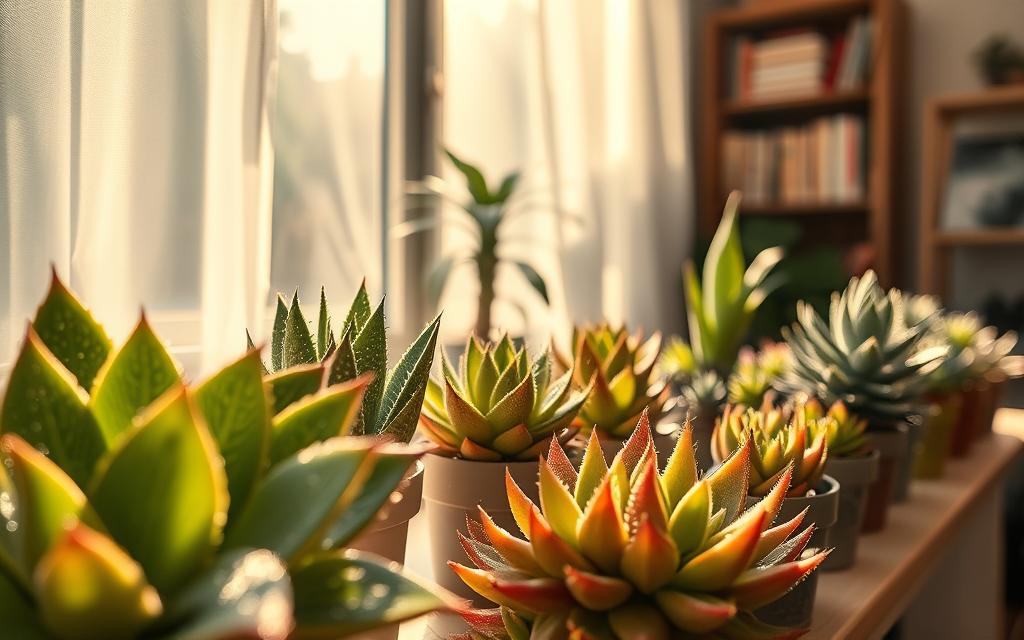
Best spots in Australia
East-facing windows give gentle morning sun that suits fragile leaves. West-facing windows bring stronger afternoon sun; keep a small step back or use a sheer curtain.
Distance from the window
Begin within about 1 metre of a window and watch the plant for a few weeks. If leaves stretch, move closer. If they bleach or scorch, move back or filter the sun.
Signs to watch
Not enough light: thin, pale growth and long spacing between leaves.
Too much sunlight: bleached or brown patches, dull colour or red stress tones.
Simple rotation and acclimation
Rotate the pot every few months so one side doesn’t lean. When increasing light, make changes slowly over days or weeks to avoid shock.
| Window | Best action | Watch for |
|---|---|---|
| East | Place near sill or shelf; morning sun OK | Even colour, gentle growth |
| West | Step back ~1m or use curtain in afternoon | Scorching if too close |
| Bright shelf | Indirect light behind curtain or beside window | Compact rosette, steady growth |
Watering Haworthia without causing rot
A reliable watering routine starts with patience, not frequency. Give the mix time to dry fully before adding more water. That small habit prevents mushy leaves and root rot.
The golden rule: less water is better than more
Underwater rather than overwater. You’ll see firmer leaves and fewer problems if you wait a little longer between sessions. Overwatering is the biggest cause of soft, brown leaves and rot.
Checking soil dryness before watering
Use your finger and push down past the top centimetre. If it feels dry deeper, you can water.
Try a wooden skewer or chopstick—leave it in, then inspect for damp residue.
Lift the pot: a light pot usually means dry soil; a heavy pot means moisture remains.
Seasonal changes: winter slow-down and summer dormancy
In winter, growth slows and watering gaps widen. Some plants need water only once a month indoors.
Summer dormancy also reduces demand. Watch leaves rather than following a fixed time schedule.
Why misting can backfire in indoor environments
Lingering moisture on leaves or around the crown invites fungal issues in low‑airflow rooms. Misting feels useful but often raises humidity where you don’t want it.
Water well: when you do, soak until excess drains, then discard any standing water. Never leave the pot sitting in a saucer of water.
If unsure, wait and reassess. These plants tolerate dry spells far better than soggy soil. For a sample watering rhythm you can adapt, see an indoor watering schedule: indoor watering schedule.
| Check | Method | What it indicates |
|---|---|---|
| Finger test | Insert to 2–3 cm | Dry deep = water; damp = wait |
| Skewer test | Leave in; inspect wood | Dry wood = dry soil; dark = moist |
| Lift pot | Compare light vs heavy | Light = ready; heavy = needs time |
| Leaf signs | Visual and touch | Firm = healthy; squishy = possible root rot |
Soil, drainage and choosing the right pot
Pick a pot and mix that helps roots breathe, not drown. Regular indoor potting mix holds water for too long. In cool or low-light rooms that lingering wetness suffocates roots and raises the risk of root rot.
Why normal potting mix fails indoors
Standard mixes are rich and moisture-retentive. That’s great for many plants, but not for succulents.
Wet soil in low light stays soggy. Roots need air. When they sit wet, they go soft and brown.
Two simple soil options
DIY gritty blend: coarse sand, potting grit or crushed brick, composted bark and a small proportion of soil. Fast-draining and airy.
Store-bought cactus mix: use as a base and add perlite or pumice for extra drainage and aeration.
Choosing pot size and drainage
Match the pot to the root system, not the leaf spread. Too large a pot holds excess wet soil and slows drying.
Never skip drainage holes. If you use a decorative cachepot, keep the plant in a removable inner pot and empty the saucer.
“A slightly snug pot helps the mix dry faster, which lowers rot risk and keeps growth steady.”
Quick setup checklist
- Gritty soil or cactus mix + perlite/pumice.
- At least one drainage hole in the pot.
- Empty saucer after watering.
- Bright, indirect light so the soil dries predictably.
| Item | Why it matters | Practical tip |
|---|---|---|
| Soil type | Controls moisture and air around roots | Use gritty blend or cactus + perlite |
| Drainage | Prevents standing water and rot | Choose pots with holes; avoid sealed cachepots |
| Pot size | Affects drying rate and root health | Go up one size only; slightly snug is fine |
| Local conditions | Humidity and temperature alter drying | In humid coastal areas, use an even grittier mix |
Temperature and humidity needs in Australian conditions
Most haworthias thrive within the same temperature range you keep your home. Aim for about 20–22°C (68–72°F) for the cozier varieties, and they usually tolerate cooler nights down to roughly 10°C (50°F).
Comfortable indoor range and cold limits
Typical living-room temperatures suit these succulents well. Avoid letting nights dip near 4–5°C. Cold plus wet soil is the real danger; that combo causes rot.
Outdoor life and when to bring plants inside
They do fine outdoors in bright shade or a sheltered patio. Keep them out of harsh midday sun and heavy rain.
Rain check: move pots under cover if a wet spell is due. This keeps the mix from staying soaked.
Humidity and airflow basics
Dry air is fine — often better. Extra misting raises fungal risk. A bright room with gentle airflow helps soil dry evenly and keeps conditions healthy.
| Factor | Guide | Australian note |
|---|---|---|
| Day temperatures | 20–22°C ideal | Typical indoors; AC if extreme heat |
| Cold limit | ~4–5°C | Bring pots inside before cold snaps |
| Outdoor placement | Bright shade, sheltered | Avoid heavy rain and harsh sun |
| Humidity & airflow | Low–moderate humidity; good airflow | Adjust watering in humid coastal areas |
“Stable temperatures and dry soil beat extra humidity every time.”
Feeding and fertiliser: what Haworthia actually needs
Feed sparingly; these little rosettes rarely need a heavy hand. Haworthia are slow growers and often do well on fresh soil rather than constant feeding.
When to add nutrients
Only feed during the active growing season—typically spring through early autumn in Australia. Watch for clear signs of new growth before you add fertiliser.
Gentle approach that works
Use a balanced liquid fertiliser at half or quarter strength and apply only a few times across the growing season. Alternatively, refresh the potting soil when repotting and skip liquid feeds.
Skip feeding if…
- Your plant is stressed, freshly repotted, or showing slow growth.
- It sits in low light or has entered winter dormancy.
- Leaves look stretched from too much light or weak from overwatering—nutrients won’t fix those issues.
“Modest nutrition supports steady growth without forcing weak, stretched leaves.”
Quick safety tip: water first, then feed on the same day. Wet mix reduces the risk of root burn in gritty soil.
| Goal | Recommended timing | Product type | Practical tip |
|---|---|---|---|
| Support steady growth | Spring and warmer months | Balanced liquid, diluted | Apply sparingly, 2–4 times per season |
| Refresh nutrients | At repotting (spring preferred) | Fresh gritty soil or cactus mix | Repot instead of frequent feeds |
| Avoid harm | Winter or dormancy | None | Hold fertiliser until active growth returns |
| Protect roots | Any feeding time | Liquid or water-soluble | Water first, then feed diluted |
Repotting and root care for long-term health
Watching roots is the surest way to catch problems before they start. These succulents often sit happily in the same pot for years, but a yearly refresh or when the clump doubles in size keeps the mix lively.
Best timing and basic rule
Aim for spring through early autumn — spring is ideal. That time gives warmer conditions and steadier drying while the plant recovers. Repotting once a year or after noticeable growth works well.
Simple repot method
- Lift the plant gently from its pot and shake off old soil.
- Inspect the roots and trim any brown or mushy root sections.
- Replant in fresh gritty soil and use a slightly larger pot — only one size up.
Spotting trouble early
Look for squishy, translucent leaves and a mix that never dries. These are early signs of root rot. If you catch decay early, replacing the medium and removing damaged roots often stops further rot.
After repotting, keep the plant in bright, indirect light and wait a short time before the first water so trimmed roots can callus.
Need extra reading? See a practical potting guide at this resource for step-by-step tips.
Propagation: growing new plants from pups, division and leaves
A few simple steps will turn an offshoot into an independent, healthy plant. Start during the growing season, ideally spring, when wounds heal fastest and roots form more reliably.
Division method
Look for pups clustered at the base of the parent plant. Gently tease the clump free and separate any small offshoot with its own tiny root mass.
Root check rule: a pup with at least one visible root has the best chance of success. If it lacks roots, leave it attached until a root appears.
Leaf propagation basics
Haworthia cooperi can be grown from a leaf, but it’s slower and less reliable. Choose a healthy leaf, let the cut end callus, then lay it on a gritty mix.
Keep the medium barely damp and be patient — expect weeks or months before tiny roots or a nub of growth appear.
Aftercare for new roots
Place cuttings in bright, indirect light and use fast-draining soil. Watering should be very cautious until a clear root system forms.
If cuttings stay soft or wet, reduce watering, improve airflow and check drainage immediately. For a broader overview of varieties and setup, see a full overview at plant overview.
“New plants take time — watch for firmness and tiny root nubs rather than fast leafy growth.”
Conclusion
One short habit prevents the majority of issues you’ll see. Keep the routine simple: bright, indirect light near a good window, a gritty soil mix with drainage, and only add water when the mix is fully dry.
Expect slower growth in winter and a gentle summer slowdown. Let the season guide your watering rhythm and you’ll avoid most problems like mushy leaves or rot.
Do a quick weekly check: glance at leaves for firmness and colour, feel the mix, and act early if you spot pests. Isolate and treat mealybugs or scale fast—early detection makes control simple.
Beginners relax: this succulent is forgiving when you resist overwatering. It’s widely regarded as non-toxic for your family and pets, but not a snack.
Ready for more? Try a zebra variety or cooperi and learn propagation. See a focused zebra succulent guide: zebra succulent guide.