
Quick answer: you give a Christmas cactus a drink when the top 1–2 inches of soil feel dry, not by a strict calendar.
Expect variation: the frequency changes with light, humidity, temperature and pot size. In many Aussie homes, air‑con in summer and heaters in winter speed up drying.
Remember, this plant is a tropical cactus, not a desert one. The “ignore it for weeks” approach often backfires. Start with a guide of about every 1–3 weeks and confirm with a quick soil check.
Two common mistakes: leaving roots sitting in water causes rot, while letting the mix dry out completely leads to wrinkling and bud drop.
This guide will cover seasonal rhythm, factors that change drying speed, the best watering methods, Aussie water quality tips and early signs of trouble. If you only remember one thing, remember this: check the soil, then water deeply and drain. 😊
Table of Contents
Key Takeaways
- Check the top 1–2 inches of soil before you water.
- Typical starting range is about 1–3 weeks, but check first.
- It’s a tropical cactus, so it needs more regular care than desert types.
- Avoid both waterlogged pots and completely dry mix.
- Season, pot size and indoor climate change drying time.
Why Christmas cactus watering is different to desert cacti
Quick view: despite its name, this houseplant behaves more like a rainforest epiphyte than a dryland succulent.
Tropical origins and moisture habits
The species evolved in Brazilian rainforests, growing in tree crotches and rocky ledges. It takes moisture from humid air, dew and frequent light rainfall.
This background explains why cacti of this type need steady moisture rather than long droughts. Their roots sit where air and tiny rain events keep them fed.
What “moist, not soggy” means
Feel-test: the mix should be lightly damp below the surface, not sludge-like or dripping.
Aerated soil keeps oxygen at the root zone. Soggy mix blocks that oxygen and invites rot and fungal problems.
Realistic humidity for Aussie homes
Indoor heating and cooling in Australia often dry the air. Aim for comfortably humid conditions—about 45% or higher—so the plant needs less frequent attention.
Small changes help: move the pot away from vents, use a pebble tray or a small humidifier. You don’t need a greenhouse—these tweaks make a real difference 😊
How often to water christmas cactus across the year
Your soil is the scoreboard. Check the top 1–2 inches with a finger or a meter before committing to any schedule. That quick test beats guessing and keeps roots healthy.
Core soil check
What to feel for: the surface should be dry, while a few centimetres down stays slightly cool and damp. If the whole pot is bone dry, give a deep soak and let excess drain.
Winter and post-bloom rhythm
In cooler months the plant slows growth. Many Aussie homes find a rhythm of about every 3–4 weeks, but always confirm with the soil dry test.
Blooming period care
During blooms keep moisture steady. Avoid big swings between dry and soaked. Steady hydration helps blooms last longer and reduces bud drop.
Spring and summer growth
Warmer days speed drying. Expect nearer to every 1–2 weeks indoors, and possibly twice that rate if placed outside in bright shade. Wind and sun can halve the days between checks.
- Mini-checklist for season changes: re-check light, re-check pot weight, re-check soil dry-down time.
- Tracking habit: note how many days pass after a full soak so you learn your plant’s rhythm.
For a simple schedule template and local tips, see our indoor plant watering schedule.
Factors that change how quickly the soil dries out
Different home conditions change how fast the pot mix dries, and that controls your timing. Think of watering as responding to drying speed. Once you know what speeds drying up (or slows it), you can act with confidence.
Light and bright, indirect sunlight near windows
Bright, indirect light makes the plant more active and draws moisture from the soil faster. If you move the pot closer to a sunny window, expect quicker dry‑down.
In low light the soil stays damp longer. Match checks with the room’s sunlight rather than a fixed schedule.
Temperature swings and heaters or vents
Warm days and cool nights speed moisture loss. Forced‑air heaters, reverse‑cycle air‑con and vents create dry pockets that change drying time dramatically in many Aussie homes.
Watch for warm drafts across the pot — they can halve the days between checks.
Pot size, container depth and being slightly snug
Smaller or shallow pots dry faster. Big containers hold more soil and stay wet longer, raising the risk of root rot if you water by habit.
Being slightly potbound suits this plant, but if the mix dries crazy‑fast, reassess the pot size and the mix.
Soil mix choice, drainage holes and protecting the roots
Good drainage is non‑negotiable. Use a free‑draining soil mix (peaty with perlite or vermiculite) and always have drainage holes in the container.
If the mix smells sour or stays wet more than a week after a soak, check for root rot and adjust the mix, pot or room conditions.
“Treat watering as a reaction to drying speed — learn the factors and you’ll stop guessing.”
For related potting tips and a simple care checklist, see our aloe vera plant care guide — many principles apply across indoor succulents.
How to water a Christmas cactus properly
Think of watering as a two-step ritual: soak deeply, then let the excess leave. This simple routine keeps roots healthy and prevents rot.
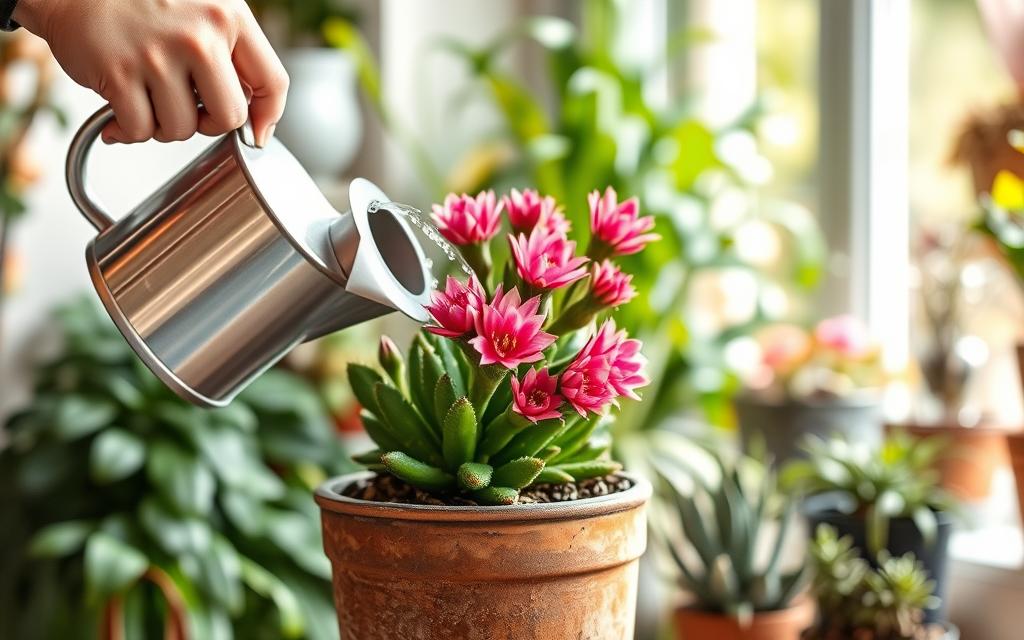
Top-watering, step by step: move the pot to the sink, pour room-temperature water evenly over the soil, and stop once water runs freely from the drainage holes. Empty any saucer straight away so the roots do not sit in water.
Bottom watering and even hydration
As an alternative, place the pot in a shallow tray with a few centimetres of water for 15–20 minutes. Let it soak up, then remove and allow full drainage so the top layer avoids lingering dampness.
Australian water quality and amount
If tap supply is heavy with chlorine or minerals, use rainwater or filtered water, or let tap sit overnight to off‑gas. Give a proper soak: keep pouring until the solution drains from the holes — that ensures the whole root ball gets hydrated.
Humidity that actually helps
Misting evaporates fast and rarely changes room humidity. Use a pebble tray, a small humidifier or group a few plants together for lasting moisture support.
Quick tip: lift a freshly soaked pot to learn the “heavy” feel. When it later feels light, it’s time for the next rinse.
water christmas cactus
How to spot underwatering, overwatering, and root rot early
Quick check first: start with the soil, then inspect the stems and leaves, and finish with a smell test. The mix often gives the clearest early warning before the plant looks badly affected.
Underwatering signs
Look for segments that go dull, feel softer, or begin to wrinkle and droop. Leaves may lose some shine and segments can drop in more severe cases.
If you find these signs, give a thorough soak or bottom-saturate the pot and then check the soil more frequently for a few weeks until the plant regains firmness.
Overwatering signs
Wet, soggy soil that stays damp for days is the first red flag. You might see yellowing, mushy stems, persistent droop and a sour smell from the pot — all classic signs that rot may be starting.
When that sour smell appears, act fast: stop giving the plant any more fluid and let the pot drain fully.
Root rot prevention and rescue
Prevention trio: a well‑draining mix, clear drainage holes and never leave the saucer full of water. These steps cut rot risk dramatically.
If roots are damaged, unpot the plant, inspect the roots and trim away soft, brown sections with sanitised scissors. Repot into fresh, airy mix and avoid standing water in the saucer.
When repotting helps
If the pot dries out too quickly despite correct routine, the container may be too small or the mix too old and airy. Repot every 2–3 weeks? Sorry — every 2–3 years is the right rhythm; upsize if the pot is the cause of rapid dry‑down.
Recovery is slow. Expect several weeks before segments firm and new growth appears. Be patient and keep checking the soil’s top layer for steady progress. 😊
For extra reading on overwatering signs and sensible care, see this overwatering guide and a practical watering schedule at Homes & Gardens.
Conclusion
A single, repeatable rule beats guessing: only give a full soak when the top 1–2 inches feel dry. Then water deeply and let the excess run away — simple and reliable.
Season matters. In winter and after bloom you’ll reduce frequency. During blooms keep moisture steadier. In spring and summer expect quicker dry‑down with more light and heat.
Biggest prevention tip: never let the pot sit in standing water. Good drainage and a free‑draining mix cut the risk of root rot and other rot issues.
Quick action plan you can use today: check the soil depth, confirm drainage, move the pot away from vents, and boost humidity with a pebble tray or small humidifier (better than constant misting). For a detailed care guide, follow this link.
Be patient and learn your plant’s dry‑down rhythm — once you do, blooms become much more predictable year after year. 😊
FAQ
What’s the best way to check if your festive pot needs a drink?
Gently press the top 2.5–5 cm of the mix with your fingertip. If it feels dry, give it a thorough soak and allow excess to drain. If it still feels slightly damp, wait a few days and check again — these plants like moist, not waterlogged, conditions.
Why does this plant need different care from desert succulents?
Unlike arid cacti, it evolved in rainforest understories where air is humid and soil drains well. That means it prefers steady moisture and higher humidity rather than long dry spells and blazing sun.
What does “moist, not soggy” mean in plain terms?
The soil should cling together lightly when squeezed but not release free water. Roots should be damp, not sitting in puddles — this prevents root rot while keeping foliage plump.
What indoor humidity should I aim for in an Australian home?
Aim for around 40–60% relative humidity. Use a pebble tray, group pots together, or place near a humidifier. Regular misting offers only brief relief and isn’t as effective as consistent ambient humidity.
Should I follow a fixed watering schedule through the year?
No — check the soil depth instead of relying on days. Seasonal growth, temperature and light change moisture needs. Use the fingertip test to decide when to hydrate.
How do watering needs change in winter and after flowering?
Reduce moisture in cooler months and during the rest period after blooms fade. Let the top layer dry a bit more between drinks to encourage bud set and avoid soggy roots.
How should I manage hydration during the blooming phase?
Keep the mix consistently damp but not waterlogged. Stable moisture supports blooms and helps them last longer — avoid sudden drought or overwatering during this time.
What about spring and summer growth — any different approach?
Increase watering slightly as new growth appears and temperatures rise. If you move the pot outdoors, expect the mix to dry faster and adjust checks accordingly.
If I place the pot outside for summer, how does that affect care?
Outdoor warmth, wind and brighter light speed drying. Check soil more often, give morning indirect sun and protect from harsh afternoon rays. Ensure the pot has good drainage.
How do light levels influence soil drying?
Brighter, indirect light warms the soil and speeds evaporation. Less light slows drying, so you’ll water less often in low-light spots.
Do heaters and vents change watering needs?
Yes — warm air from heaters or vents dries soil and lowers humidity. Move plants away from direct heat or increase humidity and watering frequency slightly.
How does pot size and being slightly root-bound affect moisture?
Small pots dry faster; a slightly pot-bound plant often uses water more quickly. Larger containers hold moisture longer. Match pot size to growth and check more often if the container is small.
What soil mix and drainage should I use to avoid soggy roots?
Use a well‑draining indoor potting mix with added coarse sand or perlite. Always use a pot with drainage holes and avoid heavy, compacted mixes that retain excess water.
What’s the proper top-watering technique?
Water slowly until you see runoff from the drainage holes. Let the pot drain fully, then return it to its saucer. Do not let the plant sit in standing water.
Is bottom watering a good option?
Yes — place the pot in a shallow tray of water for 10–20 minutes, then remove and let excess drain. It wets the root zone evenly without saturating the surface.
What water is best in Australia — tap, filtered or rainwater?
Filtered or rainwater is ideal, especially if your tap water is very hard. If using tap water, let it sit overnight to allow chlorine to dissipate or use a simple filter jug.
How much should I give each time I water?
Water until it flows freely from the drainage holes, then let the pot drain completely. That gives the roots a thorough soak without leaving standing water.
What humidity methods work better than regular misting?
Use a pebble tray with water under the pot, a small humidifier, or group plants together. These methods raise ambient humidity more consistently than brief misting.
What are early signs of underwatering?
Look for wrinkled segments, dull or slightly shrivelled stems, and drooping growth. These indicate the plant needs more consistent moisture.
How can I spot overwatering early?
Signs include a soggy mix, yellowing segments, mushy stems and a sour or musty smell from the pot. Act quickly — prolonged wetness leads to root rot.
How do I prevent root rot and treat damaged roots?
Prevent it with a free‑draining mix and pots with holes. If rot appears, gently remove the plant, trim soft roots, repot into fresh, dry mix and reduce watering until it recovers.
When should I repot if the plant dries out too quickly?
Repot when roots fill the pot or the mix compacts and dries fast. Move up one pot size and refresh the mix with well‑draining components to restore balanced moisture retention.