
You’re about to learn exactly how often to water a jade plant without guessing or drowning it.
Crassula ovata is a succulent with thick, waxy leaves and stems that store moisture. This makes it forgiving when you forget, yet risky if it sits wet for too long.
The rule is simple: soil dryness sets the schedule, not the calendar. Timing and technique beat routine pouring.
For busy plant parents, that matters. A quick finger test and the right pot mix will save you from root rot and mushy leaves.
In this guide we’ll cover dryness checks, proper soaking, seasonal tweaks for Australian homes, and potting choices that help your houseplant thrive. Try a quick self-check: When did you last water—was the soil truly dry? 🙂
Table of Contents
Key Takeaways
- Check soil dryness before adding moisture.
- Use well-draining mix and pots with holes.
- Reduce frequency in cooler months.
- Signs of over-saturation are soft, translucent leaves.
- Simple steps make jade plant care repeatable and stress-free.
- For more on succulent care and potting, see this guide on jade plant care basics.
Understanding jade plants and why watering is different for succulents
Succulents are built for storage. Your Crassula ovata keeps reserves inside its body, so it copes with gaps between drinks better than most house greenery.
Crassula basics: thick leaves, stems and roots that store water
Crassula ovata has fleshy leaves and sturdy stems. These parts — plus chunky roots — act like tanks. That means the visible soil can be dry while the plant still has reserves.
Less often, but thorough beats tiny sips
Give a good soak rather than tiny top-ups. A thorough wetting pushes moisture deeper and encourages strong roots. Tiny sips keep roots shallow and weak.
What really causes overwatering: liquid plus poor drainage
Over-saturation often comes from much water sitting in compacted mix. Slow drainage starves roots of oxygen and invites rot organisms.
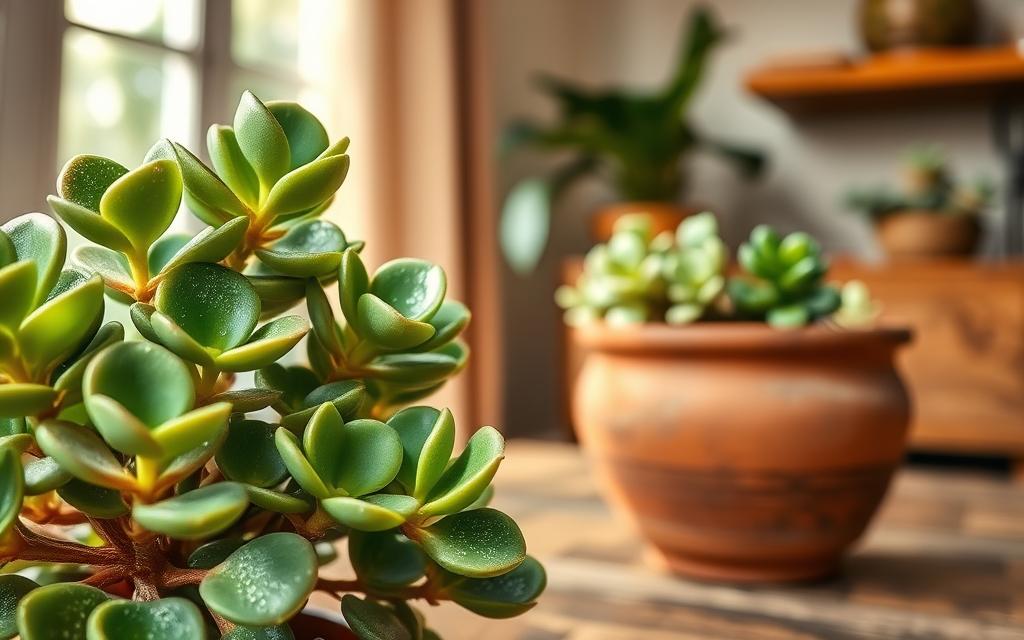
Myth buster: misting the leaves won’t replace root uptake. Focus on the soil, not water leaves as a main method.
- Read the signs: plump leaves mean good reserve; wrinkles signal drawdown.
- Watch drainage: fast-draining soil and pots with holes protect roots.
- Next skill: learn to check if the soil is truly soil dry below the surface.
How often to water jade plant based on soil dryness, not the calendar
Start by checking the mix, not the calendar—your pot will tell you when it needs a drink. A surface crust can lie; the gold-standard test checks deep dryness before you give any water.
The gold-standard test: check that soil is very dry before watering
Use one simple goal: confirm the mix is very dry several inches down. If the top looks dry but the lower soil is still damp, hold off.
Indoor rule of thumb: roughly every couple of weeks in active growth
In active growth many Australian homes find a rhythm of about every couple of weeks. Treat that as a starting point, not a strict schedule.
How deep to check and easy tests
Check 3–4 inches down. Try a finger test, push a wooden skewer into the mix, or lift the pot to feel weight change. These quick steps fit mobile routines.
How to water properly and when bottom-watering helps
Soak the mix thoroughly until water runs from the drainage holes, then let it drain and empty the saucer. One good soak beats frequent light pours.
If the soil is bone dry and repels moisture, sit the container in water partway up the side for a few minutes. Drain fully afterwards.
Safety note: If you see soft, brown roots or rot, drying and repotting is the right move rather than bottom-watering.
Adjust watering for Australian seasons, light and temperatures
A seasonal read on your pot will save guesswork. Spring and summer bring faster growth and quicker drying. That means more frequent checks and deeper soaks once the mix is dry below the surface.
Spring and summer: active growth needs attention
In warm months, higher light and heat speed evaporation and growth. Move your jade plants into bright indirect light and allow a few hours of gentle sun if the foliage tolerates it.
Winter: slower growth and longer dry-outs
As winter sets in, growth slows. Evaporation drops and pots stay damp longer. Extend dry-out intervals and cut back on giving extra moisture.
Light exposure and temperature swings
More sunlight means faster drying; low light raises rot risk. Keep the pot away from air-con blasts, heaters or cold drafts that cause stress or sudden drops in temperatures.
Quick check: Has your plant’s light or temperature changed lately? That often explains a sudden mismatch in care.
Outdoor time and rain protection
Only move outdoors when nights stay around 18°C. Start in a sheltered spot and increase sun slowly over several days to avoid scorch. If steady rain is forecast, shift pots under a porch or alfresco cover so the soil doesn’t become a rain trap.
| Season | Light | Typical effect on soil | Action |
|---|---|---|---|
| Spring | Bright, more daylight | Dries faster | Check deeper dryness more often |
| Summer | Strong daylight, morning sun ok | Fastest drying, active growth | Soak thoroughly when mix is dry; protect from heavy rain |
| Winter | Lower light | Pots stay damp longer | Lengthen dry-outs; reduce frequency |
For further seasonal tips and placement ideas, see our detailed care guide and a practical watering schedule for home routines.
Set your jade up to avoid root rot: soil, pot, drainage and placement
Get the basics right: a chunky mix and a sensible container cut rot risk dramatically. Start by choosing a gritty, fast-draining soil that keeps air around the root ball. Dense, compacted mix holds moisture and invites trouble.
Choose a chunky, fast-draining succulent potting mix
Pick a mix with coarse grit, perlite or pumice. That lets liquid move through quickly and gives roots oxygen between sessions. This simple swap reduces rot and makes basic care predictable.
Pick the right pot: drainage holes, sensible sizing, and not too wide
Always use a pot or container with a drainage hole. Avoid oversized containers that trap excess moisture. A good rule: choose a pot only a little larger than the root ball so the mix dries at a steady pace.
For more on matching pot and mix, see this right pot and soil guide.
Keep roots healthy: what firm white roots vs brown mushy roots mean
Healthy roots are pale, firm and smell neutral. Rot shows as brown, soft, smelly root tissue and decaying stems or blisters on leaves. Those signs usually mean the mix stayed wet for too long, not that the plant needs more moisture.
“If you spot rot, act fast: stop giving liquid, trim infected roots, remove old mix, and repot into fresh succulent mix.”
- Stop adding liquid and lift the plant.
- Trim brown, mushy roots and any black stems.
- Discard old soil and repot in fresh chunky mix.
These simple tips make caring for houseplants, including your jade plant, low-stress. For an in-depth care walkthrough, check the ultimate care guide and a handy low-maintenance care resource for houseplants in your garden. 😊
Conclusion
Let the soil’s dryness guide your next pour and the results will follow. Wait until the mix is very dry several centimetres down, give a thorough soak until runoff, then let the saucer drain and stay empty.
Adjust frequency with light and the seasons: brighter rooms and warm sun speed growth and use more water, while cool, low-light months slow everything. Watch leaves, stems and root health for real clues about needs.
Quick checklist: soil dry deep down; pot has a drainage hole; saucer emptied; plant sits in bright light with a little sun. 😊
Ready for one small step? Pick a day this week to check depth and tweak your routine. For extra reading, see our jade plant care guide.