
Quick heads-up: this guide explains whether lucky bamboo (Dracaena sanderiana) poses a risk to your pet. Many owners worry when their cat nibbles greenery. You’re not alone.
First, note that this plant isn’t true bamboo. It contains saponins that can upset a cat’s stomach. Most exposures aren’t classed as highly toxic, but they can cause vomiting, drooling and a reduced appetite, especially if eaten in quantity.
We’ll set expectations fast. You’ll learn what “mildly toxic” really means, what to watch for, and simple at‑home steps. The guide also covers when to call an Australian vet and how to prevent future snacking.
Not sure what plant you have? We’ll help you ID it in the next section. Stay calm; quick action and sensible monitoring usually keep pets safe. Read on for clear, practical steps to protect your home and pet.
Table of Contents
Key Takeaways
- Dracaena sanderiana is different to true bamboo.
- Saponins can cause vomiting, drooling and appetite loss in cats.
- Most cases are manageable with home care and vigilance.
- Know when to contact a vet in Australia — we’ll spell that out next.
- Prevention tips help keep plants and pets happy at home.
Quick answer: is lucky bamboo safe for cats?
Short version: that decorative stalk can cause tummy upset in curious felines.
Why “not highly toxic” still isn’t “safe”
Lucky bamboo contains saponins that irritate the gut. That usually means vomiting, drooling or a reduced appetite rather than life‑threatening collapse.
Even mild reactions can make your pet feel pretty awful. Size of the animal, amount eaten and whether pieces were swallowed all change the risk.
When a small nibble is less concerning — and when to act fast
A quick taste, then walking away, often causes no lasting harm. Still watch for any vomiting or drooling over the next few hours.
Seek advice if you see repeated chewing, missing plant pieces, ongoing vomiting, weakness or behaviour that’s not normal. When in doubt, call your vet — that simple step protects you and your pet.
- Takeaway: this popular plant isn’t a cat‑safe option because it can irritate the gut.
- Decision rule: unsure what was eaten or symptoms start? Get veterinary advice rather than waiting.
Lucky bamboo vs true bamboo: how to tell the difference at home
Spotting the difference matters — not every “bamboo” label means the same plant. A quick check can protect curious cats and keep your houseplants harmless to touch. 😊
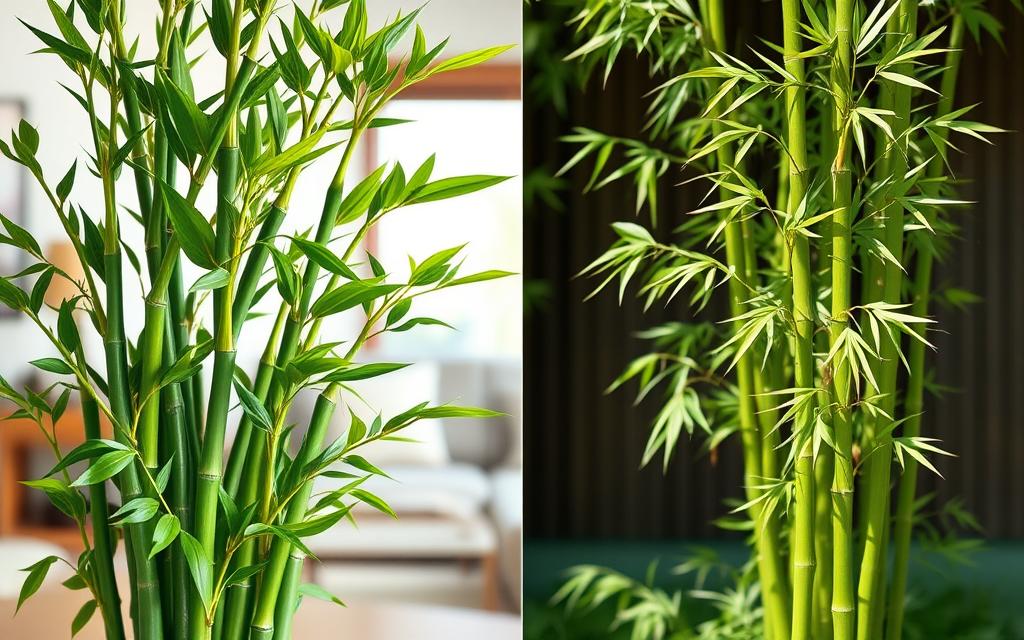
Dracaena sanderiana is the common gift plant
The popular indoor stalk sold in vases is actually a dracaena, not true bamboo. Look for smooth green canes often in water and sometimes trained into a spiral. These are the ones that can upset a cat’s tummy.
True bamboo looks different
True bamboo (Bambusoideae) has woody, segmented culms and a leaf structure you won’t see in water‑vase gifts. It’s generally less toxic, though fibrous chewing can still cause vomiting or diarrhoea.
Quick ID checklist — handy at nurseries or office desks
- Label name: check for Dracaena sanderiana vs Bambusoideae.
- Growth form: smooth water canes vs woody segmented stems.
- Presentation: vase-in-water and spiral training = dracaena.
If unsure: treat the plant as the dracaena type and move it out of reach of pets until confirmed.
What makes lucky bamboo toxic to cats and dogs
Saponins in dracaena are the main reason pets feel sick after chewing stems or leaves. These natural compounds irritate the gastrointestinal tract and trigger nausea signs.
Saponins and stomach irritation
Why it matters: when your cat or dog chews a dracaena stem, saponins contact the mouth and gut lining.
This often leads to drooling, vomiting or diarrhoea as the body tries to expel the irritant.
How amount eaten changes the risk
A tiny taste may cause no lasting harm. Repeated chewing or swallowing whole pieces raises the chance of stronger symptoms.
Severity depends on animal size and how much plant material they ate.
Physical hazards beyond toxicity
Fibrous leaves and long strips can catch in a throat. That creates gagging or a choking risk, especially if bitten off in chunks.
Also note the common vase setup: plants kept in water can spill. Broken glass or wet floors add another danger at home.
- Quick tip: knowing the chemical and physical risks helps you prevent incidents and act quickly if a pet chews a stem.
- Household note: the issue touches both cats dogs, so shared spaces should be pet-proofed.
Signs your cat may be reacting to lucky bamboo
Quick clues often show up within hours after a cat chews a plant stem. Watch closely during the same day after any nibble.
Vomiting and diarrhoea after chewing leaves or stalks
What to expect: repeated vomiting or loose stools are common when pieces were swallowed.
If your cat vomits more than once or has ongoing diarrhoea, contact your vet promptly.
Drooling or excessive salivation
Extra drool often appears even after a tiny chew. Salivation signals irritation in the mouth or gut.
Reduced appetite and tummy pain
A cat that refuses food, coughs when eating or tucks its belly may have abdominal pain. Small changes in eating are a clear sign.
Lethargy, weakness and incoordination
Wobbliness, stumbling or greater sleepiness than usual suggest a stronger reaction. These neuro‑style signs need faster veterinary advice.
Dilated pupils and “not quite themselves” behaviour
Hiding, not greeting you, or odd quietness counts. Trust your gut — if your pet seems off, seek guidance.
- Fast checklist: vomiting, diarrhoea, drooling, low appetite, lethargy, wobble, dilated pupils.
- Timing: most signs appear within hours; monitor closely the same day.
| Sign | How it looks | When it appears | Immediate action |
|---|---|---|---|
| Vomiting | Repeated retching or expelled food | Within hours | Remove plant access; call your vet if persistent |
| Drooling | Excess saliva, pawing at mouth | Soon after chewing | Wipe gently; monitor for other signs |
| Incoordination | Stumbling, wobbly gait | May follow GI signs | Seek urgent vet advice |
| Behavioural change | Hiding, lack of interest, dilated pupils | Same day | Trust your instincts; consult a vet |
What to do if your cat eats lucky bamboo
Start by keeping your cat away from the plant and taking a quick look at any damage. This gives you a fact base to report if you call the vet.
Remove access and check what was eaten
Step 1: move the plant to a closed room or cupboard — higher shelves alone often fail.
Step 2: inspect stalks and leaves for bite marks and missing pieces. Note whether bits may have been swallowed.
Monitor symptoms over the next several hours
Watch for vomiting, diarrhoea, drooling, appetite change or unusual tiredness. Most signs start within hours.
Offer fresh water and keep things calm at home
Hydration helps. Refill water often and keep the environment quiet. Rest reduces stress and helps you notice changes.
If vomiting or diarrhoea starts: brief pause, then bland food
Common guidance: a short fast of about 4–6 hours, then tiny portions of plain boiled chicken with a little rice. Stop feeding and call your vet if vomiting continues.
What to take to the vet
Bring any chewed plant pieces, clear photos of the plant and a note of when symptoms began and how many vomiting episodes occurred.
When to seek urgent help straight away
Get urgent care if you see: repeated vomiting, severe diarrhoea, weakness or wobbliness, collapse or rapidly worsening signs.
- Helpful resource on plant incidents: owner report and outcomes
- For low-maintenance plant choices that reduce risk, see safer indoor plant ideas
| Action | Why it helps | When to call vet |
|---|---|---|
| Remove plant access | Stops further chewing and ingestion | Immediately if multiple pieces missing |
| Monitor for symptoms | Early signs guide next steps | If vomiting or drooling appears |
| Offer water | Prevents dehydration after vomiting | Call if unable to keep water down |
| Collect evidence | Helps vet identify plant and exposure | Bring to clinic if you attend |
When to call a vet in Australia and what they may advise
When signs like vomiting or drooling appear after a plant bite, prompt veterinary advice helps avoid escalation. Keep calm and act quickly — early guidance often prevents a bad night.
Call threshold: contact your local vet if vomiting, diarrhoea, ongoing drooling or reduced appetite occurs, if symptoms worsen, or if you don’t know how much was eaten. Remember that lucky bamboo can affect both cats and dogs.
- What a vet may ask: your cat’s weight, time of exposure, which part was chewed, and current signs (vomit frequency, stool changes, drooling).
- Advice varies: home monitoring, anti‑nausea medication, fluids, or an in‑clinic exam may be recommended.
- Multi‑pet homes: vets often suggest removing the plant if any pet has access.
In Australia you can use Dial A Vet telehealth from $49 AUD for quick reassurance and a clear action plan. 📞
Prepare before you call: have photos of the plant, a short timeline and notes on episodes. Early contact saves stress and helps your pet recover faster.
For more on risky houseplants, see our toxic plant list.
How to prevent plant nibbling in a cat-friendly home
A few simple changes to your rooms can stop most plant chewing before it starts. Make access harder and offer better chewing choices so your pet learns what’s okay.
Place plants out of reach
Think vertical and closed: use hanging planters, tall shelving or a room with a closed door. In a cat-smart home, “out of reach” often means behind a barrier rather than just high up.
Offer safer chewing options
Provide cat grass like wheat or oat grass as a tempting, harmless substitute. A small pot of grass placed where your cat likes to nibble often stops interest in other leaves.
Use deterrents and redirect boredom
Bitter spray can help, but pair it with play, puzzle feeders and short training sessions. Saying “no” is less effective than giving a better “yes.”
Do a household plant audit
Remove or block access to high‑risk houseplants (lilies top the list). Label remaining plants so everyone in your household follows the same plan.
- Stabilise water setups: heavy pots or sealed vases reduce spills and breakage.
- Dedicated plant zone: create an area that your cat cannot enter, especially for bamboo‑style arrangements.
“With a smarter layout and a shortlist of pet‑friendly choices, you don’t need a plant‑free house — just better plant care and supervision.”
For ideas on safer indoor greenery, see our guide to pet-safe houseplants. Small changes give big peace of mind. 🌿
Conclusion
Wrap up: this common gift plant can upset a pet’s stomach and calls for simple caution.
Quick recap: Dracaena sanderiana may cause vomiting, drooling and lethargy after chewing, while true bamboo usually causes fibre-related tummy upset rather than chemical poisoning.
Key signs to watch: repeated vomiting, loose stools, excess salivation, low energy or odd behaviour soon after a nibble. Act fast when signs worsen.
Action plan: remove access, offer fresh water, monitor closely and contact your vet or telehealth if unsure. Bring photos or a sample if you visit a clinic.
Prevent repeat incidents with a plant audit, higher placement or sealed displays. If you want more detail on bamboo and cats toxicity concerns, that guide helps. For households with multiple pets, remember dogs and cats share the same risks — choose pet‑friendly plants and set up rooms to reduce curiosity turning into an emergency.