
Quick calm note: this guide isn’t here to scare you. It points out a few watch‑outs before you bring a glossy, low‑fuss plant into your home. 😊
Short summary: the main concerns are mild toxicity from calcium oxalate crystals, sap irritation during trimming or repotting, and common care issues like overwatering, leggy growth and occasional pests.
You’ll find a list of practical drawbacks next: toxicity, sap irritation, slow growth, rot risk, leggy stems and pests. If you have curious pets, toddlers, or you tend to overwater houseplants, this is especially for you.
Article flow is mobile‑friendly. We start with safety, then light and watering, then growth and potting, then simple troubleshooting tips. Each bit is short and skimmable.
Read this first: keep it out of reach, avoid overwatering and aim for bright indirect light. With a few small habits, you can enjoy this hardy little green companion safely.
Table of Contents
Key Takeaways
- Contains calcium oxalate — mild irritation is the main risk.
- Wear gloves when trimming and wash hands after handling.
- Avoid overwatering to reduce rot and pest issues.
- Keep away from curious pets and small children.
- Bright, indirect light helps prevent leggy growth.
Why ZZ plants are popular in Australian homes
Many Australians choose zamioculcas zamiifolia for its sleek, architectural look and fuss‑free care. It wears deep, waxy foliage and thick stems that suit modern interiors and compact rentals.
Zamioculcas zamiifolia basics and what it looks like
The stems hold glossy, oval green leaves arranged neatly along each stalk. Under the soil are starchy rhizomes — think potato‑like energy stores — that help the plant survive dry spells.
Why it suits low light and busy households
This resilient indoor plant tolerates a range of light conditions, including low light and fluorescent office lighting. It copes when you travel or forget a watering session.
- Where it works: apartments, offices and shaded rooms.
- Quick tip: bright indirect light is the sweet spot for steady growth.
disadvantages of zz plant: the main drawbacks to consider
Let’s run through the practical issues that can catch new owners off guard. These are small hassles, but good to know before you bring one home.
Mild toxicity from calcium oxalate crystals
Leaves and stems contain tiny crystals that may irritate mouths and throats if chewed. Symptoms are usually mild, but they’re important if you have curious pets or kids.
Skin irritation risk when pruning or repotting
Broken stems can release sap that causes skin irritation for some people. Wear gloves when you trim, and wash hands after handling soil or parts.
Unpredictably slow growth
This species stores energy in rhizomes, so it can sit still for months. That slow pace can frustrate owners who expect visible progress after every care session.
Overwatering sensitivity and rot risk
Too much water makes stems mushy and leaves yellow. Poor drainage invites root and rhizome rot, so let the soil dry between waterings and use a free‑draining mix.
Leggy or leaning stems in poor light
In low light the stems will stretch and lean toward brighter spots. Too much direct sunlight can scorch leaves, so aim for bright, indirect light.
Potential pest issues like aphids
Pests aren’t constant, but aphids and scale can appear—especially if you move the pot outdoors during warm months. Regular checks help catch problems early.
For more on real‑world care and placement tips, see our full guide to care indoors.
Toxicity concerns for pets and kids
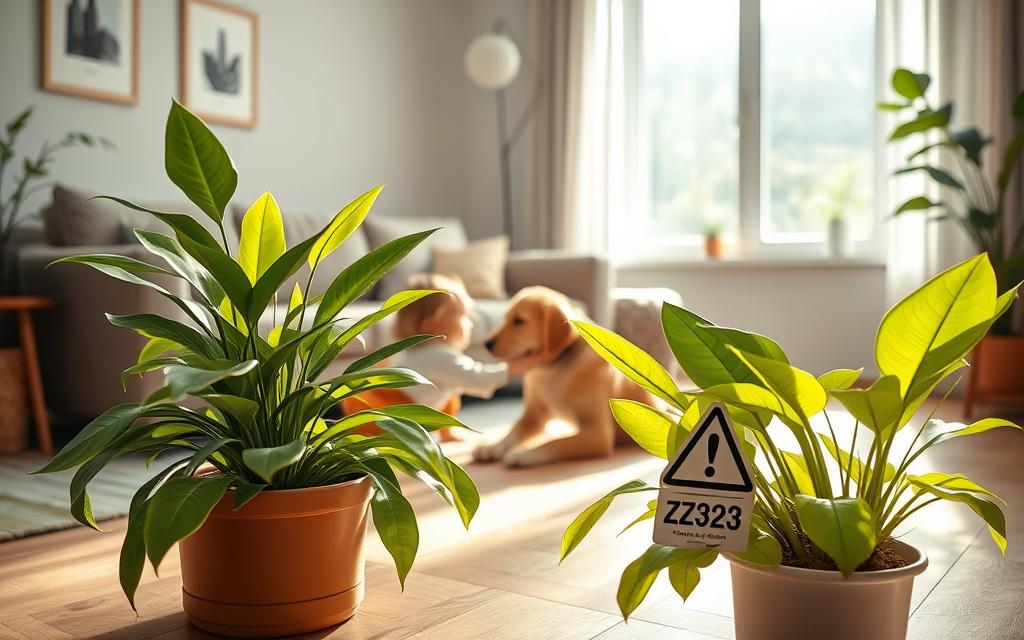
If you share your home with pets or young children, location matters more than you might think. Place this species where curious mouths and paws can’t reach.
Why cats and dogs may nibble or scratch stems
Cats often nibble leaves or use stems to test texture or sharpen claws. Dogs chew out of boredom or curiosity. This behaviour makes safe placement essential for pet owners. 🐾
Likely symptoms after eating a leaf, stem or root
If a pet eats any part, expect mouth burning, drooling, vomiting or diarrhoea. Some animals may paw at their mouth or whimper from irritation.
- Quick actions: remove plant pieces, wipe the mouth with a damp cloth and offer water.
- If symptoms are strong, call your vet for advice right away.
Keeping children safe at home
Shiny leaves attract toddlers. Keep the pot out of reach and use high shelves or hanging spots. If a child puts a piece in their mouth, remove it, wipe the mouth and give water.
When in doubt: contact your local poison helpline for guidance. For general care tips that reduce risk and fuss, see our low-maintenance care guide.
Handling and placement downsides in everyday plant care
Small routines keep you safe. When you trim or move a pot, a quick habit shift prevents most problems. These tips help you enjoy the greenery without fuss.
When you’re most likely to contact sap
Sap usually appears when a stem snaps, during pruning, dividing or potting. Vigorous cleaning can do it too. Intact leaves rarely cause issues; broken tissue exposes the sap and that is why irritation feels random.
Simple handling habits that reduce irritation risk
Wear gloves for pruning, potting and cleaning. Wash hands with soap straight after and don’t touch your face mid-task. These small steps stop skin irritation and keep chores quick.
- Placement tips: make sure the pot isn’t in tight hallways or at kid height.
- Busy household checklist: stable pot, out of reach of pets and children, space around stems to avoid bumping.
| Moment | Risk | Quick action |
|---|---|---|
| Pruning | Sap contact | Wear gloves; wash hands |
| Repotting | Broken roots/stems | Use gloves; keep area clear |
| Brushing past | Accidental rubbing | Move pot to low-traffic spot |
You don’t need to fear this green companion—a few habits are the easiest way to care for it. Once handling is sorted, light and watering choices decide whether this indoor plant looks happy or slowly declines.
Light-related issues that affect leaves and growth
Where you sit the pot has a big say in how the foliage looks. Good light makes stems compact and leaves glossy. Poor choices lead to slow growth or scorched foliage.
Low tolerance ≠ deep shade growth
This species tolerates low light but deep shade causes stagnation. Expect no new stems for months, leaning towards windows, and slow leaf development when light is too weak.
Too much sun: scorch and washed-out leaves
Harsh direct sunlight can bleach or scorch leaves. Early morning or late afternoon sun is usually OK, but midday beams may leave foliage looking faded or brown. ☀️
Best bright indirect light spots in Australian homes
Place it near a north or east-facing window where it gets bright indirect light. Filtered light through a sheer curtain works well. A spot that suits in winter can be too strong in summer, so watch seasonal shifts.
Micro-prompt: if your pot leans, rotate it occasionally for even growth. Light levels also change how quickly soil dries, so match your watering routine to the chosen spot.
| Condition | Signs | Quick fix |
|---|---|---|
| Low light / deep shade | No new stems; leaning | Move near bright window; rotate pot |
| Bright indirect light | Compact stems; glossy leaves | Keep as primary spot; monitor seasonally |
| Direct sunlight | Washed-out, scorched leaves | Filter light; use sheer curtain or move back |
Watering problems that cause yellow, brown, or droopy leaves
Water habits matter. Less is usually better for this indoor companion. 💧 Follow a simple check before each watering: stick your finger into the top few centimetres of soil. If it’s still damp, wait.
Why “less is more” with watering
The rhizomes store water, so frequent water keeps soil wet for too long. That creates stress rather than benefit. Let the soil dry a little between water sessions to keep roots healthy.
How overwatering leads to mushy stems and root rot
Classic signs include yellowing leaves, drooping stems and soft, mushy bases. Soggy soil reduces oxygen and the roots weaken. Left unchecked, root rot takes hold and the whole pot can suffer.
Underwatering signs like dry, crispy brown leaves
Contrast that with thirst: lower leaves turn brown, crisp and dry. The leaf texture feels papery rather than soft. These signs usually start on older foliage first.
Drainage holes and well-draining soil are non-negotiables
Always use a pot with drainage and a well-draining soil mix. Decorative covers are fine, but ensure the inner pot drains. If you suspect rot, stop watering and repot into fresh, airy mix with drainage holes.
For step-by-step care tips and troubleshooting, see our ZZ care guide.
Slow growth and the frustration factor for plant owners
It can feel like nothing’s happening for months, and that stillness is the main source of frustration for many owners. Don’t worry — this is often normal.
Why energy sits in rhizomes before new stems appear
The roots store food in thick rhizomes. They hold water and reserves so the plant waits until conditions suit new growth.
Think of it as a slow-burn strategy: quiet below ground, then sudden shoots above it.
When lack of new leaves flags light or being rootbound
No new leaves for ages can mean two common issues: insufficient light or a cramped pot with crowded roots.
Try brighter indirect light first before big changes. If roots poke from drainage holes, a slightly larger pot helps.
What reasonable growth looks like across seasons
Expect long quiet stretches in cooler months and more activity in warmer weather. New stems can unfurl quickly after a quiet spell.
Flowers are possible but rare — they’re a bonus, not the main show.
“Long pauses then sudden shoots are the norm — patience usually wins.”
| Situation | Signs | Quick fix |
|---|---|---|
| Normal slow growth | No new stems for months; glossy old leaves | Keep steady light and water routine; wait |
| Insufficient light | Leggy stems; few new leaves | Move to bright indirect light; rotate pot |
| Rootbound | Roots at drainage holes; slow top growth | Repot into slightly larger pot with fresh soil |
Quick diagnostic: if nothing changes, give it brighter indirect light for a few weeks before repotting. For more placement ideas, check our guide to indoor greenery.
Space, potting, and repotting drawbacks
Give your pot more space — the swollen underground parts can push, warp or crowd a container over time. Thick rhizomes store water and can slowly outgrow a snug pot. That pressure shows up long before roots escape the drainage hole.
How bulging looks and when to act
Look for warped plastic, a raised soil surface or a pot that starts to bow. These signs mean the rhizomes are crowded, not that the specimen will fail immediately.
When repotting is needed
Repot only when necessary: roots poking from holes, a cracked container, or severe distortion. Aim for spring or summer if you must move it.
Choosing pots and mixes to avoid waterlogging
Use a sturdy ceramic pot with drainage. A general potting mix or succulent-style mix works well. Keep well-draining soil in the top layer to cut rot risk.
- Tip: larger pots hold more soil and stay wet longer — avoid upsizing too much.
- Space planning: give the greenery clearance so leaning stems aren’t bumped or bent.
“Small changes to pot and soil save big headaches later.”
For more on common issues and fixes check this guide: common problems.
Common ZZ plant problems you might mistake for “normal”
A little yellowing or a limp stem might be a helpful early warning, not a mystery. Notice small changes early and you can fix them fast with simple plant care moves.
Yellowing leaves: ageing stem versus too much water
Older leaves naturally yellow and drop as part of growth. That’s normal.
Rapid, widespread yellowing usually signals overwatering. When soil stays wet, roots struggle and leaves show it quickly.
Drooping stems and oxygen-starved roots
Droopy stems often mean roots can’t breathe. Saturated soil holds less oxygen and the stems lose support.
Make sure drainage is working and cut back watering until the top layer feels dry. This restores root function and firmness.
Dusty leaves and why leaf-shine products can backfire
Dust blocks light and slows photosynthesis. A gentle rinse in a tepid shower or a wipe with a damp cloth restores natural shine.
Avoid leaf-shine sprays. They can build up, stress tissue and reduce leaf function over time.
Clear pots: a simple pro hack to spot issues early
Clear containers let you see roots, spot rot and check for rootbound conditions without guessing. They also help you time watering more precisely.
“Small signs are clues — act early and the problem rarely gets worse.”
| Sign | Likely cause | What to check | Quick fix |
|---|---|---|---|
| Single yellow leaf | Natural ageing | Older stem; few leaves affected | Remove leaf; keep routine |
| Many yellow leaves | Overwatering | Soil damp; soft stems | Hold water; improve drainage |
| Drooping stems | Oxygen-starved roots | Soggy soil; poor airflow | Repot if needed; let dry |
| Dull, dusty leaves | Surface grime | Leaf surface matte | Rinse or wipe gently |
Quick action list: adjust watering, check drainage, inspect roots in a clear pot, and remove rotten parts if needed. For step-by-step care and propagation tips, see our care and propagation guide.
Conclusion
Quick wrap: a few simple habits make this glossy companion easy to own in most homes.
Key recap: mild toxicity, sap irritation, slow growth, overwatering risk, light extremes and occasional pests are the main drawbacks to note.
Safe ownership formula: keep plant out of reach of pets and children, choose bright indirect light, and water sparingly once the topsoil is dry. For extra reading on sap and pet safety, see our toxicity guide.
Quick checklist to screenshot: drainage holes, well‑draining soil, rotate for even growth, and wear gloves for pruning/repotting.
With small tweaks to light, soil and watering, these resilient plants remain among the easiest indoor plants to enjoy. Use this guide whenever leaves yellow, stems droop or growth stalls — you’ve got this. 😊