
Quick answer: In Australia that familiar holiday plant is commonly called Zygo (short for Zygocactus). You will also see it sold as Schlumbergera or labelled “Crab Cactus” in garden centres.
Plant names shift by country, season and what shops print on labels. That means one species can wear a few labels where you live. This guide will show you the most common Australian name and why labels differ.
Why the difference? Flower timing flips between hemispheres, so people abroad and local growers often use different terms. Regardless of the tag, the care basics stay simple.
What to expect here: You’ll learn quick ID tips, flowering periods, light and potting needs, watering and feeding, plus common problems. By the end you’ll feel confident keeping this easy-grow favourite thriving all year.
Table of Contents
Key Takeaways
- Commonly called Zygo in Australia, but also sold as Schlumbergera or Crab Cactus.
- Labels vary by shop, season and regional timing of blooms.
- Care is straightforward: right light, potting mix and regular feeding keep it happy.
- Quick ID tips and seasonal cues help you spot blooms.
- Suitable as a house or garden favourite when matched to the right conditions.
- We cover watering, potting, light and problem solving to keep it healthy year-round.
Christmas cactus australia name in Australia: Zygo, Zygocactus and Crab Cactus
Across garden centres and living rooms, a short, easy nickname has stuck: Zygo. Australians often say this more than the formal term, and it feels friendly and familiar. Zygocactus appears on many labels, while botanical tags may show Schlumbergera.
Why Australians commonly say “Zygo” instead of “Christmas Cactus”
You’ll hear “Zygo” in conversation because it’s quick and local growers use it. The word links people to the plant without the seasonal baggage of the northern hemisphere months.
Other names you’ll see: Schlumbergera, holiday cactus and “Crab Cactus”
Retail tags often list several options: Zygocactus, Schlumbergera, holiday cactus and Crab Cactus. Knowing these helps you shop with confidence and spot the right variety.
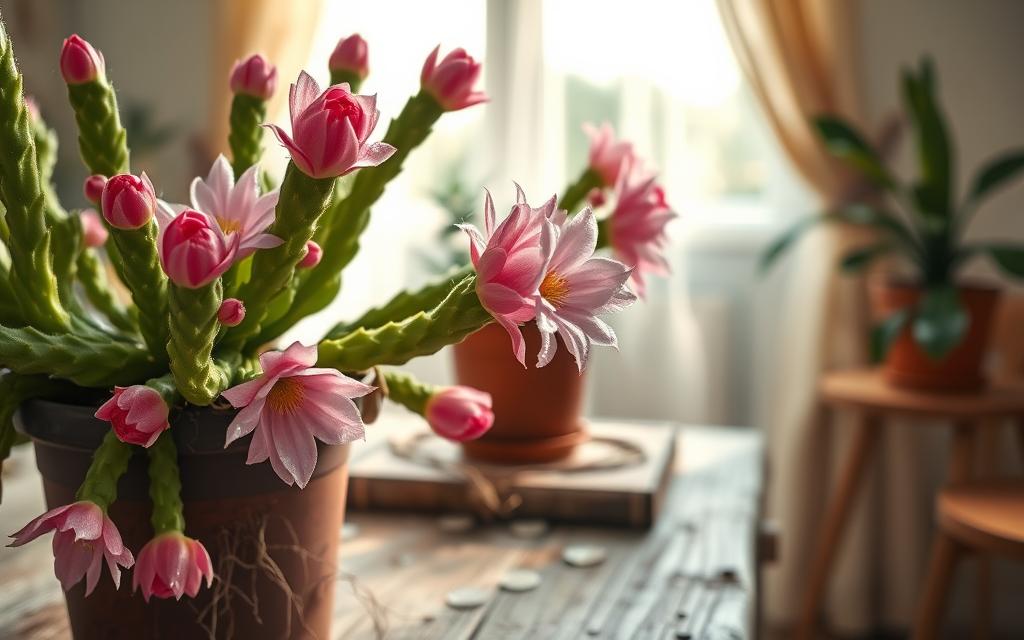
Quick ID tips: crab-like segmented stems and flattened, bell-shaped flowers
- Scan the stems for crab-like, flattened segments — that’s a classic sign.
- Look for bell-shaped flowers at stem tips when it blooms.
- Spot check: check segment shape, feel for thin leaves, and note the flower form.
Even with different tags, you care for the same easy grow plant. A quick sweep of stems and blooms at the shop is all it takes to recognise your next Zygo. 😊
Understanding your Zygo’s natural habitat and flowering timing in Australia
This plant is not a desert dweller. Zygocactus are true forest specialists. In the wild they grow as epiphytes or lithophytes, using thin roots to cling to trees and rock faces in humid South American forests.
That habitat means water drains fast and air stays moist. Treating your Zygo like a dry, sandy succulent can cause problems. Instead, aim for steady moisture cycles — water when the potting mix is almost dry, not bone-dry for weeks.
How the wild habit links to care
- Not desert tough: it needs humidity and airflow, not constant dry soil.
- Roots cling to trees: imagine thin soil pockets on a tree or rock, so use a free-draining mix.
- Water routine: soak, then let the mix approach dry — avoid sitting water.
Flowering seasons and what to expect
Flowering begins when nights lengthen and temperatures cool. In the northern hemisphere many plants bloom around holiday periods. In Australia, flowering commonly lines up with autumn to winter — often April, May and June.
Cooler nights and shorter days are your cues that buds are forming. If you want more blooms, minimise night-time light and keep conditions stable as buds develop.
Colours and varieties available locally
Australian growers offer a wide palette: pink, red, purple and orange shades, with some yellow tones too. Different varieties show variation in bloom shape and intensity, so shop during key months for the best selection.
Quick tips:
- Look for varied colours during peak flowering months.
- Match care to its forest origin: good airflow, moist-but-draining soil, and regular water cycles.
Where to place it: light, temperature and climate conditions
Think like a forest plant: sheltered light, steady temperatures and no sudden moves. Outdoors, choose dappled sun or filtered shade under trees or a covered spot in the garden. Avoid harsh afternoon sun — it causes scorched segments and stress.
Best outdoor and indoor light
Outdoors, place in filtered light or dappled shade. Indoors, put the plant in bright-to-medium, indirect light. Direct afternoon sun will bleach leaves and dry the mix too fast.
Temperature, frost protection and climate tips
Keep an eye on temperature swings. In cool climate zones, move pots to a sheltered deck, shade house or inside for winter to protect from frost. Aim for steady, mild conditions rather than sharp cold snaps.
Encouraging buds and avoiding surprises
Flowering needs long, dark nights. Give roughly 15 hours of uninterrupted darkness for several nights to trigger bud set. Even streetlights or kitchen lamps can ruin that cycle — cover the plant at night with an upturned box if needed.
“Keep things calm: once buds form, don’t move the plant — sudden changes can cause bud drop.”
- Do: Outdoors in dappled shade or indoors in bright, indirect light.
- Don’t: Expose to harsh afternoon sun or frequent relocations after buds appear.
- Protect: Move pots for frost, keep nights dark for budding, and avoid sudden changes.
How to pot and water a Christmas cactus in Australia
A proper container and free-draining mix recreate the tree-root pockets this species prefers. Use pots or hanging baskets to mimic that fast-draining habitat and cut the risk of waterlogged soil.
Why pots and hanging baskets work best
Pots and baskets let excess water escape quickly. That matches the epiphytic roots and lowers rot risk. Hanging baskets also improve airflow around stems.
Choosing the right container
Pick a pot at least twice the width and depth of the root ball. Drainage holes are non-negotiable. If you use a basket, ensure it has good gaps for water to run out.
Best potting mix and planting method
Use a coarse, free-draining potting mix such as orchid mix or cactus & succulent mixes rather than regular garden soil.
- Part-fill the pot with mix, place the root ball at the original level, backfill and gently firm.
- Water in well to settle the mix so there are no air pockets.
Watering routine and checks
Water deeply, then let the mix almost dry out before the next soak. Frequency varies with weather, pot size and whether it’s hanging or on a bench.
Use the finger test: push a finger 2.5–5 cm into the mix. If it feels moist, wait; if dry, water.
“Never leave water sitting in saucers — that’s the quickest route to root rot.”
Troubleshooting prompts: if stems droop, check moisture before you add more water. If the mix is soggy, pause watering and improve drainage. For more detailed potting tips see our potting and propagation guide.
Feeding, flowering, pruning and troubleshooting common problems
Small, steady habits—feeding, darkness and gentle pruning—make the biggest difference. These steps keep your zygocactus healthy and encourage regular flowering without fuss. 🙂
Fertiliser basics
Feed lightly during active growth and while the plant is setting buds. Use a balanced, diluted feed every 4–6 weeks rather than heavy doses.
Try: Yates Dynamic Lifter Liquid Concentrate at a low strength to avoid salt build-up. This supports stems and leaves without overwhelming the roots.
How to boost flowering
Flowering needs long, dark nights. Give about 14–16 hours of uninterrupted darkness for several weeks to set buds.
Check for stray light from windows or streetlamps. If indoor lighting is a problem, move the plant or cover it at night to keep the cycle consistent.
Quick checklist: no flowers?
- Too much night light or inconsistent dark periods.
- Moving the plant after buds form.
- Irregular feeding or sudden care changes during bud set.
Mealy bugs and pests
Look for the classic “white fluffy stuff” on stems and leaves. That’s mealy bug. Treat early with Yates Nature’s Way Vegie & Herb Spray or a similar insecticidal wash.
Wipe affected spots with alcohol-soaked cotton for small outbreaks, then repeat sprays as directed until pests clear.
Woody stems and pruning
As your zygocactus ages over years, the base may harden—this is normal and not always a sign of poor care. Keep watering and feeding steady.
After blooming, prune to shape arching stems and encourage bushier growth. Trim back leggy segments and pinch tips to promote new branches.
“Most issues are fixable with small routine tweaks — stay patient and steady with care.”
For timing on when to prune, see our short guide on best pruning periods.
Conclusion
In plain terms: the plant you love is called Zygo by many Australians, and it rewards simple, steady care.
Core takeaway: copy its forest-style growing habits — bright, gentle light, protected temperatures and a free-draining potting routine — and it will thrive.
Flowering in your part of the world follows cooler, longer nights, so plan for an autumn–winter bloom window rather than December. For notes on its epiphytic habits and care, see this forest-like conditions guide.
You’ve now got the essentials: light, drainage and a consistent watering and feeding routine. Check your plant’s label for variety and share what colour range you hope to grow next — we’d love to hear what you pick! For extra blooming tips, try this short blooming advice. 😊
FAQ
What is a Christmas cactus called in Australia?
Many Australians call it a “Zygo” or zygocactus. You’ll also see Schlumbergera, holiday cactus and crab cactus used. These names all point to the same epiphytic plant with flattened, segmented stems and bell-shaped blooms.
Why do people say “Zygo” instead of the full botanical name?
“Zygo” is a friendly shorthand that’s quicker to say than Schlumbergera or zygocactus. It’s common in gardening circles and nurseries, especially when talking about care, potting and flowering timing.
How can I quickly identify a zygocactus?
Look for crab-like, flattened stem segments that join end-to-end and distinctive bell-shaped flowers that appear from the stem tips. Leaves are actually these stem segments, not true leaves.
Is this plant a true desert cactus?
No. It’s epiphytic or lithophytic — native to humid South American forests where it grows on trees or rocks, not in dry deserts. That’s why it prefers filtered light and higher humidity.
When does it flower in Australia compared to the Northern Hemisphere?
In the Northern Hemisphere it often blooms around December. In Australia, flowering typically falls into autumn and winter months. Timing depends on light, temperature and care.
What colours and varieties can I find locally?
You’ll find pinks, reds, purples, oranges and some yellow tones. Nurseries sell hybrids and varieties with single or double blooms and different growth habits suitable for pots or hanging baskets.
Where should I place my Zygo outdoors?
Outdoors, give it dappled sun or filtered shade. Avoid harsh afternoon sun that can burn the stems. A sheltered patio or under light canopy is ideal.
Where should I place it indoors?
Indoors, choose bright to medium indirect light. Near an east-facing window or a few metres from a west window usually works. Avoid direct midday sun through glass.
What temperature range is best and how do I protect it from frost?
Keep temperatures between about 10–24°C for comfort. In cooler regions, bring plants inside or provide frost protection — they don’t tolerate hard freezes.
How do I encourage bud set and avoid bud drop?
Encourage buds by giving the plant cooler nights (around 12–15°C) and longer uninterrupted dark periods in the lead-up to flowering. Don’t move the plant once buds form — sudden shifts in light or temperature cause bud drop.
Why are hanging baskets recommended?
Hanging baskets mimic the plant’s natural habit, give good air circulation and drainage, and let arching stems display their flowers. They also keep soil from staying too wet.
What pot or basket size and drainage should I choose?
Use a pot or basket slightly larger than the root ball with excellent drainage holes. Shallow to medium-depth containers work well; avoid oversized pots that hold excess moisture.
What potting mix is best?
Choose a coarse, free-draining mix — an orchid mix or a cactus & succulent mix amended with perlite or bark works well. The aim is airy roots that don’t sit in water.
How should I plant or repot my zygocactus?
Settle the mix gently around the roots so the root crown sits level with the pot rim. Don’t bury stems too deep. Repot every 2–3 years or when root-bound, using fresh free-draining mix.
What’s the right watering routine?
Water deeply, then allow the mix to almost dry out between waterings. Reduce water slightly in winter when growth slows, but don’t let the plant shrivel.
How can I check moisture correctly?
Use the finger test — poke 2.5–5 cm into the mix. If it feels dry at that depth, it’s time to water. You can also lift the pot to judge weight for frequent checks.
How do I avoid root rot?
Ensure good drainage, never let water sit in saucers, and avoid waterlogged potting mix. Choose a pot with holes and avoid overwatering after repotting.
When and how should I fertilise?
Feed with a balanced, diluted fertiliser during active growth and the flowering period — roughly spring through early autumn. Use a low-strength liquid feed every 4–6 weeks rather than heavy dressings.
How do I boost flowering indoors where lights are always on?
Reduce artificial night-time light and give the plant longer dark nights for at least six weeks before bloom time. Cooler night temperatures also encourage bud formation.
What are mealy bugs and how do I treat them?
Mealy bugs look like white fluffy patches on stems and joints. Remove them with a cotton bud dipped in isopropyl alcohol or treat with insecticidal soap or horticultural oils. Isolate affected plants.
Why do stems become woody and is that a problem?
Older stems can lignify naturally as the plant ages. It’s normal. If stems die back or become woody due to stress, review watering, light and root health. Prune out dead wood to encourage fresh growth.
How and when should I prune after blooming?
After flowering, prune to shape and promote bushier growth. Snip segments at joints to create a fuller plant and encourage new side shoots. Pruning also helps manage size for pots and baskets.