
Quick definition: when you ask what is lucky bamboo good for, you mean whether this easy-to-keep plant suits your space and goals.
This little house favourite—actually Dracaena sanderiana, not true bamboo—shows up in homes for its symbolism and low fuss care.
We’ll cover the meaning behind its ties to prosperity, luck, fortune and positive energy in Feng Shui, plus real-world benefits like decor impact, mood lift and simple productivity boosts.
Expect a clear, skimmable list of reasons to place one in your home, plus a short care checklist for water, light and quick troubleshooting.
There’s a myth-bust early: it’s called a bamboo but it isn’t. That matters for care and expectations.
If you’ve killed plants before, don’t worry — this particular plant tends to forgive beginner mistakes. 😊
Table of Contents
Key Takeaways
- Dracaena sanderiana is commonly linked with prosperity and positive energy via Feng Shui.
- The plant offers easy décor appeal and mood benefits with low maintenance.
- Placement and stalk numbers carry symbolic meaning; we’ll explain practical tips ahead.
- Care is simple: basic water, bright indirect light and routine checks prevent issues.
- See related ideas on plants that boost focus and productivity at plants that boost productivity.
Lucky bamboo meaning and what it actually is
Dracaena sanderiana is the botanical name behind the familiar stalks sold as a bamboo plant. Retailers call it a lucky bamboo because its upright stems and simple look echo true bamboo.
The real difference is visual and botanical. True bamboo is a grass with hollow, jointed canes. This plant has a fleshy stem and narrow leaves. You often see it in spirals, braids or neat bundles in shops and offices.
Native to Central Africa, the species later became popular across Asian cultures. In feng shui, people place it to invite growth, resilience and balanced energy into a room.
Those cultural beliefs about good fortune or good luck are traditional. Either way, the plant’s tidy look and low fuss care give practical perks for everyday life.
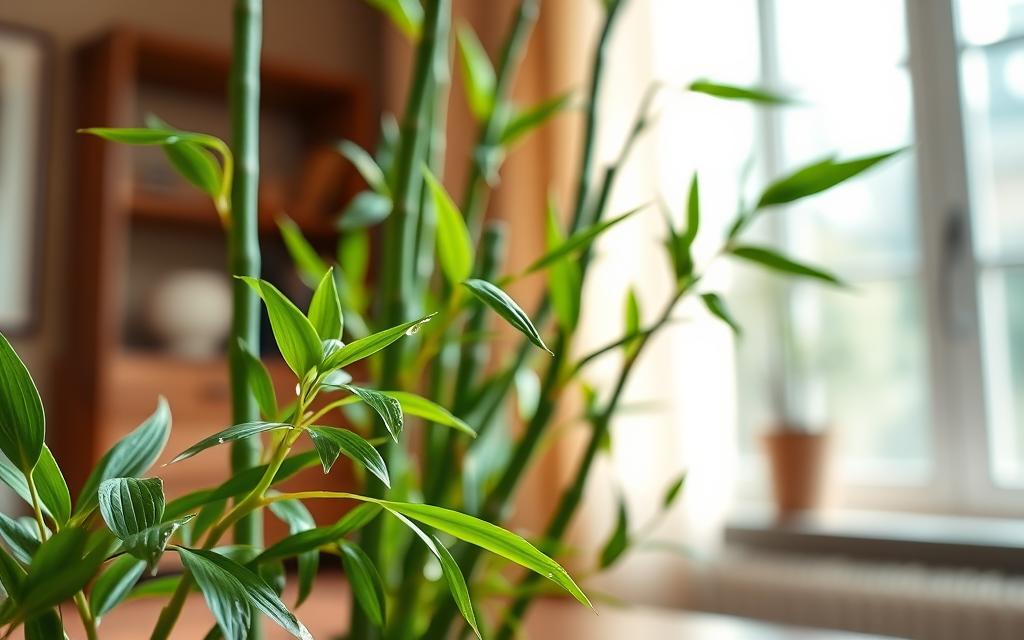
Curious fact: the name Sander honours German‑English gardener Henry Frederick Conrad Sander, who helped popularise exotic plants in Europe.
Why people value it
It’s both symbolic and useful. You get a stylish accent that’s easy to keep. And it carries cultural meaning if you like the tradition.
So, what does it actually do in everyday life at home—beyond symbolism? Next, we look at practical benefits and placement tips.
What is lucky bamboo good for in the home?
Placed well, a compact green stem can bring calm, style and a little ritual to daily routines.
Promoting prosperity and wealth through Feng Shui tradition
Symbolic placement supports intention. In feng shui, a small stalk set near a desk or entry can signal prosperity and positive energy. Use it where you take action—bills, plans or work—to reinforce focus on growth and wealth.
Creating a calmer space and supporting mental wellbeing
Greenery softens rooms. A tidy stem adds a restful touch that often lowers stress and lifts mood for you and your family.
Improving focus and productivity for study and work zones
University of Exeter research found plants in workspaces can lift productivity by about 15% and improve perceived air quality.
Place a stem on a study shelf or beside your laptop to reap the same small gains in attention and calm.
Supporting indoor air quality: claims and debate
Some sources credit house plants with filtering pollutants like formaldehyde and benzene. Other experts say measurable air changes in real rooms are limited. Keep expectations realistic: the plant adds perceived freshness, but it won’t replace ventilation.
Adding minimalist beauty to rooms, desks and small spaces
This slender plant fits tiny apartments, shelves and desks without clutter. Its clean lines suit minimalist decor while adding natural beauty.
A meaningful gift for housewarmings and new beginnings
Small, low‑care stems make thoughtful gifts. They carry symbolic intent, travel well and suit most homes — perfect for birthdays, housewarmings or a fresh start 🎁.
| Benefit | How to use | Practical tip | Notes |
|---|---|---|---|
| Prosperity | Desk or entry | Place near work area | Supports intention and routine |
| Calm | Living room or bedroom | Keep in soft light | Improves mood and ambience |
| Focus | Study nook | Small pot beside laptop | Research shows ~15% productivity boost |
| Air | Anywhere with light | Use alongside ventilation | Perceived freshness; real filtering debated |
Which benefit are you chasing right now—calm, focus, or a little extra prosperity?
Feng Shui placement and the number of stalks meaning
If you’ve wondered where to park a small stalk to invite positive energy, this short guide keeps things simple.
Best spots at home
Wealth corner and health area
Traditionally place a stem in the southeast corner of a room to support wealth and prosperity.
The east side links to health. Pop a plant there to symbolise renewal and balance.
Number of stalks and common meanings
Match stalk counts to your intent. A quick legend:
- Two stalks — love.
- Three — longevity, joy or a mix of health and wealth.
- Five — harmony and balance.
- Six — wealth and extra prosperity.
- Seven — health. Eight — growth and development.
- Nine — great good fortune. Ten — perfection. Twenty‑one — a powerful blessing.
How retailers count stalks and what to avoid
Retail bundles count each stem as a stalk. If a braid contains multiple stems, each stem still counts.
Avoid multiples of four. In many traditions the number links to death, so choose an adjacent count when gifting or styling.
Want a deeper look at number meanings? See this short guide on number stalks for more detail.
Lucky bamboo care tips for Australian homes
A short, practical routine will help this easy plant handle Aussie light and air‑con.
Growing in water vs soil: choosing the right setup
Water (hydro) setup: vase with pebbles suits minimalists. It looks neat and needs weekly attention.
Soil pot: moist, well‑drained soil suits a “set and forget” approach and helps steady growth.
Choose water if you like a clean display; choose soil if you want lower daily fuss.
How often to change water and why clean water matters
Change water weekly for hydro displays. Clean water prevents smells, algae and root stress.
Use filtered or tap water left to stand if your mains are very chlorinated. Fresh water keeps stalks lively.
Light and sunlight: bright, filtered light over direct sun
Place the pot or vase in bright, filtered light — think rainforest canopy rather than harsh window sun.
Avoid strong afternoon sunlight on west‑facing glass; it scorches leaves quickly in Australia.
Temperature comfort zone and where to position it indoors
Keep the plant between 18–34°C. Avoid heater blasts, cold drafts and direct hot glass.
Good spots are near north or east windows with sheer curtains, or a bright hallway away from vents.
Pruning leaves and shoots to prevent a top‑heavy plant
Trim new offshoots and cut yellowing leaves at the base. This keeps stems balanced and tidy.
Use clean scissors and make small cuts. Regular light pruning helps stable, attractive growth.
Common problems to spot early and quick fixes
- Yellow leaves: too much sun or old foliage — trim and move to filtered light.
- Poor growth: switch to soil or check water warmth and change frequency.
- Stagnant water: smells or algae — empty, scrub the vase and refill with fresh water that week.
Quick routine: weekly water change, filtered light, avoid drafts, prune monthly. Small actions yield steady results.
Need a step‑by‑step reference? See a short care guide on easy care tips or browse low‑maintenance options at low maintenance plant care.
Tip: even if you’re new to plants, this species is forgiving when you keep water clean and light gentle. 🌿
Conclusion
To wrap up, this small green stem offers both ritual and real, low‑fuss benefits. Not a true bamboo, it still brings neat styling, calm and a sense of intention to any room.
You can follow feng shui or simply enjoy the look — either way it adds gentle energy and extra happiness to daily life.
Quick checklist: clean water, bright filtered light, steady indoor temps and an occasional prune keeps it thriving. Place it in a wealth corner or near the east side for health, and pick a stalk count as a simple personal ritual.
Looking for a present? Try this plant as a meaningful gift that suits modern Australian living — minimal, symbolic and low‑maintenance. 😊