
Want to know how long a haworthia can live on your windowsill? This section sets clear expectations about haworthia plant lifespan at home and explains why indoor lives often differ from wild ones.
“Lifespan” here means staying healthy, producing new leaves and offsets, and showing steady growth over the years. In nature some species can reach decades, but indoors they rarely match wild longevity. You’ll learn the practical reasons why.
We preview the things you can control: light, watering, soil mix, pot choice, temperature and rot prevention. I’ll cover Australia-friendly tips for changing daylight across seasons and winter dips that affect long-term health.
Safety note: haworthia is generally non-toxic to people and pets, though chewing should be avoided. Expect clear, step-by-step guidance you can follow on a sunny sill—no jargon, just simple care tips and a decades strategy using offsets to keep a lineage going.
Table of Contents
Key Takeaways
- You’ll learn realistic indoor longevity and why it’s shorter than in the wild.
- Health means leaf production, offsets and steady growth over the years.
- Key controls: light, water, soil, pot size, temp and rot prevention.
- Seasonal Aussie light and winter dips matter for indoor success.
- They’re generally non-toxic — still discourage nibbling.
- Practical, windowsill steps will help you extend lifespan and keep offsets.
How long do haworthias live in Australia?
How long these small succulents live at home depends on simple daily choices. In Australian homes, realistic indoor ranges usually span about 5–25 years with care. In the wild, some survive close to 50 years thanks to stable habitats and natural cycles.
Average indoor versus ideal conditions
Excellent care means fast-draining soil, steady bright indirect light, gentle watering and stable temperature. That boosts healthy growth and offsets over many years.
Why wild specimens can reach decades
Wild sites offer consistent drying, airflow and native soils that shed water quickly. Those conditions limit rot and stress, so specimens can slowly age for decades.
Why indoor ones often don’t
Indoors you may see inconsistent watering, trapped moisture, low airflow and sudden seasonal swings. That makes survival possible but thriving harder.
“Small growth over months is normal — patience and routine add years.”
| Care level | Typical years | Key factors |
|---|---|---|
| Excellent | 15–25 | Drainage, light, airflow, steady temp |
| Average | 5–15 | Inconsistent watering, mixed soil, variable temps |
| Wild/Ideal | ~50 | Native soils, natural dry cycles, stable habitat |
haworthia plant lifespan explained: what most affects longevity
A few simple adjustments to light, water and warmth make the biggest difference to long-term health. Focus on balance rather than extremes. Small, steady habits protect leaves and roots over years.
Light balance for long-term growth
Bright, indirect light supports steady growth without stressing leaves. Aim for an east- or west-facing window in Australian homes.
Avoid harsh afternoon direct sunlight — it can scorch leaves and slow recovery.
Watering habits that shorten life
Overwatering is the biggest killer. Let compost dry between waterings and never let moisture sit in the rosette.
Standing water invites rot and root rot, even if you water infrequently. Water at the soil level to keep leaf crevices dry.
Temperature stability as a booster
Keep temperatures above 10°C to maintain steady growth. Cold dips stunt roots and raise rot risk after watering.
Pot, roots and staying slightly pot-bound
A slightly snug pot helps the root system stay tight and prevents soggy soil volume. That faster drying is protective.
Repot only when roots fully fill the pot. Too-large pots hold too much moisture and stress the system.
“Balance light, watering and warmth — that trio is the simplest way to add years.”
- Longevity checklist ✅: bright indirect light, dry-between-watering routine, temperatures above 10°C, slightly pot-bound roots.
- Next: set up soil and drainage before fine-tuning light and watering habits — here’s a quick guide to set up soil and drainage.
| Factor | What to do | Why it helps |
|---|---|---|
| Light | Bright, indirect; east/west window | Steady growth without leaf scorch |
| Watering | Water only when dry; avoid rosette moisture | Prevents rot and root rot |
| Temperature | Keep >10°C where possible | Supports root activity and recovery |
| Pot/root system | Slightly pot-bound; repot when crowded | Faster drying, stronger roots |
Set up the right pot, soil mix and drainage to prevent root rot
Start by giving roots a dry, airy home — that choice prevents most problems before they begin. A few simple swaps at potting time make a big difference to long-term health.
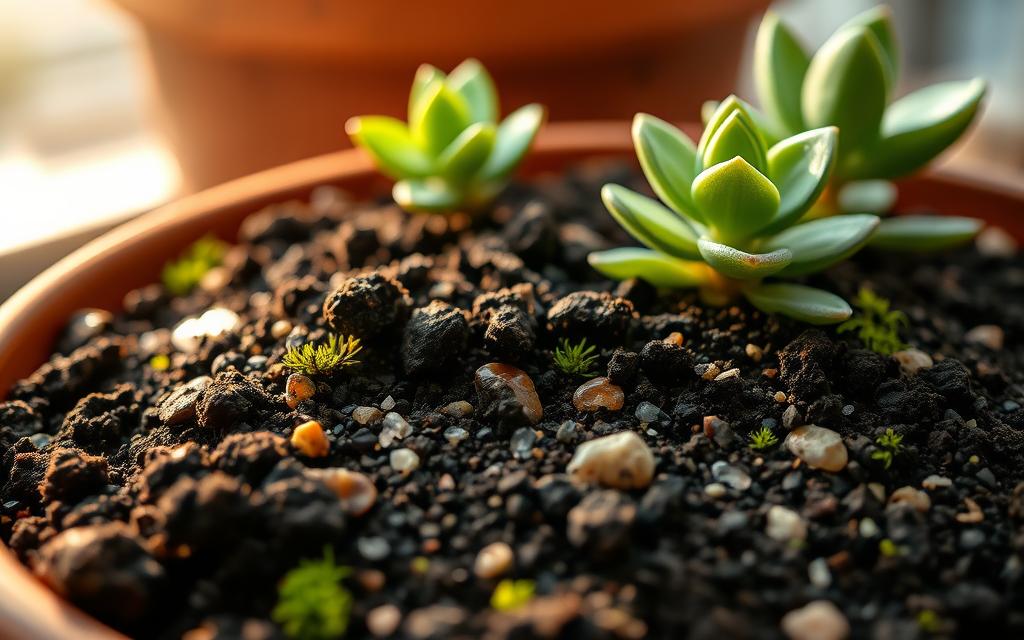
Choosing pots with drainage holes
Use pots with drainage holes. They stop water pooling around the root system and cut rot risk fast. If a pot lacks holes, drill or use it as a decorative outer cover only.
Pick a well-draining mix
Use a ready-made succulent/cactus mix or make your own. Well-draining means water passes through instead of sitting. Add gritty bits like perlite or coarse sand to help the soil dry between waterings.
Spot early root rot risk
Watch for soil that stays wet for days, a musty smell, soft base or leaves that lose firmness. Do a quick test: poke the compost or lift the pot — heavy and damp is a warning to change the setup.
- No-root-rot setup: pot with hole, gritty cactus mix, slightly snug pot size.
- Terracotta dries faster than plastic; choose based on how often you water.
- Preventing one rot episode can add years to your care — small steps matter. 😊
For watering timing and how dryness affects the setup, check a practical watering schedule to pair with these tips.
Get light and location right: indirect light, direct sunlight and window direction
A good spot balances plenty of light with gentle protection from harsh sun. Place your pot where it receives bright but filtered light for most of the day. Small changes to location reduce stress and improve long-term health.
Best indoor positions: east- or west-facing windows
East- or west-facing windows give bright light without constant harsh sun. Morning or late-afternoon sun is gentler and encourages steady growth.
Keep the pot a little back from the glass in summer so direct sun is softened.
Managing direct sunlight in summer
Too much direct sunlight can scorch the leaves. Look for reddening tips, pale bleached patches or dry brown spots.
- Use sheer curtains or a light screen to filter sun.
- Move the pot slightly away from the window during hot afternoons.
- Shift to gentler morning sun if afternoons are fierce in summer.
Air, temperature and quick checks
Good air movement helps, but avoid cold draughts that shock the root zone and raise rot risk.
Do a 30‑second light audit: note how many hours of direct sun hit the leaves and at what time. If direct sun exceeds one hour in peak heat, take action.
“Consistent placement beats frequent moves — stability reduces stress and supports steady growth.”
Watering schedule that supports steady growth across seasons
A reliable watering rhythm is the simplest way to keep growth steady across changing seasons. Start by letting the compost go fully dry, then water deeply and let excess drain away. That “dry-then-drench” routine mirrors natural cycles and limits root rot.
When to water: check soil dryness, then water well
Only water once the soil is dry. Use the finger test, a wooden skewer or lift the pot to feel its weight. If the top 2–3 cm of compost feels dry, it’s time to water deeply until it runs from the drainage hole.
Tip: Empty saucers after watering so roots don’t sit in moisture.
How frequency changes with season
In spring and summer, active growth needs more water. You may water every few days to weeks depending on light, air and pot size.
In winter, expect long dry spells. Many growers skip months between soaks — err on the side of dryness to avoid rot.
Watering technique and quick troubleshooting
- Technique: Direct water to the soil, not into the leaf crevices. Keeping water off leaves reduces rot risk.
- Check methods: Finger test, skewer probe or pot-weight give reliable answers.
- Drainage reminder: Water until it drains, then remove any standing moisture.
Soft leaves + wet soil = pause watering and inspect roots. Soft leaves + dry soil = give a proper soak.
For a practical watering guide and extra seasonal tips, see this concise resource. For soil and drainage ideas that help drying between waterings, check these drought-care tips.
Long-term care habits that add years: feeding, pruning and repotting timing
Tiny routines repeated in spring and summer compound into better growth year after year. These small acts keep the root system healthy and cut risk from pests or rot.
Feeding during active growth
Feed every three months with a light cactus fertiliser during active growth (spring and summer). A weak dose beats heavy feeding.
Repotting rules
Repot only when the specimen fills its pot, usually every 2–5 years. Look for roots circling, the soil breaking down, or the plant lifting from the mix.
Pruning and hygiene
Remove yellowing or dead leaves with clean tools. Let small cuts dry before watering to avoid infection.
- Keep the soil mix airy and slightly gritty to protect roots.
- Check crevices for mealybugs — early action stops major pest issues.
- Gentle, regular care adds quiet years to your plants. 🌱
“Slow and steady maintenance quietly extends healthy growth.”
Understand growth stages and maturity time so you can care for the plant for the long haul
A clear timeline for growth stops you from overwatering or overfeeding when progress feels slow. Think of growth as steps: seed, seedling, vegetative, mature and then flowering. Each step needs a slightly different routine.
Germination and early growth
What seeds need: warmth (~20–25°C), a well-draining mix and gentle, indirect light.
Expect germination in about 2–4 weeks if the soil stays slightly moist but not waterlogged. Keep temperatures steady and avoid direct sun.
Seedling care
Seedlings usually last ~4–8 weeks before sturdier growth begins.
Give bright indirect light and only water once the top soil is dry. Overwatering at this stage causes rot quickly, so err on the side of dryness.
Vegetative growth and maturity
Vegetative growth is slow. The rosette thickens, leaves develop and offsets may appear after months or years.
Many specimens reach full size in roughly 2–5 years depending on light and temperatures. Patience wins here—steady care beats rapid tricks.
Flowering
Small tubular flowers often appear on tall stalks in spring and summer under warm conditions and good light.
Flowers are a bonus, not a sign to change your routine—keep the same careful light, soil and watering approach.
“Think timeline, not speed: steady, consistent care protects roots and encourages long-term growth.”
| Stage | Typical time | Key care points |
|---|---|---|
| Germination | 2–4 days to weeks | 20–25°C, well-draining soil, indirect light, slightly moist |
| Seedling | 4–8 weeks | Bright indirect light, soil dry between watering, gentle airflow |
| Vegetative | Months to years | Steady light, sparse watering, slight pot-bound root space |
| Mature & flowering | 2–5 years to full size; flowers in summer | Good light, warm temperatures, light feeding in spring/summer |
Quick tip: Adopt a “timeline mindset” and follow this practical life stages guide for deeper reading: life stages guide. ⏳
Propagation by offsets to keep your haworthia going for decades
Offsets give you a practical way to carry a parent plant’s genetics forward for decades. These pups form natural clumps, so splitting them keeps the lineage alive even if the original rosette slows. 🌿
When pups are ready
Wait until an offset is about one‑third the size of the parent plant. At that stage it has enough reserves and often some fine roots.
Removing and healing offsets
- Gently tease or cut the offset away, keeping any attached roots. Avoid tearing the base.
- Leave the cut end to dry and callus for a day or overnight — this greatly reduces rot risk.
- If soil clings to the new root, leave it; don’t overwash or damage tiny roots.
Potting and aftercare
Use a small pot and a well‑draining soil mix. Plant the offset shallowly so roots meet the mix quickly.
Aftercare: Place in bright, indirect light and keep watering minimal. Only water when the mix is trending dry. Controlled moisture prevents rot while roots establish.
- Success signals: new central growth, firmer leaves, and gentle resistance when nudged after a couple of weeks.
- Take it slow — propagation is easy, but rushing watering is the fastest way to lose pups.
“Offsets are your decades plan: a simple, repeatable process that multiplies good stock and reduces risk over time.”
Conclusion
A tidy routine for light, watering and drainage beats one‑off fixes when it comes to lasting health.
Keep two habits every time: wait until the soil is dry, then water thoroughly and let the pot drain; and keep water off the leaves and out of the rosette to prevent rot.
Place your haworthia in bright, indirect light near an east or west window. Give good airflow, protection from harsh sun and a slightly snug pot with gritty soil for fast drainage. In winter, cut back watering, keep it warm and avoid cold, damp conditions that invite root rot.
Slow growth is normal. Small, steady improvements—better drainage, a new light spot or a smarter watering check—add years and can reward you with flowers and healthy offsets. Read a deep dive on succulent longevity here and practical low‑maintenance care here. 🌞