
Quick read: you’ll learn how to style a Dracaena sanderiana so it looks great and supports calm, uplifting energy in your home.
The plant is not true bamboo. It is Dracaena sanderiana, and that affects care. It likes bright, filtered light; harsh sun will scorch leaves. Keep this in mind if you have cats or dogs — it is toxic to pets.
Follow a simple system: pick an intention, find the best spot using basic Bagua ideas, match light and cleanliness, then choose stalks and a container that suits your style.
Note: water and container choices matter beyond looks. They affect health and the feel of the room. Small, intentional tweaks can shift the vibe noticeably — you don’t need perfect Feng Shui to see results.
We’ll offer room-by-room ideas for Aussie apartments and houses, plus the meaning of stalk numbers (and why four is often skipped). Ready for easy, practical tips that actually work?
Table of Contents
Key Takeaways
- Dracaena sanderiana prefers bright, indirect light and suits most Aussie homes.
- It is toxic for cats and dogs — keep it up high or out of reach.
- Use simple intent + location + light + container steps for best results.
- Water and container style influence both health and the room’s vibe.
- Small, intentional changes beat perfect rituals for real impact.
Lucky bamboo and Feng Shui basics for Australian homes
In Feng Shui, a simple plant can change how your house feels and works for you. Start with a clear aim and the rest becomes practical, not mystical.
What this plant represents
Resilience, steady growth and balance are the core symbols here. Think of an open heart and flexible strength — qualities that help you adapt to change.
Wood + water elements made plain
Wood brings upward growth and renewal. Water brings flow and opportunity. Together they soften tense rooms and revive flat-feeling spaces.
Why intentional placement matters
- You shape daily support: visible plants get cared for and boost positive energy.
- In Australia, strong sun, air conditioning and open-plan layouts change how a plant feels and thrives.
- Feng Shui and Vastu often point to southeast for wealth and north/east for support — think of this as guidance, not a strict rule.
Next step: decide what you want this plant to support in your life before you move anything.
Set your intention before placing lucky bamboo
Pick one clear goal first; the right aim helps the plant work as an everyday reminder. A quick intention check stops random decorating and turns this little green into a practical support for daily change.
Prosperity and abundance
Use this aim for money flow and wealth energy. Choose 6 or 8 stalks for growth and fortune. Put the plant where you’ll see it during bill time or budgeting sessions. That attention helps shift small habits—like tracking expenses—into steadier results.
Health and vitality
Pick 7 stalks or a balanced odd number. Keep the plant near meal prep or a sunny bench. Seeing it often nudges better routines: more water, clearer sleep habits, calmer mornings.
Love, relationships and harmony
Two stalks symbolise partnership. Place the plant where you share time—dining or living areas. A tiny ritual helps: tidy the surface, refresh the water, and name your intention aloud. Simple, grounded and effective.
Career growth and opportunity
Three or nine stalks support ambition and big goals. Sit the plant near your desk or a home office shelf. Remember: this plant supports energy and focus, but action—planning and follow-through—creates results.
- Tip: Treat stalk numbers as alignment tools, not magic. They guide attention and habit.
Use the Bagua map to find the right area in your home
Think of the Bagua as a map that points you toward parts of your home that support intentions. It divides your house into nine simple zones. Each zone links to a life theme such as wealth, health or career.
How to orient the Bagua from your front door (BTB method)
Step 1: Stand at your front door and look into your living space.
Step 2: Mentally overlay a 3×3 grid with the front door along the bottom edge.
Step 3: Note the back-left zone — this usually shows the wealth area. The centre square relates to health and wellbeing.
What “wealth corner” and “health gua” mean in plain terms
Wealth corner is simply the zone you connect with resources and opportunity. You don’t need perfection — a tidy shelf or a small table can mark that area.
Health gua is the home’s centre. It supports balance and vitality. Keeping this space clean and bright helps steady household energy.
- Open-plan homes: define an area with a mat, console or shelf.
- Quick walk-through: stand at the door, look back-left and centre, then pick the nearest bright, tidy spot.
- Remember: placement beats perfection — choose a practical spot that you will actually care for.
| Bagua Zone | Simple Meaning | Practical marker |
|---|---|---|
| Back-left | Wealth | Small table or shelf |
| Centre | Health | Clear bench or open mat |
| Front-right | Helpful people / travel | Entry console or coat rack |
Next, we’ll cover practical rules that make placements work: light, clutter and airflow. These keep your plant healthy and energy flowing according feng shui.
where to place lucky bamboo for the best Feng Shui results
Small, practical placement choices make a big difference for energy flow and plant health. Use a few clear rules and you’ll get consistent results without fuss.
Choose bright, filtered light to energise the space
Bright, indirect light is ideal. Think a window with sheer curtains or a bright room that misses harsh midday sun. In Australia, morning light on an eastern sill works well; avoid strong western sun that scorches leaves.
Avoid spots that block flow: clutter, dust and tight corners
Clutter and dust block positive energy and stunt a bamboo plant’s vibe. Don’t squeeze the pot into a messy corner.
- Keep a hand-span clear around the pot for airflow and energy flow.
- Wipe leaves weekly and clear nearby dust.
- Don’t hide plants behind stacks of boxes or unused décor.
Match the room to your goal: wealth, health, love or career
Align placement with intent: southeast/back-left for wealth, centre or kitchen for health, living areas for relationships, desk zones for career. For rentals, you can still shift positive energy with light, cleanliness and easy care.
Quick check: can you reach the pot easily for weekly water and leaf wipes? If not, choose a different spot.
Place lucky bamboo in the entryway to welcome positive energy
Your entry sets the tone for every visit and shapes how energy meets your home. The front door is treated in Feng Shui as a portal for qi, the life-force that carries new momentum into daily routine.
Why the front door acts as a portal
The entry greets you and your guests first. A welcoming spot signals fresh starts and invites supportive opportunities. Anjie Cho recommends gently flanking the doorway with plants to encourage prosperous qi.
Best placement ideas for narrow Aussie hallways
- Slim console table: a narrow vase keeps the path clear and tidy.
- Wall shelf: height saves floor space while keeping the view open.
- Pairing: two small pots either side of the door if the layout allows.
Styling tips: choose a stable vase or pot—no wobble risk—and set it away from bags, kids or pets. Refresh the water and wipe the vessel weekly; this simple routine lifts the look and the positive energy in the area.
Avoid shoe piles, mail clutter or anything that blocks movement. Treat this spot as an intention marker for new beginnings. If you walk in and don’t feel a small lift, tweak height, light or clutter until it feels right.
Put lucky bamboo in the kitchen or centre area for health and vitality
A small green on your kitchen bench can quietly steer daily habits toward better self-care. The kitchen and the home’s centre link directly with nourishment and wellbeing in simple Feng Shui terms.
Why the kitchen supports nourishment and wellbeing
The kitchen is where you prepare food, make tea and shape daily routines. A thriving lucky bamboo plant here acts as a visual cue for healthier choices.
Best benchtop zones: bright but gently shaded
Pick a bench near a window that avoids harsh afternoon sun. Bright, filtered light keeps leaves rich green without scorch.
Quick signs: washed-out leaves mean too much sun; long, pale stems mean it needs more light.
Simple pairings that reinforce the vibe
- Small herb pot (rosemary or mint) for practical aroma and use.
- Timber board or earthy ceramics to add warmth and balance.
- Neutral linens or a pebble tray for a calm, tidy look.
Safety and upkeep: keep the plant away from stovetop splatter, direct heat and high-traffic chopping zones. Wipe the container and bench weekly—kitchen grease dulls energy. A clean, healthy plant nudges calmer cooking and steadier routines.
| Spot | Light | Why it works |
|---|---|---|
| Window-adjacent bench | Bright, indirect | Natural light without scorch; easy to see while prepping |
| Centre island (shaded) | Filtered light | Acts as a daily reminder for mindful meals and balance |
| Near sink but not over it | Moderate, indirect | Combines water and wood elements; easy care access |
Use the southeast corner to attract wealth and prosperity
Aim a small green on the back-left of your floor plan and you’re using a simple BTB Feng Shui cue that’s easy to follow. Stand at your front door, look in, then find the back-left area — that’s the common “wealth area” for the home.
How to locate the back-left “wealth area” from the front door
- Stand at your front door and face into the house. The back-left of the overall plan usually marks the wealth area.
- “Southeast corner” is a handy shorthand, but BTB uses front-door alignment. Keep the method consistent for clear results.
- Real spots that work: a sideboard corner, bookshelf end, plant stand in the living room or a hallway niche.
Light requirements to keep growth strong and energy active
Bright, filtered light keeps growth healthy and the energy feeling upbeat. Avoid harsh afternoon sun; a morning-eastern light or a curtained north-facing window is ideal.
Small-space options for apartments and townhouses
- If the back-left is a bathroom or wardrobe, use the nearest bright surface: a shelf, cabinet top or a tall plant stand.
- Clear the area first—if it’s a dumping ground, tidy it. Your plant shouldn’t compete with clutter.
- Pair the plant with a small symbol of abundance you value: a tidy budget notebook, a bowl, or a timber tray. This simple prompt helps attract prosperity and keeps attention on growth and fortune.
Place lucky bamboo in a home office to support career growth
A single stalk beside your screen can act as a steady visual cue for calm focus. It nudges attention back when tasks pile up and reminds you to breathe before big calls.
Feng shui and Vastu both link work zones with career momentum. Anjie Cho suggests a small green in work areas can invite flexibility and steady growth. Treat your desk as a career zone: that mindset guides simple choices that matter.
Desk placement for focus and flexibility
- Keep the pot slightly to the side of your monitor or on a nearby shelf at eye level.
- Let the upright form work as a visual cue for steady progress and growth.
- If you WFH, set it where you’ll see it before your first meeting — a quick micro-prompt to start fresh.
Keep it away from messy cables and crowded work zones
Stress from clutter drains attention. Keep the plant off tangled cords, overloaded power boards and stacked papers.
- Clear one small surface and make that your “clean focus zone”.
- Rotate the pot weekly so leaves grow evenly under bright, indirect light.
- Simple care keeps the lucky bamboo plant healthy and your work energy feeling grounded.
Position lucky bamboo in the bathroom to balance water energy
Wet rooms concentrate water energy, so a few mindful choices can steady the feel and flow. Bathrooms often act like energy funnels—drains and humidity can feel like small leaks in prosperity and calm.
How it can help “transmute” excess water element
Use a plant as a symbolic converter: a healthy stalk suggests growth rather than loss. Anjie Cho notes this can help transmute excess water energy into steadier prosperity and balance.
Best spots and simple styling
Best spots are near the basin, on a shelf, or a windowsill with gentle, indirect light. Avoid harsh sun and strong exhaust drafts.
Spa-style arrangement: a clear jar, clean pebbles, the plant and a timber tray or woven mat create a calm look. Keep the jar fresh and wipe surfaces weekly.
Care, ventilation and daily ritual
- Cleanliness: bathrooms get humid and dusty—change water weekly and clear clutter.
- Ventilation: avoid constant cold drafts from exhaust fans; choose a sheltered spot.
- Daily habit: each hand wash becomes a moment of renewal and steady intention.
For more on practical feng shui tips and benefits, see this guide. Small steps here help your home hold steadier energy and prosperity.
Living and dining room placements for harmony and good luck
A green accent in your living or dining room can quietly lift mood and invite calm conversation. Think of the plant as a friendly visual cue that warms the space and nudges steady, welcoming energy.
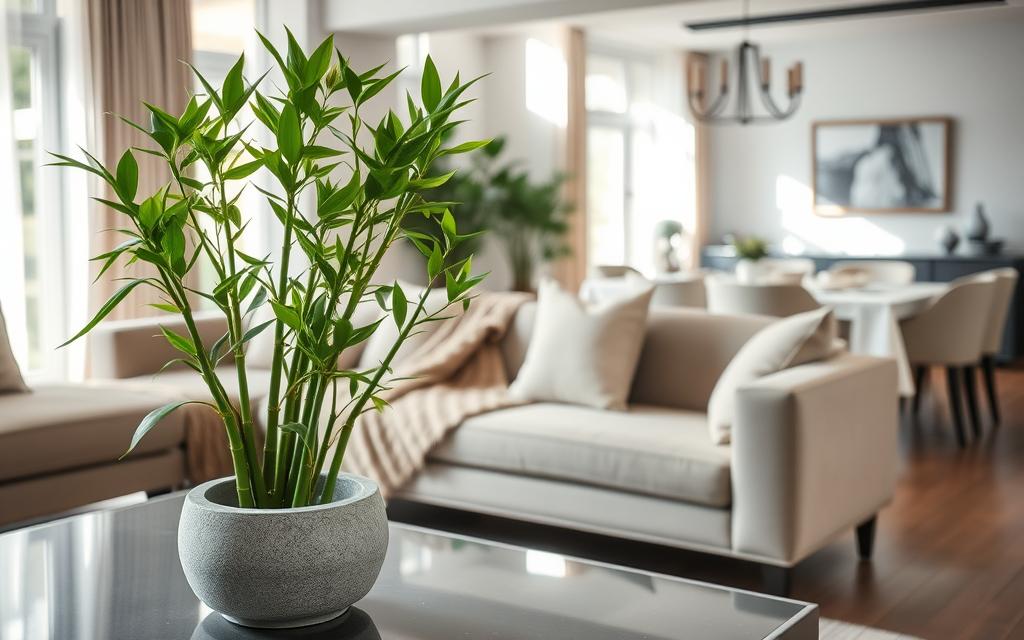
Near the living area entrance to lift the mood
Set the plant where guests naturally look first. An entry-adjacent shelf or console gives an instant visual lift and helps attract positive energy into gatherings.
Why this works: it makes the room feel alive, eases social flow and signals care. Keep the spot tidy and visible so the plant supports the room’s vibe rather than hiding in clutter.
Southeast corners for abundance and reduced money stress
If your layout suits it, aim for the southeast corner or the back-left of the living/dining plan. This traditional cue often aligns with prosperity and steady fortune.
- Dining room tip: use a stable surface such as a sideboard rather than the table centre—less knock risk, more longevity.
- Styling: pair the plant with timber, linen or earthy ceramics for warmth and grounded energy.
- Flow: avoid blocking walkways or tucking the pot behind furniture where dust builds and the plant becomes invisible.
If you’d like a quick guide on practical room options, see this short post about ideal indoor spots for wellbeing: entry and corner tips. For ideas on pairing plants with work and focus, check plants that boost productivity.
Bedroom placement: when it works and when it doesn’t
If sleep is a priority, a plant’s energy should feel soft, not stimulating. It depends: bedrooms are for rest, so active greens can sometimes keep a room feeling switched-on.
Why plants can feel too “active”: growth, tiny movement and visual aliveness give a subtle lift. That lift is great in living spaces, but it can interrupt sleep for sensitive sleepers.
Safer positioning
- Choose a far corner or a bedside table that’s not right next to your head.
- Keep the space uncluttered so the green feels calm, not busy.
- Use soft, neutral colours and low lighting for gentle balance and harmony.
What to avoid
Don’t put a pot directly beside or under the bed, or anywhere the room feels crowded. If the plant draws your eye at night and wakes you, move it out. Your nervous system is the boss here.
“If it makes you alert, it’s in the wrong room.”
Small bedrooms? Consider an adjacent hall or living shelf instead. A compact bamboo plant or a set of tiny bamboo plants often work better outside the sleeping zone.
Places to avoid putting lucky bamboo in your house
Some spots in a home quietly stress this plant and sap its energy fast. Spotting no-go zones early saves care time and keeps the green looking bright. 🌿
Direct sun that scorches leaves
Aussie afternoon glare through west- or north-facing glass can burn foliage within hours. Move the pot 1–2 metres back or add a sheer curtain to soften harsh rays.
Drafts from air conditioning, heaters and leaky windows
Cold or hot blasts stress roots and stunt growth. Keep the plant out of direct vents and away from drafty sills where temperature swings shock new shoots.
Dusty, cluttered areas that block positive energy
Feng Shui notes that messy spots feel heavy. Dust and forgotten corners stop the flow of positive energy and make regular care harder.
- No-go zones: harsh sun-trap windows, vent fronts, utility corners, crowded shelves.
- Quick fixes: sheer curtains, a brighter internal shelf, a reachable stand you will actually clean.
- Practical tip: if you can’t access it, it will collect dust—choose visible, easy spots.
You don’t need perfection—just remove obvious drains on energy and care. For more placement ideas, check this Homes & Gardens guide.
Light and temperature rules that affect placement
Good light and steady warmth are the unsung heroes of a healthy indoor plant. Bright, filtered light gives life without scorch. Direct sun often causes brown patches on leaves and faded colour.
Bright, filtered light vs direct sun
Think canopy, not open field. Filtered light means a sheer curtain, a north/east window or bright ambient room light. Avoid west-facing afternoon glare that burns foliage quickly.
How the plant signals it needs more light
Stretching (leggy growth) shows it is reaching for light. Fading green means it needs brighter conditions. Scorched patches are a clear sign of too much direct sun.
Warm, stable conditions
Keep temperatures near 18–32°C. Cold snaps at glass, heater tops and air‑con vents stress roots and stunt growth. Don’t sit the pot directly above or in front of drafts.
- Simple light rule: bright yes, harsh sun no.
- Rotate weekly so growth stays even.
- Quick checklist: not in front of vents, not on icy sills, not above heating.
Healthy light and steady warmth keep the plant looking vibrant, which lifts the room’s energy and helps the rest of your plants thrive. For more care basics, see growing and care tips.
Water, containers and cleanliness for strong energy and healthy growth
Fresh water, clean pebbles and trimmed roots are the small acts that keep energy flowing. Treat care as a simple routine and the plant will repay you with steady growth and a calm room vibe.
Distilled or rested tap water
Why it matters: this plant is sensitive to chlorine and chemicals. Use distilled water or let tap water sit for 24 hours before use.
Quick routine: top up as needed with rested water and avoid sudden changes that stress stalks and leaves.
Weekly water changes for vases and pebble setups
Do a full refresh once a week. Clear, moving water prevents odours, algae and disease.
Rinse pebbles and wipe the jar so the whole display looks neat. Cloudy water drags energy down and looks tired.
Keep roots and leaves healthy
Check roots regularly: healthy roots often show a reddish tint. If roots go black or mushy, trim them with clean snips and return the plant to fresh water.
Remove yellowing leaves promptly. Dead foliage can rot and spread issues through the water and container.
- Make care easy: your placement only works long-term if the plant stays healthy and the water stays clean.
- Container hygiene: rinse pebbles, wipe the vase, and consider an opaque jar if algae is a recurring problem.
- Real-life benefit: a tidy, healthy plant on display nudges you to keep that part of the home calmer and more organised.
Choose the right pot and colours according to Feng Shui elements
A pot is more than a container — it completes the plant’s story in your room. A fast, clear choice ties material and hue to your intention. That makes care feel purposeful and stylish.
Materials and what each supports
- Wood: leans into growth and vitality. Choose timber or rattan for warmth and life.
- Ceramic / earth: brings grounding and stability. In Aussie sunlight a thick ceramic pot helps regulate temperature better than thin glass.
- Metal: offers clarity, precision and light, joyful energy. Think brass or painted steel for a crisp look.
Colour intentions made simple
- Green / blue: healing and steady growth.
- Red / orange: sparks creativity and inspiration.
- Yellow / earthy: supports balance and security.
- White / metallic: brings clarity and refined focus.
- Black / charcoal: adds depth, wisdom and water energy.
Styling tips: pick one strong container rather than many small trinkets. Match tones with furniture so the bamboo plant blends, calms and stays visible. A cohesive display makes upkeep easier — and healthy plants deliver real benefits for your space. 🌿
| Material | Primary Element | Practical Aussie note |
|---|---|---|
| Wood | Wood (growth) | Light, warm feel; use sealed timber near windows |
| Ceramic / Earthenware | Earth (stability) | Stabilises temperature; good for sunny spots |
| Metal (brass, steel) | Metal (clarity) | Durable, crisp look; avoid direct heat contact |
Stalk numbers and arrangements: align your lucky bamboo with your goal
Stalk counts are a simple, ritual-free way to match an arrangement with a clear intention. Pick a meaning that fits your aim, then choose a style that suits the surface you have.
Popular meanings made plain
- 2 — love and relationships.
- 3 — happiness, wealth and long life.
- 5 — balance and harmony.
- 6 — good luck and wealth.
- 7 — health.
- 8 — growth and steady progress.
- 9 — great luck and fortune.
- 10 — completeness and perfection.
- 21 — a powerful blessing or celebration.
Why four is usually avoided
Four sounds similar to the word for “death” in Chinese. For that reason, sets of four are often skipped in gifts and arrangements. Avoid this number if you want a considerate, culturally aware display.
Placement-friendly arrangement tips
- Taller groupings suit corners and floor stands; short clusters work well on shelves and benches.
- Give roots room — don’t cram stalks. Use pebbles in water setups for sturdy support.
- Keep the arrangement visible and easy to reach. Regular care keeps positive energy active and the plant healthy.
“What do you want more of this year — love, health, wealth or career momentum?”
Quick choosing prompt: pick the count that matches your answer, make an arrangement that fits your area, and check it weekly for water and growth.
Conclusion
Simple routines and one good spot are all you need for steady growth and calm energy.
Start with a clear intention and pick a visible spot that gets bright, filtered light. Good starter locations are the entry for uplifting flow, the back-left (southeast) for abundance and fortune, your desk for career focus, and the kitchen or centre for health.
Care checklist: use clean or rested tap water, change water weekly, keep the pot away from drafts and harsh sun, and remove yellowing leaves. These small acts keep roots healthy and energy steady.
Set up one bamboo plant beautifully, then watch how your home feels over a week. Tie water changes to a weekly habit (Sunday reset or bin night). For more indoor greenery ideas see indoor greenery ideas.
You’re in charge: Feng Shui is a practical tool that helps your environment support growth, good luck and positive energy.