
Most indoor plant problems come down to one thing: not enough sun, not a so-called black thumb. You’re not alone.
These picks tolerate dim rooms and need little fuss. They still appreciate a brighter holiday now and then — a quick rotation keeps them healthy.
You’ll find 12 choices grouped into easy categories: trailers, set‑and‑forget structure, leafy features, flowering options, indoor trees and bathroom lovers. Each entry has a tiny placement tip and a watering cue so you can decide in under a minute.
Think Aussie flats and south‑facing rooms, shaded verandahs and office corners. That’s what “dim” really looks like indoors here. If a room has no window at all, try rotating pots or add a small grow lamp for better results 🌿
At the end we give a minimal‑care setup to stop the number one killer: soggy soil and root rot. Ready to pick plants that suit your space?
Table of Contents
Key Takeaways
- Most failures come from too little sun, not your care.
- These selections handle dim areas but like occasional brighter spots.
- The list is split into six handy categories for quick choice.
- Each plant includes fast placement and watering hints for mobile readers.
- We finish with a simple setup to avoid soggy soil and root rot.
Why low-light houseplants are a game-changer for Australian homes
Dim corners and narrow hallways can still feel lively with the right plant choices. Low light doesn’t mean no light — it means indirect or filtered sun, or being a few metres back from a window. That makes a real difference to growth and care.
Low light doesn’t mean no light: choosing realistic spots indoors
Think hallways, bedrooms with small windows, office corners and living rooms shaded by neighbouring buildings. These are typical low‑sun zones where plants can cope without daily bright sun.
Why “tough” plants still appreciate a brighter break now and then
Most tolerant species prefer bright to medium light. Give them a brighter spell every few months — a short move or swap helps steady growth and colour. 🔄
- Quick spot check: if you can read comfortably there in daytime without lamps, plants will usually cope.
- Watch out: a windowless bathroom is a tough situation without rotation or a small grow lamp.
Payoff: matching a plant to the spot gives you greenery in awkward spaces with minimal fuss. It’s an easy confidence‑builder for beginners.
How to pick the best houseplants for low light for your space
Knowing whether a spot gets filtered sun, deep shade or just an hour of brightness will guide your plant picks. Spend a day watching the room at different times. That tells you if a corner gets true shade or useful indirect light.
Reading your room: indirect light, shade, and awkward corners
Indirect light means bright but not sun on the leaves. True shade feels dim even at midday.
Corners often get less light than you expect. Measure by eye: if you can read comfortably, plants usually cope.
What to prioritise for minimal care: drainage, slow growth, drought tolerance
Drainage is non-negotiable. Choose pots with holes and a free-draining mix so soil does not stay soggy in cooler conditions.
Also favour species that tolerate missed waterings and slow growth. They suit busy households and small spaces.
Quick warning signs your plant needs more light
- Leggy stems or long gaps between nodes — growth is stretching for light.
- Smaller new leaves or paler colour — variegation may fade as patterns are energy expensive.
- Leaves that thin or turn uniformly green — colourful varieties often revert in poor conditions.
Choose your vibe: structural upright shapes, trailing vines, or big leafy feature plants. If winter light drops in your part of Australia, plan to shuffle pots closer to brighter windows seasonally. 🌿
| Priority | Why it matters | Quick check | Action |
|---|---|---|---|
| Indirect light | Supports steady growth without sun scorch | Can you read there at noon? | Place a few metres back from a bright window |
| Drainage | Prevents root rot in cool, damp soil | Does the pot have holes? | Use free-draining mix and a saucer |
| Slow growth | Needs less fuss and fewer repots | Does new growth seem small? | Accept slower pace or move to brighter spot |
| Variegation | Patterns fade in dim conditions | New leaves turning green? | Give occasional brighter breaks to restore colour |
Trailing and hanging plants that handle low light and a bit of neglect
A single trailing plant can turn a shelf or cabinet into an instant green feature. They’re quick to place and forgiving when you skip a watering now and then.
Devil’s ivy (pothos / epipremnum aureum)
Devil’s ivy — known as pothos — tolerates neglect and dim rooms. It grows in a free-draining potting mix and thrives trailing or climbing a moss pole.
Variegated varieties such as ‘Marble Queen’, ‘Snow Queen’ and ‘N’Joy’ may fade in darker spots. ‘Neon/Goldilocks’ keeps bold colour with less sun.
“Snip a node and place it in water — cuttings root fast and stay healthy for months.”
English ivy varieties
English ivy is a classic cascade option. Let the soil dry between waterings and avoid soggy mixes to keep roots healthy.
Heart-leaf philodendron
This one gives a softer, tropical feel. It likes partial sun now and then and will fill hanging baskets with lush foliage without heavy fuss.
- Placement prompts: higher shelves for a waterfall effect, hanging baskets near a bright-ish window, and away from harsh direct sun.
- Propagation tip: water-root cuttings for easy sharing or more hanging displays. 🌱
Hard-to-kill structural plants for low light conditions
Choose a few upright, architectural plants that still look purposeful when you forget them for weeks. These are your set-and-forget anchors: sculptural, fuss-free and great in hallways or awkward corners.
Snake plant (Dracaena trifasciata)
Snake plant tolerates low light conditions and very little water. It suits a narrow entry or a bedside table in Aussie homes.
Keep the pot draining freely. Overwatering invites rot — treat it like a succulent and let the soil dry between drinks.
ZZ plant (Zanzibar Gem)
ZZ stores moisture in rhizomes, so it’s ideal if you forget to water while away for months. Growth slows in dimmer conditions, so buy a larger specimen if you want instant presence.
Good drainage matters; when in doubt, wait longer before you water. 💧
Cast iron plant (Aspidistra elatior)
The cast iron plant truly tolerates shade and cooler indoor temps. It takes dry periods once it’s settled.
Water only when the top 2.5–5 cm of soil dry. It’s a slow grower and can stay in the same pot for years.
“Danger zone: the real threat in dim spots is root rot from too much water and poor drainage.”
Micro-prompt: group two or three of these structural plants as a modern collection to get a styled, designer vibe.
Want a simple care checklist? See our minimal maintenance plant care guide.
Leafy feature plants that bring a lush look to darker rooms
Feature plants lift a dim room with bold leaves and instant presence. These are the specimens you buy to make a statement: big foliage, strong patterns and a jungle vibe without heavy fuss.
Chinese evergreen — patterned and adaptable
Chinese evergreen suits many low light situations and offers silver, pink and red varieties. If stems get leggy or colour fades, it’s asking for more light; a short move to a brighter spot restores pattern.
Happy plant / corn plant — vertical presence with little fuss
Dracaena fragrans ‘Massangeana’ gives height and a sculptural feel. Use a well-draining mix, wipe the leaves so they can photosynthesise, and accept occasional dry spells once the rootball settles. Thin, stretchy new growth means shift it slightly closer to indirect light. ✨
Dieffenbachia — big-leaf drama in filtered areas
Dieffenbachia loves filtered light and makes a bold centrepiece. It tolerates slight underwatering better than wet soil, so keep the potting mix moist in spring and summer and reduce watering in winter.
Monstera — tropical look with honest expectations
Monstera tolerates less-than-ideal light thanks to its shade-adapted origins. Growth will slow without brighter spells. Give warmth, humidity and occasional brighter time to keep new leaves large and split.
- Styling tip: place taller plants to fill vertical empty space and near reflective walls to bounce extra light.
- What you’ll see: smaller new leaves, stretched stems or fading patterns = move the plant closer to brighter indirect light.
“Bigger leaves = bigger impact. Keep them clean and rotating occasionally to keep patterns vivid.”
Low‑light flowering options (with honest expectations)
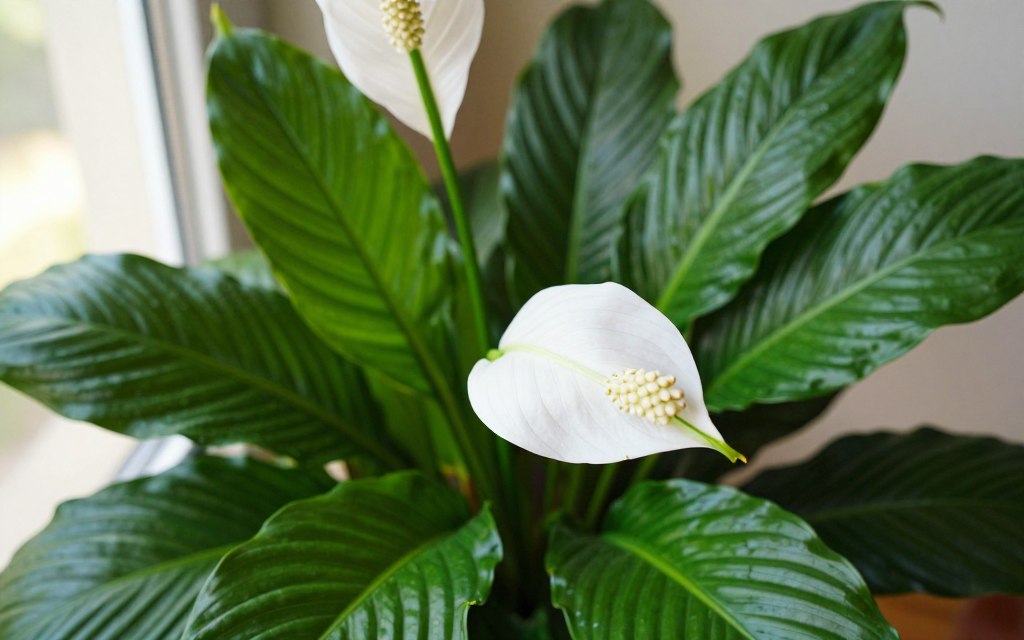
Flowering options in dim rooms give you glossy foliage first and blooms only as a pleasant surprise. In many situations, you choose these plants for shiny leaves and shape — flowers turn up when the light conditions improve.
Peace lily (Spathiphyllum)
Peace lily tolerates darker corners and stays popular in offices because it signals thirst clearly — the dramatic droop. When you water, it perks up fast.
Expect fewer blooms in dim spots. Variegated types and bigger cultivars like ‘Sensation’ will show better pattern and more flowers with brighter indirect light.
Watering rhythm: aim to keep soil evenly moist, not soggy. Let posture guide you — if the plant droops, give it a drink and it will recover.
Flamingo flower (Anthurium andraeanum)
Anthurium brings glossy, heart-shaped foliage and seasonal colour when given the brightest spot you can spare. It will live in lower light, but flowers appear more often with better indirect light.
Use a very free-draining mix and water regularly while avoiding waterlogging. If indoor air is dry, group plants or use a pebble tray to boost humidity and prevent brown edges.
- Quick notes: you’re buying foliage first; blooms are a bonus.
- Don’t do this: never let water sit in a decorative cover pot base — that invites root rot.
For more low-sun selections and care ideas, see this low-sun selections guide and our air-purifying plant care tips.
Palms and “indoor tree” picks for low light and larger rooms
Tall, sculptural greenery can anchor a dim lounge and make the room feel deliberate and calm. Some rainforest species naturally grow under a canopy, so they cope with softer rays rather than full sun.
Lady palm (Rhapis excelsa)
The lady palm is an understorey palm adapted to shade. It tolerates lower light but rewards occasional brighter spells.
Plant in a premium potting mix, water regularly and rotate every few months so each side sees better light. It grows slowly and can cost more up front, yet it lasts years as a refined focal piece.
Money tree (Guiana chestnut)
The money tree gives height when you want an indoor tree that fills a corner or entry. It can reach tall sizes if cared for and prefers soil that stays moist, not waterlogged.
Check drainage and the weight of large pots before you water — big planters stay wet longer in shade. Use these trees beside a sofa, in an entryway or to soften an open-plan space.
- Routine: quality soil, consistent water rhythm and quarterly rotation.
- Styling tip: group with smaller plants to create a natural vignette in the room. 🌤️
- Explore indoor tree options or see a quick care list at low-maintenance picks.
Bathroom-friendly low light plants that enjoy humidity
Steam from showers creates a mini greenhouse that many tropical plants genuinely love. That humidity helps species that prefer warm, moist conditions thrive even when daylight is gentle. 🚿
Prayer plant — movement and weekly care
Prayer plant loves warmth and humidity. Place it in gentle indirect light near a frosted window or a bright bathroom shelf.
Water about weekly and keep the soil slightly damp, not soggy. Its leaves fold and unfold — a lovely cue that it’s happy.
Bird’s nest fern — steady moisture, soft foliage
Bird’s nest fern thrives in steamy bathrooms. Let humidity do the work and keep the soil evenly moist.
Avoid waterlogging the crown. If edges brown, check drainage and reduce splash at the plant base.
Nerve plant (Fittonia) — veined colour in small spaces
Fittonia gives a pop of veined colour and loves high humidity. It performs well on pebble trays or in terrariums.
Avoid direct sun — it can burn the leaves. These plants need consistent moisture, so they’re not ideal if you often forget to water.
Leaf language: crispy edges = dry air; yellowing plus mushy stems = too much water or poor drainage.
If your bathroom has no window, rotate pots to a brighter room now and then or consult this low‑light houseplant advice to match conditions and placement.
Minimal-care setup: soil, watering, and placement that prevent common failures
Overwatering is the silent killer in dim rooms — soil dries slower when light is limited. Start simple: a free‑draining potting mix and pots with drainage holes cut rot risk immediately.
Practical potting and drainage
Use a mix that lets water pass through quickly. Choose a pot with holes and never let water pool in a cover pot or saucer.
Two clear watering lanes
Drought‑tolerant plants (snake, ZZ, cast iron) prefer the soil to dry between drinks. Humidity lovers need evenly moist soil, not swampy conditions.
Easy watering cues
Finger test the top 2–3 cm of soil. Lift the pot — light means dry, heavy means wet. Watch leaves: droop or limp shows thirst; soggy stems hint at overwatering. 💧
Variegation, colour and recovery
Why patterns fade: plants conserve energy in dim spots and reduce variegation. Move a faded specimen into brighter indirect light for a few weeks to restore colour.
Micro‑maintenance and holiday proofing
Rotate pots every few months, wipe dust from leaves and trim dead growth so the plant focuses on new shoots. If you travel months away, trust snake plant, ZZ, cast iron and established pothos — they survive longer dry spells.
“A simple checklist — free‑draining mix, drainage holes, and sensible watering — solves most failures.”
Conclusion
You don’t need perfect sun to enjoy indoor greenery. Match a plant to the spot, give it good drainage and don’t drown the roots. Dim rooms usually mean slower growth and fewer blooms, but still plenty of lush leaves that lift a space.
Quick shopping shortlist: forgetful-waterers — ZZ, snake, cast iron. Styling picks — monstera, Chinese evergreen, lady palm. Bathroom choices — prayer plant, bird’s nest fern, nerve plant.
Next step: pick one specimen for your darkest corner, nail a watering rhythm, then add a trailing or structural friend to fill the space. If you’ve struggled before, it’s likely light plus watering mismatch — not you.
Take a midday photo, note where indirect sun lands, and choose based on that. For more low-sun selections, see this quick guide. 🌿
FAQ
Which plants tolerate darker rooms like hallways and bathrooms?
Many tolerant species do well in lower light. Think snake plant (Dracaena trifasciata), ZZ plant (Zamioculcas zamiifolia), cast iron plant (Aspidistra elatior) and peace lily (Spathiphyllum). These cope with indirect or filtered light and often survive occasional neglect — perfect for hallways or bathrooms with no direct sun.
How can I tell if a spot is truly “low light” or just shaded?
Low light means no direct sun and only dim, indirect illumination most of the day. A quick test: read a book there without artificial light — if you can, the spot is brighter than true low light. Observe shadow clarity: soft, diffuse shadows signal low light; sharp shadows mean direct sun.
Will trailing plants like pothos and philodendron survive in low-light corners?
Yes. Devil’s ivy (Epipremnum aureum) and heart-leaf philodendron tolerate lower light and make great hanging or shelf plants. Growth slows and variegation may fade a little, but they’ll keep healthy with occasional watering and a feed every few months.
Can variegated plants keep their patterns in dim rooms?
Variegation needs more light than plain green foliage. In dim spots the patterned areas may turn green to capture more light. To preserve variegation, move the plant to brighter, indirect light for periods each week or rotate it closer to a window when possible.
How often should I water plants that tolerate low illumination?
Frequency varies by species and potting mix. Slow-growers like ZZ and snake plant prefer to dry between drinks — water sparingly. Humidity-loving plants, such as peace lily or bird’s nest fern, like evenly moist soil. Always check the top few centimetres before watering to avoid root rot.
Which palms and taller options work well in sheltered rooms?
Lady palm (Rhapis excelsa) and money tree (Pachira aquatica) are reliable choices. They tolerate filtered light and add height without needing intense sun. Both prefer steady conditions and benefit from occasional dusting and a free-draining potting mix.
Are there flowering plants that’ll bloom in low-light conditions?
Some will flower occasionally but expect fewer blooms. Peace lily can produce white spathes even with modest light. Anthurium may flower in brighter, indirect spots but will still offer attractive foliage in dimmer rooms. Keep expectations realistic and focus on foliage beauty.
What soil and pot setup reduces common failures like root rot?
Use a free-draining potting mix and pots with drainage holes. For many indoor species, add perlite or coarse sand to improve drainage. Avoid saucers that hold water long-term; empty them after watering. Good airflow and the right mix cut rot risk dramatically.
Which plants are best if you travel often or forget to water?
Choose drought-tolerant types: ZZ plant, snake plant, and some Sansevieria cultivars tolerate long dry spells. They store water in thick leaves or rhizomes and bounce back after missed watering. Still, pop them in indirect light and check once every few weeks.
Do humidity and bathrooms really help certain species?
Yes — higher humidity suits prayer plant, bird’s nest fern and Fittonia (nerve plant). Bathrooms with a window or indirect light offer warmth and moisture they like. Keep ventilation moderate and avoid hot, dry vents that can desiccate leaves.
How do I revive a leggy or pale plant in dim conditions?
First, move it temporarily to brighter, indirect light to strengthen new shoots. Trim long, weak stems to encourage bushier growth. Check soil and replace any compacted or soggy mix. A gentle liquid feed during the growing season helps recovery, but avoid overfeeding weak plants.
Can variegated pothos keep its markings in lower light?
Variegated Epipremnum can lose some contrast in dim settings because variegated tissue photosynthesises less. To maintain pattern, give it occasional brighter indirect light and avoid deep shade. Trim back wholly green shoots to encourage variegated growth.
Are there any safety concerns with these indoor plants around pets or children?
Some popular picks are mildly or moderately toxic if ingested. Dieffenbachia, ZZ plant and many philodendrons contain calcium oxalate crystals and can irritate mouths and stomachs. Peace lily is also toxic. Keep suspect species out of reach and check ASPCA or local vet guidance for specific risks.
How often should I rotate plants and clean leaves in dim rooms?
Rotate pots every few weeks so all sides get light and grow evenly. Wipe leaves monthly with a damp cloth to remove dust that blocks light and reduces breathing. For textured or hairy leaves, use a soft brush. Simple care keeps foliage glossy and efficient at capturing light.