
Want more greenery without buying every pot? Propagation is the simplest, most rewarding route. It means taking part of a parent plant and growing it into a new, usually identical, plant. 🌿
This short guide gives you 15 easy, beginner-friendly methods. Expect cuttings, division, offsets, plantlets, layering, plus succulent and cactus tips. We start with the basics, then compare water vs soil, and finish with steps for common indoor plants.
Try both water and soil where it helps. Take several cuttings and experiment. You’ll learn to find nodes, make clean cuts, prevent rot and know when to pot up. These skills build confidence fast.
Reality check: propagation won’t work every time. Plants can be unpredictable, but it’s cheap and fun. Got a pothos or philodendron at home? You’re already holding a great first project. Make sure you enjoy the process. 😊
Table of Contents
Key Takeaways
- Propagation turns one mature plant into many and saves money.
- There are 15 simple methods for beginners, from cuttings to layering.
- Start with basics, then try water versus soil for best results.
- Expect failures; take multiple cuttings and learn from each attempt.
- Key skills: find nodes, clean cuts, stop rot, and pot up at the right time.
Why multiply your plants at home (and when it works best)
Making new plants from your current collection is a cheap, practical way to refresh tired foliage. It saves money and lets you share cuttings with mates. You’ll also rescue a leggy specimen by encouraging fresh growth.
Best time in Australia:
Late spring through early summer
Plants enter active growth then, so roots form faster. Warmer temperatures and longer daylight give a measurable boost in growth and rooting speed.
Start with a healthy parent
Choose pest- and disease-free material
Use a strong parent plant. Pests and disease pass straight to cuttings. Make sure stems are firm and leaves look healthy before you take any pieces.
Results show up over weeks, not days
Many cuttings need several weeks before roots appear. That helps you stay patient and avoid overwatering.
- Quick health checklist: firm stems, no mushy spots, no webbing or scale, no odd leaf spots.
- Common failures: temperature swings, too many leaves, stale water, dirty tools, or soggy soil.
| Reason | Risk | What you can do |
|---|---|---|
| Weak parent | Transmits disease | Pick a vigorous, pest-free plant |
| Environmental swings | Delayed rooting | Keep stable warmth and bright, indirect light |
| Too much foliage | Transpiration stress | Trim excess leaves before placing cuttings |
Try not to expect perfection. Even experienced growers lose a few cuttings. The goal is better odds, not 100% success. Once you’ve picked your parent, you’re ready to prep tools and choose water vs soil for your next step.
Propagation basics: what you need before you take a cutting
A little preparation makes a big difference. Set up a clean station with clear containers and fresh media so your cuttings start with the best chance. 🌿
Clean, sharp snips and tidy containers
Before you cut, make sure your tools and jars are sanitised. Dirty blades can spread fungi and rot between plants.
Quick tip: wipe secateurs with 3% hydrogen peroxide between cuts.
Fresh water or fresh potting mix
Use fresh water or new potting mix. Stale water and old soil hold fewer oxygen bubbles and more pathogens. Fresh inputs lift your odds.
Optional helpers that speed things up
Rooting hormone (powder or gel) and a heated propagator mat can speed root growth. These help most with slow-rooting or rare specimens, or during cooler months.
- Before you cut checklist: clean snips, clean jar or pot, fresh water or fresh potting mix, and a label for each sample.
Mini decision: If you want the simplest setup: water + clean jar. If you want fewer steps later: pot straight into fresh mix — a practical method for many indoor plants.
Now let’s get into the most beginner-friendly approach — water propagation using node cuttings.
How to propagate houseplants using water propagation (node cuttings)
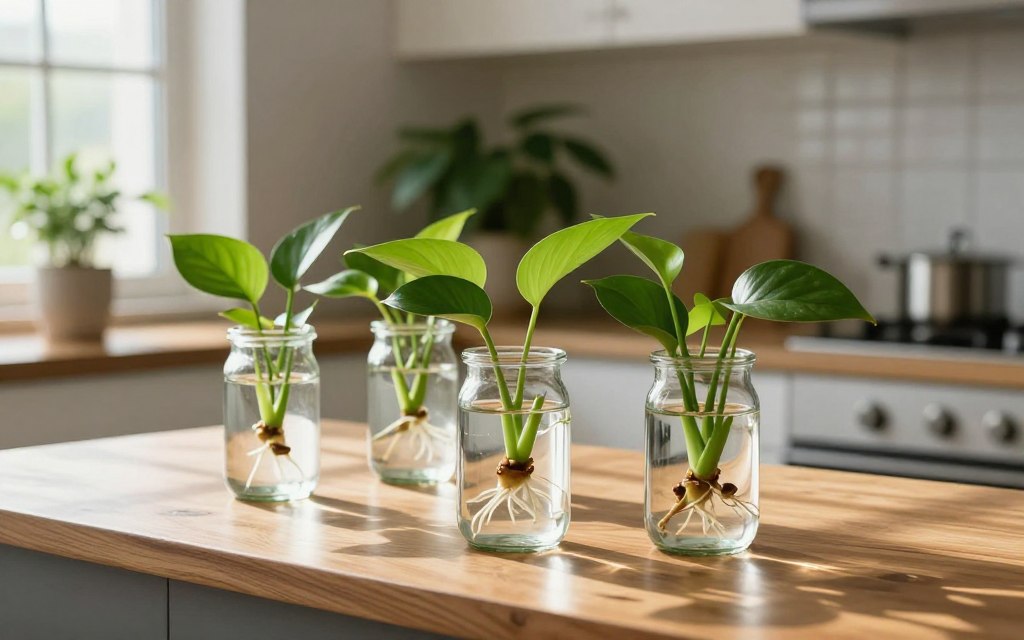
Watching a stem turn into a rooted plant is oddly satisfying and very teachable. Water is cheap and clear, so you can see new roots forming and learn fast. 💧
Spot the node and any aerial roots
Look where the leaf or petiole meets the main stem. That junction is the node — often marked by a raised ring. Aerial roots often sit beside it and are a bonus when present.
Where to make the cut
Snip about 1 cm below a node on a slight angle so the node stays intact. If you can include an aerial root, even better; nodes are where roots form most reliably.
Leaves, vessels and warmth
Remove lower leaves that would sit in water and rot. Keep a couple of top leaves for photosynthesis.
Pick a narrow jar that keeps leaves dry while one or two nodes are submerged. Warmth matters more than harsh light early on — bright, indirect light plus a warm spot speeds root growth.
Feeding, water care and potting up
Start a gentle hydroponic-friendly feed once the first root nub appears. Top up regularly and fully change the water about weekly to restore oxygen and prevent rot.
Pot up when roots reach roughly 3–5 cm or begin branching. That timing gives the best chance of a smooth transition into soil.
Soil propagation: when potting straight into mix is the better method
If you’d rather skip a transfer step, potting straight into soil often saves time and fuss. This method suits cuttings that hate sitting in water or when you want them in their long‑term medium from day one. 🌱
Who should pick this method and why it cuts steps
Choose soil if you dislike moving roots from a jar into a pot later. Planting straight away means fewer moves and less shock. It also suits species that rot easily in standing water.
Keeping the mix moist, not wet
Use fresh potting mix for good aeration and fewer pathogens. A small pot with free‑draining mix gives roots room and air.
Water lightly when the top layer feels dry rather than on a strict schedule. Aim for even moisture—damp but not soggy—which supports healthy rooting and cuts rot risk.
- Troubleshoot: flopping stems + wet mix = hold watering.
- Too dry? rehydrate gently over a day or two.
Next: pick the cutting style that matches your plant’s stem type and growth habit. For simple watering guidance, see our indoor watering schedule.
Easy stem cutting methods for common indoor plants
Match the right stem style with your plant and you’ll get faster, cleaner results. Pick the approach that suits the stem type and growth habit, and you’ll save time and losses.
Soft-stem cuttings for plants like pothos, philodendron and syngonium
Soft stems root fast and forgive small mistakes. Take a short cutting from a non-flowering stem in spring or summer.
Simple cutting formula: include at least one node, keep some healthy top growth and avoid overcrowding leaves.
Cane cuttings for leggy plants
Use cane pieces when a plant is bare or tall. Cut canes into 2–3 inch sections and plant upright in the same direction they grew — upside down usually won’t root.
Keep cane pieces stable with snug mix, a small pot and gentle support while roots form.
Wet stick — a section with a node but no leaves
A wet stick or “chonk” is handy for salvaging a bare vine or an expensive plant. It’s simply a stem section with a node and no leaves. Try one in water and another straight into mix to compare results.
| Style | Best for | Key tip |
|---|---|---|
| Soft-stem | Pothos, philodendron, syngonium | Include a node; warm, bright, indirect light |
| Cane | Leggy or bare-stem plants | Plant upright; snug support in small pot |
| Wet stick | Salvaged sections or pricey vines | Node-only section; try water and soil options |
Try a couple of cuttings from the same plant. One in water, one in soil. You’ll learn what works best in your home. For more low-effort options, see our low-maintenance indoor plants.
Leaf cuttings for multiplying plants with minimal gear
No fancy gear? Leaf cuttings let you make new plants with just a pot and some free‑draining mix. This method suits anyone who likes simple, low‑cost projects.
What works best: the snake plant is the classic example. Many succulents and a few other indoor species also root from leaves. Use a healthy leaf and fresh soil for the best chance.
Whole‑leaf versus leaf‑section
Use a whole leaf when you want the easiest single start. It’s one cut and one new plant.
Cut sections if you want several starts from one large leaf. Each section must include the basal end that originally faced the stem.
Planting direction and depth
Keep the leaf facing the same way it grew. Plant the basal end down — that trick prevents confusion and failed rooting.
Only bury a few centimetres. Leave most of the leaf above the soil line for airflow and light. Shallow planting cuts rot risk.
Warmth, low watering and patience
Warmth speeds the rooting process. Place pots in bright, indirect light and a warm corner.
Water very sparingly. Let the mix dry a little between sips — overwatering is the main killer here.
Time expectations: roots and shoots often take several weeks. Be patient; new growth can be slow at first.
Signs of success: the leaf stays firm, tiny shoots appear at the base, or you feel resistance when you tug gently.
| Step | Action | Why it matters |
|---|---|---|
| Pick leaf | Choose healthy, firm leaves | Strong tissue gives better roots |
| Cut or section | Whole leaf for one start; sections for multiple | Efficient use of large leaves |
| Planting | Basal end down, only a few cm in soil | Prevents rot and aids root formation |
| Care | Warm spot, low water, wait weeks | Encourages steady rooting and shoots |
Want deeper reading on basics and troubleshooting? See this practical guide on leaf and general propagation for more tips and examples.
Offsets and plantlets: the quickest way to get “baby plants”
Offsets and plantlets give you instant little versions of your favourites — almost ready for their own pot. This feels fast because you start with a mini plant that often has visible roots or is very close.
Removing offsets with enough roots to survive
Offsets are side shoots or pups that form near the base. Leave them until they are reasonably mature and show a decent clump of roots.
Survival rule: separate only when roots are present. Use a clean knife and avoid tearing the root mass. Keep the pup damp while you pot it up.
Potting up spider plant babies and other ready-made plantlets
Plantlets are tiny plants that form on stems — think spider plant babies with little leaves and visible roots. Once leaves and roots are clear, snip them free.
Potting steps: use ordinary compost, plant at the same depth as the parent, water in gently and keep the mix lightly moist without drowning the root ball.
| Step | When | Why |
|---|---|---|
| Wait for roots | Visible root mass or several small roots | Improves survival and reduces shock |
| Clean removal | Use clean knife or scissors | Minimises tearing and infection |
| Pot & water | Ordinary potting mix, water in | Helps settle soil and start new growth |
Expect a little wilting after repotting. Give shade or bright indirect light and steady moisture. New growth usually follows within a few weeks.
Share the joy: offsets and spider babies make perfect gifts and quick wins for friends. For more on basic care and trends for indoor green in Australia, see this handy plantlet guide and our pick of simple tabletop plants.
Division and layering for low-risk propagation
Division and layering offer two of the gentlest, most reliable ways to multiply common indoor plants. Both keep the parent largely intact, which gives you higher early success and less drama. 🌱
Dividing crowded clumps while keeping a root ball
Lift the pot and tease the root ball gently by hand. Pull apart into sections so each has a decent clump of roots.
Repot each section in fresh soil and water in. Best candidates are clumping, crowded plants with separate crowns or growth points.
Layering vines by pinning a node into soil
Pin a low stem node into nearby soil using a bent wire or hairpin. Use a small pot of mix beside the parent if space is tight.
Let the parent feed the pinned section until you feel resistance or see new growth. Then cut the new roots free and pot up.
- Aftercare: bright, indirect light; water in and avoid heavy fertiliser until fresh root growth shows.
- Both methods often produce new plants with better survival than many quick cuttings.
Succulents, cacti and woody indoor plants: when to let cuttings callous
For many fleshy and woody types, a brief dry period at the wound is a small step with big gains. Letting the cut form a callous is like giving the plant a tiny scab. It blocks rot and keeps pathogens out. 🌵
Why thicker or fleshy stems benefit from drying before rooting
Thick or woody stem pieces retain moisture and invite rot if placed straight into wet soil or water.
A short drying time seals the wound. That reduces pathogen entry and prevents the cut end becoming mushy while roots form.
Examples and a simple timing guide
Common examples: many succulents like Crassula, Echeveria and Sedum, cacti, snake plant leaves, thicker Monstera stem sections and woody Ficus (fiddle leaf fig, rubber plant).
Dry for several hours up to a day. Very thick pieces may need longer until the end feels sealed.
| Plant type | Callous time | Best medium |
|---|---|---|
| Succulents / cacti | Several hours–24 hrs | Gritty, free‑draining soil |
| Thick stems (Monstera, Ficus) | 12–48 hrs | Free‑draining potting mix with perlite |
| Snake plant cuttings | 24 hrs | Very well‑draining mix |
Contrast: soft vines like pothos generally root faster when placed immediately into water or soil.
Practical tip: once calloused, plant in gritty mix and water sparingly until you see tiny roots. If you’ve lost succulent cuttings to mush before, this small change can be a game‑changer.
For a step focused on succulents specifically, see propagating succulents.
Conclusion
Propagation is an inexpensive, hands-on way to grow more green in your home and learn fast.
Pick the right season, start with a healthy plant, keep tools clean and match the method to the species. These simple choices lift your success rate quickly.
Top wins: node cuttings in water for visibility, soil starts for fewer steps, offsets and plantlets for speed, and division or layering for low risk.
Not every attempt will work—and that’s normal. Keep notes (date, method, light spot and watering) and try again; results improve after a few rounds.
Want deeper reading? See this comprehensive guide for more detail. You’re working with the plant’s natural growth—enjoy the process and keep experimenting. 🌿
FAQ
When is the best time of year for new cuttings to grow quickly?
Late spring to early summer is ideal. Plants are actively growing, light levels rise and warmth helps roots form faster. Aim for healthy, non-flowering stems for the best chance of success. 🌿
How do I pick a parent plant that will give strong baby plants?
Choose a vigorous, pest- and disease-free specimen with plenty of new growth. Avoid yellowing or stressed stems — they root slower and have lower success rates.
What simple tools and supplies should I have ready before taking a cutting?
Clean, sharp scissors or pruning snips, small clear containers for water propagation, fresh potting mix for soil starts, and optional helpers like rooting hormone and a heat mat. Clean tools reduce infection risk.
How do I find a node and where should I cut for water propagation?
A node is the knobbly spot where leaves or aerial roots emerge. Cut just below a node so that node sits in water — that’s where roots will form. Keep at least one node and some healthy leaves above water.
How many leaves should I leave on a stem cutting?
Keep one or two healthy leaves and remove extra foliage that would sit in water or soil. Less leaf surface cuts stress and lowers rot risk while roots develop.
Is rooting hormone necessary, and when is it useful?
It’s optional but helpful for slow-rooting or woody species. Hormone gel or powder can speed and increase root growth, especially on cane or hardwood cuttings.
What vessel works best for water propagation?
A clear jar or glass that lets you submerge nodes while keeping leaves out of the water is perfect. Clear containers also make it easy to watch root progress and change water as needed.
How warm and bright should the cutting’s spot be?
Bright, indirect light and consistent warmth are key. Avoid direct sun that scorches young leaves. A warm windowsill or near a lamp keeps metabolism up and roots forming.
When should I start feeding cuttings in water?
Wait until roots are a few centimetres long and you pot the cutting into soil. Liquid fertiliser in water can be used sparingly once established, but fresh water changes are more important early on.
Should I top up the water or change it completely?
Change the water every 5–7 days to keep oxygen levels and prevent algae or bacteria. Top-ups aren’t enough long-term; full changes are cleaner and safer.
How do I know when it’s time to pot a water-rooted cutting?
Pot up when roots are about 2–5 cm long and show branching. Strong, white roots indicate readiness. Move gently into a well-draining mix and keep humidity high for a few weeks.
When is soil propagation better than water?
Choose soil if you want fewer steps or are working with species that hate disturbed roots. Some plants root more reliably in a moist potting mix and skip the shock of re-potting from water.
How do I keep soil moist but not waterlogged during rooting?
Use a well-draining mix, water lightly when the top 1–2 cm feels dry, and cover with a clear bag or dome to keep humidity high without creating soggy conditions that cause rot.
What’s the difference between soft-stem and cane cuttings?
Soft-stem cuttings come from flexible, green growth (pothos, philodendron) and root quickly in water or soil. Cane cuttings use thicker, woody segments; they often need support to stay upright and may benefit from hormone.
Can I root leaves instead of stems for some plants?
Yes. Leaf cuttings work well for snake plants and some succulents. You can plant whole leaves or sections; ensure the cut edge is slightly buried and keep the medium warm and barely moist while roots form.
How do offsets and plantlets differ from cuttings?
Offsets are small, ready-made baby plants attached to the parent with their own roots. They usually transplant with minimal fuss — gently separate and pot once roots are visible and firm.
When should I divide a crowded pot rather than take cuttings?
Divide when a pot is root-bound or clumps are obvious. Keep a good root ball on each section and pot individually. Division is fast and low-risk for many clumping species.
What is layering and when should I use it?
Layering pins a low node into soil while still attached to the parent. Once roots form you cut the new plant free. It’s gentle and great for vines that resist simple cuttings.
Do succulents and cacti need different prep before rooting?
Yes — let cut ends callous (dry) for a few days to a week before planting. Thick or fleshy stems heal better and resist rot when allowed to dry first.
How long will it typically take before I see new roots?
Most soft-stem cuttings show root buds in 2–4 weeks. Leaf sections, succulents and woody cuttings can take several weeks to months. Patience and consistent warmth speed things up.
What common mistakes slow or ruin rooting?
Overwatering, letting leaves sit in water or soil, dirty tools, and low light. Also, taking cuttings from weak or flowering stems lowers success. Keep it clean, warm and slightly humid.