
Yes — with a few simple choices. You can set up both species in the same room or beside each other and get great results. This answer helps you plan a practical indoor layout without guesswork.
“Live together” here means two things: styling in the same room, or sharing a single pot. Success is easier when you keep the two options separate. Same-room setups need matched light and watering. One-pot combos need matched soil and root space.
Both prefer bright, indirect light and soil that dries slightly between waterings. They’re hardy, low-maintenance rivals for busy homes. Growth habits differ: pothos trails, while spider forms a clump, so leave enough space for each to grow.
We’ll guide you through a short checklist: light, watering, pot and soil, airflow, and ongoing care. Also place pots thoughtfully if you have curious pets or kids. Quick, practical tips follow so you can set up with confidence. 🌿
Table of Contents
Key Takeaways
- Both species suit bright, indirect light in Australian homes.
- Same-room setups are simpler than sharing one pot.
- Match watering rules: let soil dry slightly to avoid root rot.
- Allow space for a trailing habit and a fountain-like clump.
- Follow a checklist: light, watering, pot/soil, airflow, care.
Why pothos and spider plants make a strong companion planting combo indoors
These two house favourites share simple routines, so one sunny shelf can keep both happy. That makes daily care quick, and reduces mistakes for busy homes.
Similar needs: indirect light, light watering
Both prefer bright, indirect light and a habit of let it dry a little between drinks. Short watering rhythms are best to avoid root rot.
This similar care pattern means one spot, one schedule. You’re less likely to overwater when routine is simple.
Cleaner indoor air in practical rooms
“Spider Plant is cited as a top air-purifying companion for Golden Pothos; both help remove formaldehyde and xylene.”
In closed winter rooms, home offices, or air‑con summers, this combination improves indoor air quality. Fewer toxins in the air feels fresher, faster.
Design appeal: contrast in foliage
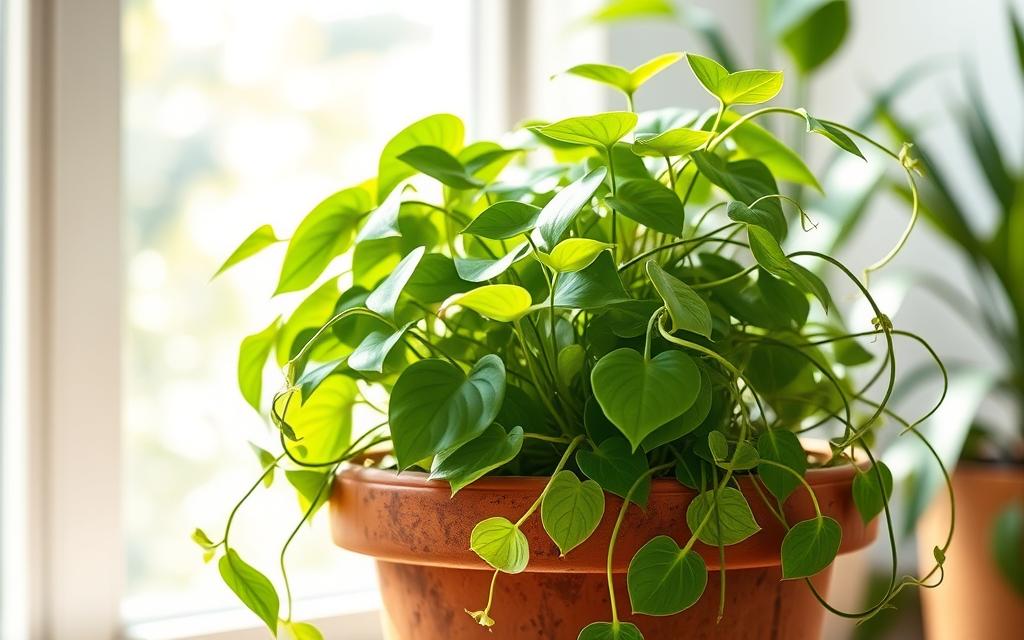
One trails and drapes, the other forms an arching fountain—this contrast adds instant depth. Train the trailing stems along a shelf edge; place the wider the planter in a corner for soft balance.
Easy-care reputation makes this companion planting option ideal for beginners. For tips on potting choices and spacing, see our spider care guide. The next section will help you choose same room or same pot setups.
Can pothos and spider plant live together in the same pot or room?
Placing both near the same window works well when you respect each one’s spread and root needs.
Same room styling: sharing light, humidity and airflow without crowding
Keep both inside the same bright, indirect sunlight zone. Place each within a few metres of the window so light is even. Grouping creates a steadier microclimate, which helps humidity.
Avoid cramped displays. Leave breathing room between crowns and trailing stems. Good airflow reduces pests and fungal risks. 🌱
Same pot reality check: when it works best (and when to keep separate)
One-pot combos succeed only in wide containers with excellent drainage. If you overwater or the roots crowd, both suffer from rot.
- Works: large, draining pot; confident watering by feel.
- Keep apart: a recovering specimen, frequent overwatering, or thickening root masses.
Space planning for growth: managing pothos length and spider spread
Trail the vines along a shelf or hanger. Let the clumping species sit where it can send out offsets.
Matching light, water and environment in Australian homes
Set both species where they get steady bright light without harsh midday glare. A north or east window with filtered rays is ideal. Aim for about 6–8 hours a day of bright, indirect sunlight; they tolerate less but will slow growth.
Watering rhythm: let the top mix dry slightly before you water again. Consistently wet soil is the fastest route to root rot. Reduce water in cooler months and increase in warm, dry seasons—especially if heaters or air conditioning run.
Humidity and airflow: boost humidity with a pebble tray, small humidifier, or an occasional mist when indoor air is very dry. Keep gentle air movement; avoid hot blasts from heaters.
“Watch for curling, drooping or brown edges — they’re the quickest clues that light or water is off.”
- Living room: bright filtered light, rotate weekly.
- Bathroom: great if a window adds humidity.
- Kitchen: warm spot ok, avoid steam vents or stovetops.
- Office: steady light and stable temps work well.
| Factor | Ideal | Quick fix |
|---|---|---|
| Light | 6–8 hrs bright, indirect | Move pot ~50 cm from harsh sun |
| Water | Top 2–3 cm dry between watering | Check top layer; water less in winter |
| Humidity | Moderate (40–60%) | Pebble tray or brief misting |
For more on creating a healthy indoor air setup, check our air‑purifying plant care guide for practical steps you can do today.
How to plant pothos and spider plant together for healthy roots and foliage
A tidy pot choice and a simple soil mix set the stage for healthy roots and lush foliage. Read on for a short, repeatable planting routine you can follow today. 🌿
Choosing a pot that suits both
Pick a pot with drainage holes. Go wider rather than deeper so crowns and trailing stems have room. If either is root‑bound, upsize before planting — it’s non‑negotiable.
Soil recipe that drains
Mix: 2 parts peat moss, 2 parts potting soil, 1 part perlite. This blend holds moisture without soggy conditions and suits both sets of roots.
Planting layout and gentle training
Place the clumping crown slightly above the soil line so leaves aren’t buried. Position trailing stems to spill over the pot edge or attach to a small stake.
- Keep crowns spaced so foliage won’t shade neighbours.
- Use clips or a short stake to guide vines without pinching stems.
After‑planting care
Water thoroughly once to settle the mix. Let the pot drain fully, then wait until the top layer feels slightly dry before the next watering.
“Water once to settle soil, then pause — this keeps roots from sitting wet.”
First two weeks: stable light, minimal moving, check the top 2 cm before you water again. For repotting tips, see our repotting guide.
Ongoing care tips to keep both houseplants thriving
Keep a simple routine: check the top soil, confirm bright light, then act only when needed. This three‑step habit prevents overwatering and keeps growth steady in rooms or offices.
Water checks by feel
Top layer test: probe the top inch (2–3 cm). If it feels dry, give a moderate drink. If it’s still moist, wait a few days.
Feeding during active growth
Feed monthly in spring and summer with a balanced liquid fertiliser. Reduce feeding in cooler months when growth slows.
Pruning and training
Trim trailing stems to keep shape and encourage bushy growth. Snip off offsets to propagate or display as small pots nearby.
Keeping leaves healthy
Brown tips often mean inconsistent water or dry air. Drooping can signal thirst or soggy roots. Curling usually points to light or heat stress.
“Early detection of pests makes treatment fast and simple.”
- Watch for mealybugs, spider mites, and aphids.
- Treat early with neem oil or insecticidal soap.
- Don’t let pots sit in standing water to avoid root rot.
| Task | When | Quick fix |
|---|---|---|
| Water check | Weekly | Top inch dry → water |
| Feed | Monthly in warm months | Balanced liquid fertiliser |
| Prune | Every 2–3 months | Trim vines, remove brown leaves |
| Pest check | Fortnightly | Neem oil or soap spray |
For a simple care refresher, see our basic houseplant care guide. If you want plants that boost focus in an office, this productivity plants roundup is handy.
Conclusion
, A side‑by‑side display is often the easiest way to enjoy both species without fuss. You’ll find they suit a single bright spot and a simple watering rhythm.
Success checklist: bright, indirect light; a well‑draining mix; drainage holes in the pot; and a watering routine based on soil feel.
Same room is the low‑risk route. One‑pot combos work only with roomy containers and careful watering to avoid soggy roots.
Benefits include a nicer display, a shared microclimate and better indoor air through filtering of common toxins. Try them side‑by‑side first, then combine when you’re confident. 🌿
Ready for a next step? Check your light spot, tweak your care routine, and if you repot, follow this repotting guide.
FAQ
Will pothos and spider plant cope in the same room?
Yes. Both prefer bright, indirect sunlight, moderate humidity and good airflow, so they thrive in the same room when not crowded. Place them where light is even and allow space for leaves and vines to expand. Keep an eye on airflow and avoid stagnant corners to reduce pests and fungal issues.
Are they a good companion planting combo indoors?
Absolutely. Their care routines align — infrequent watering and indirect light — and together they create pleasing textures: trailing vines paired with arching, grassy foliage. They also contribute to improved indoor air by filtering common volatile organic compounds.
Can I plant both in a single pot safely?
Sometimes. A shared pot works if the container is large, has excellent drainage and both have room to spread roots. Use a loose, well‑draining mix and monitor moisture closely. If one shows signs of stress, separate them into individual pots to prevent competition for nutrients and water.
How should I arrange them in the same pot for best growth?
Position the crown of the grassy species toward the centre or front so its arching leaves can spill out. Tuck the trailing vine at the back or side so stems can cascade. Ensure both have equal access to light and trim roots or vines if they start to crowd.
What light setup suits both in Australian homes?
Bright, indirect sunlight near an east or north‑facing window is ideal. Avoid harsh, direct midday sun through west‑facing windows — it can scorch leaves. If natural light is limited, a grow light with a broad spectrum on a daily cycle helps maintain steady growth.
How often should I water a paired pot or room arrangement?
Let the top 2–3 centimetres of mix dry before watering. Both dislike constantly soggy roots. Water thoroughly, let excess drain, then wait. Frequency depends on season, pot size and room humidity — roughly every 7–14 days for many indoor settings.
What soil mix keeps roots healthy when combined?
Use a well‑draining mix: quality potting soil blended with perlite and a little peat or coconut coir. This balances moisture retention and aeration so roots get oxygen and don’t sit in water.
How do I manage humidity and airflow for them?
Moderate humidity (40–60%) suits both. Bathrooms and kitchens can work well if they have bright, indirect light. Use a small humidifier or pebble tray in dry months and keep gentle circulation with an occasional fan to prevent mould and pests.
What fertiliser routine keeps foliage lush?
Feed with a balanced liquid fertiliser during active growth (spring and summer) at half the recommended strength, every 4–6 weeks. Reduce or stop feeding in cooler months when growth slows to avoid salt buildup and stressed roots.
How do I prune and train the pair without harming either?
Trim long vines to encourage bushier growth and remove yellowing or damaged leaves from both. Pinch or trim spiderettes if they overcrowd the pot. Use clean shears and make cuts above a node to promote healthy regrowth.
Signs one is unhappy when sharing space — what should I watch for?
Watch for yellowing leaves, wilting, brown tips, or slowed growth. Yellowing often signals overwatering; brown tips can mean low humidity, fluoride in water, or salt build‑up. If one species declines while the other thrives, consider repotting separately.
Are there pest risks when they share space?
Sharing increases the chance of pests like spider mites, mealybugs or scale spreading between specimens. Inspect regularly, isolate any infested plant, and treat promptly with insecticidal soap or neem oil following label instructions.
Which rooms are best for this combo in a home or office?
Living rooms, bathrooms and kitchens often suit them well — provided there’s bright, indirect light. Offices with filtered daylight or a desk lamp with a grow bulb also work. Avoid very hot or cold drafty spots near heaters or air conditioners.
How big a pot do I need if planting together?
Choose a pot with at least 25–30% more volume than the current root ball of both plants combined. Ensure a wide base for lateral root spread and good drainage holes. Larger pots reduce drying frequency and lessen competition for space.
Any special tips for first week after planting both together?
Water lightly to settle the mix, avoid heavy fertilising, and keep them in bright, indirect light while they acclimatise. Check moisture daily for the first week and don’t let soil stay soggy while roots reestablish.
Are there better companion plants that match their care?
Yes. Snake plant (Sansevieria), ZZ plant (Zamioculcas zamiifolia) and philodendrons share similar light and watering needs. Mix them carefully by matching pot size, soil and watering rhythm to avoid overcompetition.