
The two triggers are long, uninterrupted darkness and cooler nights—that’s what flips your plant from growing to flowering. 🌙
The Schlumbergera is a tropical epiphyte from Brazil’s humid forests. It acts differently to desert types. Rather than drought stress, it responds to a light routine and steady conditions.
Start the light-and-temperature routine in autumn if you want blooms by the holiday season. Short days and steady cool night temperatures over several weeks prompt bud formation and the cactus blooming process.
If your plant forms flower buds and then drops them, the usual causes are light at night, heat, drafts or sudden change. We’ll troubleshoot those problems and cover watering, humidity, soil and feeding next.
Mini roadmap: 2 triggers → Aussie home setup → light routine → temperature and humidity → watering and soil → fertiliser → step-by-step forcing → wrap-up. By the end, you’ll know exactly what to do each week to time flowering for a set date.
Table of Contents
Key Takeaways
- Two main signals: long, uninterrupted darkness and cooler nights prompt buds.
- Begin timing in autumn to aim for holiday blooms in an Australian home.
- Stable light, steady temperatures and gentle care prevent bud drop.
- These tips suit most Schlumbergera sold as either Thanksgiving or Christmas types.
- Follow the upcoming steps on light, heat, watering and feeding to force flowers on time.
The two triggers that make Christmas cactus blooms happen
Plants read the seasons by night length and cooler nights — together they tell your pot to start making buds. Keep both signals steady and the plant will respond predictably. 🌙
Long, uninterrupted darkness for bud formation
Your plant senses long nights — this is the photoperiod signal. In plain terms, darkness is the switch that starts bud formation.
A practical target is 12–14 hours of uninterrupted darkness each night for about 6 weeks. Even brief light — a hallway lamp or TV glow — can stop the process.
Cooler night temperatures that signal flowering time
Alongside the dark signal, cooler nights help the plant commit energy to buds. Aim for roughly 12–15°C at night.
Night temperatures above ~21°C often delay or prevent buds forming. Cooler temps and long nights together produce reliable cactus blooms.
Why light interruptions and sudden changes cause bud drop
Buds are sensitive. Sudden temperature swings, drafts, moving the pot, heaters, or moisture extremes create stress and cause buds to fall.
Once buds appear, keep conditions steady: same spot, consistent darkness routine and stable temperatures. You don’t need fancy gear — just a calm corner and a predictable routine.
What triggers christmas cactus bloom in Australian homes
Indoor routines — evening light levels and night chill — set the cue for flowering time. Translate the science into a simple home plan and you’ll get reliable results.
Short days and long nights are the main driver
Shorter daylight and long, uninterrupted darkness tell your pot to switch from growth to bud-making.
If your living areas are bright after dusk, try a nightly cover or move the pot to a quiet room.
Temperature targets for bud development
Aim for cooler nights during the weeks before display. A gentle drop in temperature helps buds set and flowers last longer.
Use the coolest spare room if your house stays warm. Stable temperatures beat sudden changes every time.
Timing and easy blackout ideas
- Pick a target week in December, then count back 8 weeks to start.
- Buds often show within 6 weeks of a steady routine.
- Cover with a breathable cloth or place the pot in a laundry or wardrobe each night — no special blinds needed.
“You’re recreating a mild autumn — darker nights and cooler evenings — and the plant responds.”
Don’t: move the pot daily, expose it to bright porch lights, or place it near heaters or hot windows.
Set up the right light routine for flower buds
A clear day–night rhythm helps your pot switch from growth to bud formation. Aim for bright, filtered daylight and long, undisturbed nights so the plant can store energy and set buds.
Bright, indirect light during the day
Daytime goal: bright, indirect light — think well‑lit shade, not harsh sun. This gives the plant the energy it needs without scorching the segments.
How many hours of darkness each night
Provide 12–14 hours of uninterrupted darkness nightly for about 6–8 weeks. That means lights off and no TV glow or hallway lamps in the same room.
Best rooms and window positions
East or south‑east windows are ideal in an Australian home. Use a sheer curtain to filter strong sunlight. If segments redden or turn purple, move the pot slightly back — it’s a sign of light stress.
- Simple schedule: cover at 6–7 pm, uncover at 7–8 am (adjust to your routine).
- Common mistake: leaving the plant in a busy living area with late lights on.
- Stability over perfection: a steady routine beats occasional perfect nights.
“Keep mornings bright and nights dark — steady conditions make buds form predictably.”
Once flower buds appear, keep the plant in bright, indirect light and avoid moving it into full sunlight. For more general low‑maintenance tips, see low maintenance plant care.
| Goal | Action | Result |
|---|---|---|
| Day energy | Bright, indirect light near an east window | Healthy growth and stored energy for buds |
| Night signal | 12–14 hours uninterrupted darkness | Reliable bud formation in 6–8 weeks |
| Avoid damage | Filter strong sunlight; avoid heaters and busy rooms | Less stress, fewer dropped buds |
Dial in temperature and humidity to stop buds dropping
A calm indoor climate keeps buds attached and lets flowers open without surprise setbacks. Small, steady changes beat dramatic swings every time. Start by aiming for a reliable daily routine so your houseplant can focus on the job of forming and opening buds.
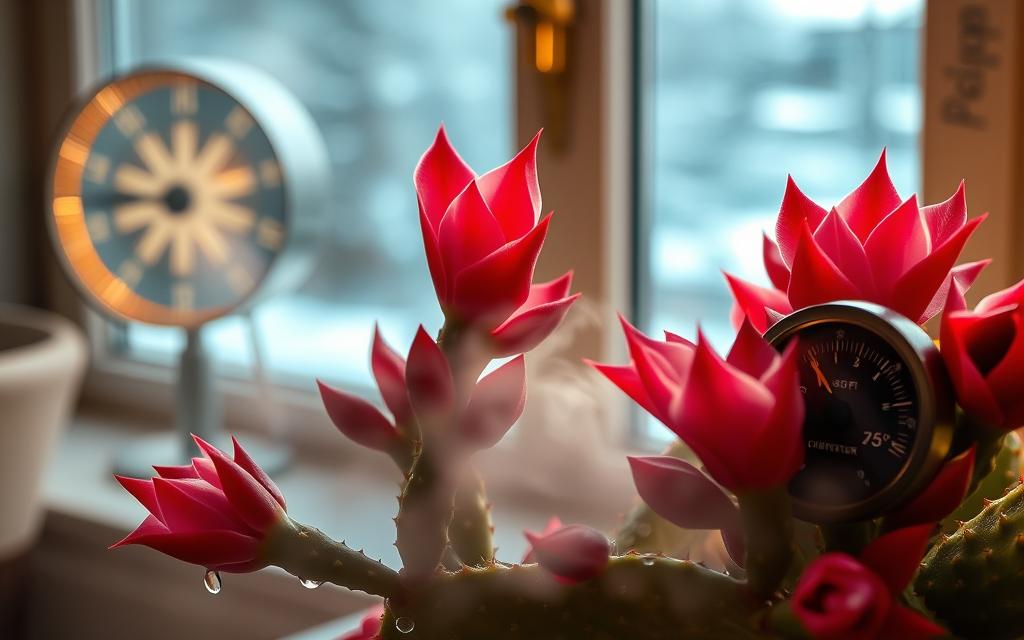
Cool nights and steady conditions that protect buds
Safe zone: daytime temperatures of about 15–21°C and nights around 12–15°C. Nights above ~21°C often stall bud set.
Keep the pot away from drafts, heaters and rapid shifts
Rapid shifts trigger stress and cause the plant to shed buds. Don’t place your houseplant near aircon vents, fans, open doors on cold nights or unvented heaters.
“Once buds appear, pick a stable display spot and stop moving the pot.”
Humidity targets and simple ways to lift moisture at home
Aim for roughly 50–60% humidity. Dry rooms from heating or aircon can make buds shrivel or drop.
- Pebble tray with water — pot sits above the waterline.
- Group pots together to raise local humidity.
- Small room humidifier for consistent moisture when needed.
Caution: avoid stagnant, cold, wet air. Good airflow prevents fungal issues while still protecting buds.
| Issue | Action | Benefit |
|---|---|---|
| Too-warm nights | Move to a cooler room overnight (12–15°C) | Better bud set and longer-lasting flowers |
| Dry indoor air | Use pebble tray or humidifier to reach 50–60% humidity | Reduced bud drop and healthier blooms |
| Drafts & heat cycles | Keep pot away from vents, doors and heaters | Less stress, fewer dropped buds |
Watering and soil moisture changes that support cactus bloom
A steady water rhythm and free‑draining soil keep roots healthy and support seasonal flowering. Treat this rainforest pot plant differently to true desert types: aim for “evenly damp, then slightly dry”, not long droughts. 💧
How to water during dormancy without letting the pot go bone dry
During bud‑set, reduce watering frequency but don’t let the whole mix stay bone dry. Water enough so the top layer dries a little, while lower soil moisture remains available to roots.
Even moisture once buds appear to keep flowers opening
When buds show, switch to a consistent routine. Water thoroughly, let excess drain, then re‑water when the top feels just dry. Small, regular top‑ups during flowering prevent shocks and flower loss.
Common watering mistakes that cause root problems and leaf drop
- Sitting in a saucer of water — leads to root rot and yellowing.
- Heavy mixes that stay wet — trade them for a lighter blend.
- Watering only by calendar, not by feel — plants need flexible care.
Choosing well‑draining, slightly acidic soil to reduce stress
Use a cactus/succulent mix lightened with perlite or bark. Aim for pH ~5.5–6.2 and always use a pot with drainage holes. Healthy roots mean more buds and longer lasting flowers.
“Stressed roots = fewer blooms. Keep soil free‑draining and moisture steady for best results.”
For more detailed care, see our recommended guide at care essentials.
Fertiliser and feeding schedule for better blooms
Think of fertiliser as fuel: modest monthly doses through the warm months help your pot build reserves for a strong display later.
Simple seasonal routine
Feed monthly in spring and summer with a balanced fertiliser (for example, 10-10-10) at half strength. This supports steady growth without burning the fine roots.
Stop feeding by late August or early autumn. Halting fertiliser several weeks before you begin the dark, cool routine helps the plant switch from growth to bud formation.
Choose the right formula
Avoid excess nitrogen in autumn. Too much nitrogen gives lush stem growth but fewer flowers.
If you want an extra nudge when buds start, use a low‑nitrogen, higher phosphorus bloom booster lightly and only for a short spell.
Practical tips and risks
- Use balanced fertiliser diluted to half strength monthly in spring/summer.
- Flush the pot occasionally to prevent salt build‑up from repeated feeding.
- If you prefer low fuss, refresh the potting mix every few years and keep feeding modest — most plants will reward that.
Remember: fertiliser helps the plant build strength, but the dark nights and cooler evenings are still the main signals for a reliable cactus bloom.
For a concise guide on feeding, see christmas cactus fertiliser.
Step-by-step: force Christmas cactus blooming for a set date
Pick a target date, then work backwards so your plant has a clear schedule to follow. For a holiday season display, count back about 8 weeks and begin the routine in early to mid autumn.
Daily routine to use for about 6–8 weeks
Day: bright, indirect light to build energy.
Night: provide 13+ hours of continuous darkness and keep nights cool (aim ~12–15°C).
Watering: slightly reduce watering during bud‑set—top mix may dry a little but don’t let roots go bone dry.
When buds form and moving the pot
Once you see buds, move the pot only once to its display spot. Choose a calm area with bright, indirect light.
After that, keep conditions steady. Sudden moves, drafts or heaters will often cause bud drop.
How long the display lasts and ways to extend it
Expect individual flowers to last about a week, while the whole display can run 4–8 weeks as buds open in stages.
To extend the run, keep the plant cooler, maintain even moisture and avoid hot, dry air from vents.
Optional summer tip to increase bud sites
Pinch back stem tips in early June to encourage branching. More branches mean more potential buds when the next season arrives.
“Start with a date, keep nights dark and cool, and steady care will give you a reliable show.”
| Step | Action | Timing / Result |
|---|---|---|
| Plan | Pick target week and count back 8 weeks | Gives full run for buds to form |
| Night routine | 13+ hours darkness; nights ~12–15°C | Bud formation in ~6 weeks |
| Watering | Reduce slightly during bud‑set; keep even moisture once buds appear | Less bud drop, longer flowering |
| Display | Move once to bright, indirect light; then keep steady | Fewer dropped buds; better flower opening |
Conclusion
Pick a target week, set a steady dark routine and watch for buds. Start about 6–8 weeks before your chosen date and keep nights cool and uninterrupted.
Keep care simple: bright, indirect light by day; 12–14 hours of darkness at night; cooler nights; reduced water during bud‑set; even moisture once buds form.
Use well‑draining soil and sensible watering to protect roots. Feed in spring and summer, stop in early autumn, and avoid high nitrogen if you want more flowers.
Count back each year and you can plan reliable displays in your home. Ready to try a timed flowering routine? See a concise guide at timed flowering routine and get started. 🌙
FAQ
What two conditions make a Christmas cactus produce flower buds?
Two main signals prompt bud formation: a stretch of long, uninterrupted night-time darkness and cooler night temperatures. Together they shift the plant from growth into reproductive mode, encouraging the formation of buds rather than new stems.
Why is long, uninterrupted darkness important for bud formation?
The plant senses extended nights as a seasonal cue. About 12–14 hours of total darkness for several weeks tells it to set buds. Light leaks or frequent interruptions can confuse the rhythm and prevent buds from forming or cause them to drop.
How do cooler nights signal flowering time?
Nights around 10–15°C are ideal for signalling bloom without harming the plant. Mildly cool nights slow vegetative growth and promote bud initiation. Sudden temperature spikes can delay or abort the process.
What happens if lights interrupt the dark period or temperatures change suddenly?
Interruptions often lead to bud drop or failure to form. Similarly, rapid temperature swings or warm drafts stress the plant and can cause buds to abort. Keep conditions steady to protect developing buds.
How do short days and long nights in Australian homes drive flowering?
In autumn and early winter, reduced daylight hours mimic the plant’s natural seasonal change. If you give steady night-time darkness and follow with cooler nights, the plant interprets this as the right season to prepare and open flowers.
What temperature targets should I aim for in Australian homes?
Aim for daytime temps around 18–22°C and night-time temps about 10–15°C during bud set. Avoid intense heat or very cold drafts; stability is more important than a single perfect number.
When should I start counting back weeks to get blooms by the holidays?
Start in early to mid autumn — roughly 6–8 weeks before you want buds to open. Allow 4–6 weeks of consistent night darkness for bud initiation, then maintain good care until flowers appear.
How can I create adequate darkness indoors without blackout blinds?
Place the plant in a cupboard, unlit room, or closet each evening for the required hours. A tall box or covering with an opaque cloth works too, as long as it remains cool and fully dark each night.
What daytime light routine supports healthy bud development?
Provide bright, indirect light during the day—east or north-facing windows are great. Avoid harsh direct sun that can scorch segments. Good daylight keeps the plant vigorous and ready to form flowers.
Exactly how many hours of darkness does the plant need each night?
Aim for about 12–14 uninterrupted hours of night-time darkness for 6–8 weeks. Consistency matters more than one perfect night, so keep the routine daily until buds set.
Which rooms or window positions are best to avoid leaf scorch?
Bright, sheltered spots out of direct afternoon sun work best—east-facing windows or filtered light near a north window. West windows can be too harsh in summer unless shaded.
How do cool nights and stable conditions protect buds from dropping?
Cool, steady nights slow metabolism and reduce stress, helping buds mature. Avoid placing the plant near heaters, air-conditioners or draughty doors that cause rapid temperature swings or dry air.
How can I keep my houseplant away from drafts, heaters and rapid shifts?
Move it to a central room away from vents and external doors. Use a shelf or stand that buffers temperature changes. Small adjustments—like closing nearby vents—can make a big difference.
What humidity level helps prevent bud drop and is easy to achieve?
Moderate humidity around 40–60% suits the plant. To raise moisture, group pots together, use a pebble tray with water, or place a small humidifier nearby for a few hours each day.
How should I water during dormancy without letting the pot go bone dry?
Reduce frequency but don’t let the soil become rock-hard. Water lightly when the top 2–3 cm of soil feels dry. Aim for slightly drier conditions than in active growth, but avoid prolonged drought.
How should I adjust watering once buds appear?
Keep moisture more even when buds form—don’t let the pot dry out completely. Regular, moderate watering helps buds open and prevents them from shrivelling or dropping before flowering.
What common watering mistakes cause root rot, wilting or leaf drop?
Overwatering in poorly draining mixes and letting plants sit in saucers of water are top culprits. Infrequent heavy soaking that causes long wet-dry cycles also stresses roots. Use a fast-draining potting mix and water to moist, not soggy.
What soil mix helps reduce stress and supports bud formation?
Choose a well-draining, slightly acidic mix—combining standard potting soil with coarse sand or orchid bark works well. Good drainage prevents root problems and keeps the plant healthy for flowering.
When should I fertilise to encourage more flowers?
Feed with a balanced liquid fertiliser through spring and summer, then stop by early autumn. This gives the plant nutrients for growth without encouraging late-season leafy growth that can hinder bud set.
Are low-nitrogen fertilisers useful for bloom production?
Yes. Lower-nitrogen, higher-phosphorus formulas can encourage flower formation. Excess nitrogen promotes foliage at the expense of buds, so reduce or stop high-nitrogen feeds before the dark treatment.
When should I start forcing blooms to hit a specific date?
Begin the dark/cool routine about 6–8 weeks before the target date. Early to mid autumn is ideal in Australia for aiming at holiday display timelines.
What daily routine should I follow to force a set flowering date?
Each evening give about 12–14 hours of complete darkness, keep nights cool (10–15°C), and reduce watering slightly. Provide bright, indirect light by day. Maintain this routine consistently for several weeks.
What should I do when buds form, including whether to move the plant?
Once buds appear, keep conditions stable—steady light, consistent moisture and moderate temperatures. Avoid major moves, repotting or pruning until after flowering to prevent bud drop.
How long does the flowering period typically last and can you extend it?
Individual blooms may last 2–3 weeks; the whole display can run several weeks if conditions stay cool and stable. To extend flowering, maintain even moisture, moderate temps and keep the plant out of direct heat sources.
Does pinching back stem tips in summer really increase bud numbers?
Yes—lightly pinching or pinching back tips in summer encourages bushier growth and more potential flowering sites. Do this several months before you start the dark treatment so new nodes can mature.