
Quick reality check: this elephant-foot houseplant stores moisture in its bulbous base and trunk. That means it likes a dry spell between drinks. You are not hunting for a strict schedule. You are learning a simple rule you can repeat with confidence.
Yes, a little neglect helps. Let the soil dry fully before you add more. That keeps the roots healthy and stops bulb or stem rot. In brighter months many owners find a gap near three weeks. In winter, gaps of four to six weeks are common. Adjust for pot size, indoor temperature and light near the window.
This short guide will show you how to check dryness, manage pots with no drainage and use self-watering setups wisely. You’ll learn the signs in the leaves and base that show stress. It’s an easy-care plant once you build a gentle rhythm. We’ll walk through each step so you care with calm confidence. 🌿
Table of Contents
Key Takeaways
- Only add moisture when the soil is fully dry, not just dry on top.
- Stores water in the trunk and base, so gaps between drinks are healthy.
- Brighter months: roughly three weeks; winter: four to six weeks as a guide.
- Main factors: pot size, light level, indoor temperature and mix type.
- Avoid overwatering — it’s the fastest route to rot and stress.
Understanding your ponytail palm’s water needs (it’s a succulent, not a true palm)
These quirky “palms” hide a succulent secret in their bulbous base that changes how you care for them. The plant you call a ponytail palm is built more like a desert survivor than a tropical tree.
Elephant foot refers to the swollen base and trunk. That bulb stores moisture, so the potting mix can stay dry longer.
Why the elephant foot trunk stores moisture
The onion-shaped base is a water tank. It lets this ponytail ride out gaps between drinks and still show steady growth over years.
Why overwatering stresses these plants
Keep soil wet for long and the roots lose air. That starts root rot and then rot in the stem or base.
- Signs: soft base, yellow leaves, limp stems and a bad smell.
- They tolerate dry indoor air; extra humidity or misting may invite fungus.
Next: with the trunk understood, you’ll move to a simple check-and-water habit rather than guessing.
How often to water ponytail palm indoors in Australia
A clear rule beats guesswork: only reach for the can after you confirm the mix is dry. Check a finger or probe near the pot base. If the soil feels dry at depth, give a thorough soak. If it’s damp, wait.
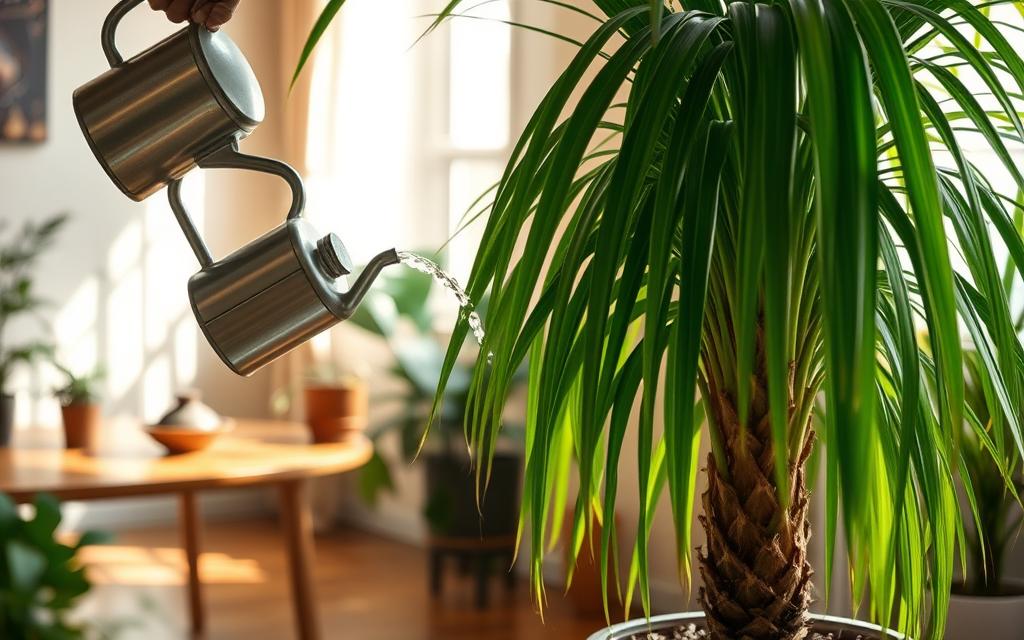
The golden rule: water only when the soil is dry
Trust dryness, not a calendar. Many indoor plants pause growth in cool months and need less moisture. Let the soil dry between drinks to avoid root rot.
A practical seasonal guide
Warmer months often mean faster drying. Expect roughly every 2–4 weeks in bright spots. In winter, aim for 4–6+ weeks and be cautious.
Pot size, temperature and light
Small pots dry faster; large pots hold moisture longer. Warm rooms and good airflow speed drying. Bright windows — especially north-facing in Australia — increase demand. Low light slows growth and cuts frequency.
- Decision framework: check soil dryness → then water deeply.
- If unsure, wait another week — underwatering is easier to fix than overwatering. 🌿
| Condition | Warmer months | Winter |
|---|---|---|
| Typical cadence | Every 2–4 weeks | Every 4–6+ weeks |
| Small pot (~5″) | Dries quicker; check biweekly | Check monthly |
| Large pot / feature | Holds moisture; less frequent | Water very sparingly |
For a detailed schedule and adjustments, see our indoor plant watering schedule.
How to check if the soil is dry enough before you water
Trust a short test at pot depth — it’s the best way to avoid stress and rot. Don’t guess. Check first, especially when your plant sits in a decorative pot with no drainage.
Use a soil probe and push it into the bottom half of the pot where moisture gathers. If the probe feels damp or shows wet residue, wait. The surface can look dry while the lower section stays moist.
Simple alternatives and what to look for
If you don’t have a probe, use a wooden skewer or chopstick. Push it down, pull it out and inspect for dark, damp residue. That tells you the soil is not fully dry.
Reading the plant
Leaves that droop or lose spring can be an early sign of thirst. But droop may also mean root trouble. Always pair visual signs with a soil check before you act.
- Tip: pick one check day each week and probe the mix.
- If you spot fungus gnats, the mix is staying too damp — tighten checks and improve drainage.
- Look for curling leaves or dry tips, but remember brown tips don’t always mean add liquid immediately.
Short routine: probe, read the leaves, then give care only when the lower soil is fully dry. That simple rhythm protects roots and keeps your ponytail thriving.
Best way to water a ponytail palm without causing root rot
Avoid leaving moisture around the roots for days. That single aim prevents most problems and keeps the base healthy.
With drainage: soak until it runs into the saucer
Use a pot with a hole and water slowly until liquid appears in the saucer. Empty that saucer so the pot cannot reabsorb the excess.
Without drainage: be precise and cautious
For sealed planters, pour small amounts, pause, then let the mix absorb before adding more. Stop well before the soil looks swampy. No-drainage setups are less forgiving; rely on checks and restraint.
Pick the right pot and add an aeration layer
Choose a pot with at least one hole. A removable plug gives a safety reset. Add stones or Aeration Stones at the base to create air pockets that help roots breathe.
Use a fast-draining potting mix
Use cactus or succulent potting mix, or amend standard potting with perlite or pumice. If the mix is old or compacted, repotting often fixes mystery dampness fast.
“Good drainage is prevention — not a cure.”
| Pot type | Drainage | When to check |
|---|---|---|
| Standard pot with hole | Excellent | Probe before adding liquid |
| Decorative no-hole pot | Limited | Small pours, frequent checks |
| Self-watering planter | Variable | Follow reservoir cues |
For deeper care notes and a handy guide, read our ponytail palm care.
Using self-watering planters with ponytail palms
A reservoir planter can simplify care, but it needs a short establishment phase before you trust it fully. Start by top-wetting the mix deeply for about 2–4 weeks so young roots grow down into the reservoir. In winter, allow extra weeks — growth slows and roots take longer to reach the basin.
Reservoir readiness test
Fill the reservoir and watch. If the liquid disappears into the pot, roots are drinking from below and you can switch to reservoir cycles. If the level stays put, keep top-wetting until absorption improves.
Servicing the reservoir
Think of it as servicing, not constant topping up. Let the reservoir empty fully, then wait 1–3 days before refilling. That break gives roots air and reduces rot risk.
When to top-water again
If the soil mix becomes bone-dry and stops wicking, reset with a thorough top soak. Bottom watering also keeps the surface drier, which can cut fungus gnat activity.
- Rule of thumb: empty → wait → refill — repeat this rhythm for low-fuss, predictable care. 🙂
- If the reservoir never empties, reassess light, drainage and mix; they may be too wet for safe growth.
For extra notes on scheduling, see our short guide on container care and timing.
Common watering problems and what to do next
A quick triage can rescue a stressed ponytail and stop small problems turning serious. Start by checking the lower pot mix, then press the base for firmness and finally review light and room temperature. This order helps you act fast and with confidence. 🌱
Overwatering and root rot: warning signs and immediate fixes
Signs: soft, translucent tissue in the bulb or stem, a sour smell, or mushy roots.
- Stop adding liquid at once and move the plant to brighter light.
- Unpot and inspect roots, trim any black or slimy bits, then repot into a fast-draining mix.
- Rotate care: let the mix dry deeper between drinks to restore oxygen around roots.
“Wet mix plus poor air is the usual start of rot — act quickly.”
Brown tips and crispy leaf ends
Brown tips are common. Low humidity, hot drafts or inconsistent care cause them.
Trim ragged tips for looks, but treat only persistent or spreading browning as a problem. Move the plant away from vents and cold drafts and give gentle humidity if the room is very dry.
Leaves dropping or slowed growth
Before changing your watering habit, check light first. Low light cuts growth and reduces moisture needs, which can mimic overwatering. If pests like mealybugs or spider mites appear, isolate the plant and treat promptly.
| Problem | Quick action | Follow-up |
|---|---|---|
| Soft base / rot | Stop liquid, unpot, trim roots | Repot in free-draining mix, brighter spot |
| Brown tips | Trim, adjust air and humidity | Check drafts and heater vents |
| Dropping leaves | Check light and pests | Relocate nearer a bright window, treat infestations |
Quick links: read more about indoor care at ponytail palm care and compare soil mixes at succulent potting tips.
Most fixes are simple: dry the mix, brighten the spot and let the plant recover slowly. You’ve got this. 🌿
Conclusion
A single clear rule will save your plant more than any schedule ever will. If the soil isn’t dry, don’t add liquid — that one habit prevents most problems and keeps the swollen base healthy.
Remember: this is a succulent, not a thirsty tropical. Prioritise good drainage and a fast-draining mix for an easy life with less fuss. 🌿
Adopt a simple rhythm: check the soil weekly, reduce checks in cool months, and watch light levels near the window. Slow, steady care wins over frequent tinkering across years.
If you’ve had repeat issues, consider a probe and a better mix — small upgrades make a big difference. Read this detailed ponytail palm care guide and our low-maintenance plant care notes for practical tips. 🙂