
You love greenery, and you want your animal companions safe at home. This short guide exists because many common house varieties can harm curious animals. Lilies can cause fatal kidney failure in cats from tiny contact with pollen or vase water, and sago palm can damage the liver in any animal that chews it.
What this piece gives you: a clear, practical list of 14 indoor favourites to avoid or manage, plus safer swaps you can buy in Australia. We define what counts as “toxic” and what counts as “risky”, and explain why even a nibble matters for cats and dogs.
Common names get messy, so we flag lookalike issues — especially with lilies — and point out warning signs like vomiting, diarrhoea, or sudden weakness.
Before your next buy, check what’s already in your household. If you’d like cleaner-air options that are kinder for a busy home, see our helpful guide on household green choices. This article is for information only and does not replace a vet assessment if your animal has chewed something.
Table of Contents
Key Takeaways
- Many common house varieties can harm curious animals; lilies and sago palm are high risk.
- Even small exposure can cause serious illness in cats and dogs.
- Learn clear signs: vomiting, diarrhoea, weakness, and drooling.
- Check existing green items in your house before adding more.
- Safer swaps are available across Australian garden centres and nurseries.
Why indoor plants can be risky for dogs and cats in Australian homes
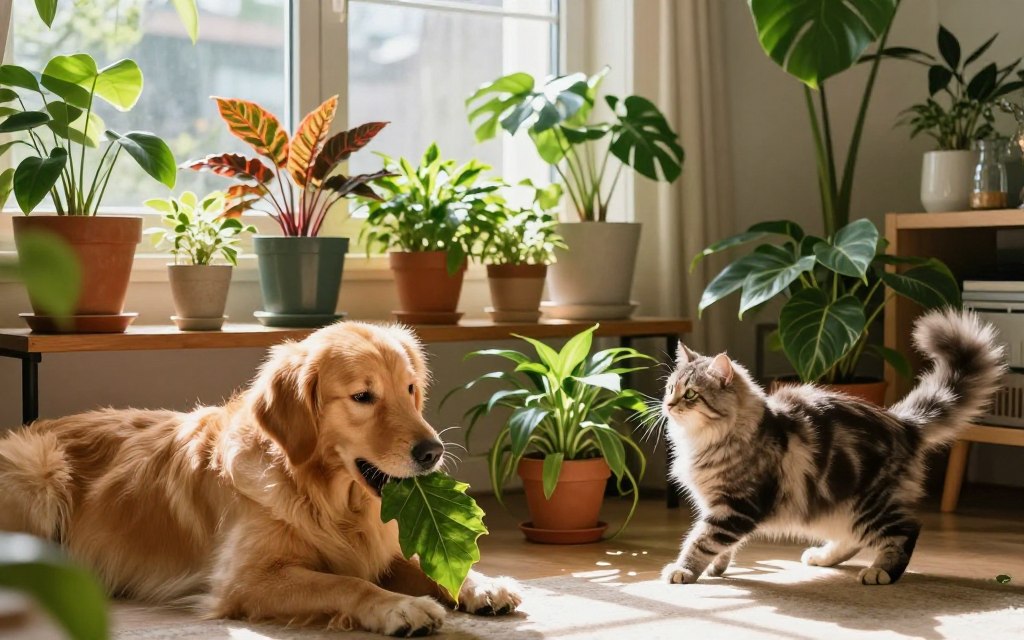
A leafy corner can become a hazard when dogs and cats treat it like a snack or a toy. You might see more chewing when an animal is bored, newly adopted, or left alone longer than usual. Curiosity, texture and a tasty scent all invite investigation.
Behaviour clues matter. Increased nibbling, stolen bits of soil or torn leaves, and a sudden interest in a new item are signs your companion may be exploring by mouth.
How exposure harms animals
There are three main harm pathways you should know about:
| Harm pathway | What happens | Common signs |
|---|---|---|
| Toxins | Chemicals in leaves or roots cause poisoning | Vomiting, lethargy, delayed symptoms |
| Physical blockage | Large seeds or fibrous parts cause gut obstruction | Straining, loss of appetite, abdominal pain |
| Mechanical injury | Thorns or small pieces lodge in ears, eyes or paws | Pawing at face, drooling, local swelling |
Quick note: a “mild” reaction like simple gastrointestinal upset can mask a larger problem. Mouth pain often appears fast — pawing, drooling or refusing food — while some poisonings show later. In Aussie homes, many households now keep lush greenery within reach, increasing overall risk.
For prevention, think supervision, higher placement, extra enrichment and always verifying an exact plant name before buying. Now that you know why plant exposure happens, here are the indoor plants toxic to pets that are most worth avoiding.
Plants toxic to pets: indoor favourites to avoid around cats and dogs
Quick scan: these common indoor favourites are worth checking room‑by‑room for curious animals. Scan living rooms, shelves, balconies and bathrooms. 😊
True lilies and lily lookalikes
High‑stakes warning: even tiny contact — pollen or vase water — can cause kidney failure in cats. Avoid lilies entirely and remove lookalikes from shared spaces.
Sago palm
Sago palm is one of the most dangerous items: ingestion often causes severe poisoning and possible liver failure, especially in dogs. Remove any cycads from yards or patios.
Common household risks
Pothos (devil’s ivy) and ivy cause immediate mouth irritation, drooling and vomiting after chewing.
Philodendrons and monstera carry insoluble oxalate crystals — think needle‑like bits that burn the mouth. You may see pawing, swelling and refusal to eat.
Peace lily, calla lily and Chinese evergreen also cause painful oral swelling and can affect organs in some cases.
Aloe vera, rubber plant and asparagus fern lead to vomiting, diarrhoea, skin irritation or ongoing GI upset.
Hydrangea, tulips, daffodils, azalea/rhododendron, lantana and cannabis (including edibles) can trigger vomiting, diarrhoea, weakness, tremors or seizures. Treat any chewed item seriously.
Note: common names vary. Always check the exact plant name before assuming it’s safe.
Symptoms of toxic plant ingestion and when to see a vet
Spotting early signs after ingestion gives you the best chance of a good outcome.
Watch for common warning signs you can check quickly at home.
Common warning signs
- Vomiting or repeated retching.
- Diarrhoea or loose stools.
- Drooling, pawing at the mouth or obvious pain.
- Refusing food, hiding or unusual activity levels.
Red flags needing urgent care
- Tremors, seizures or sudden collapse.
- Severe weakness, fast or difficult breathing.
- Rapidly worsening signs or sustained vomiting/diarrhoea.
Organ risks to know
Kidney failure is a major risk with lily exposure in cats. Sago palm can cause severe liver damage, especially in dogs. These need immediate assessment.
| Sign | What it may mean | Action |
|---|---|---|
| Vomiting | Early GI upset after ingestion | Call your vet for advice; monitor closely |
| Drooling / mouth pain | Oral irritation or burns | Remove remaining material and contact clinic |
| Tremors / seizures | Serious systemic poisoning | Seek emergency vet care immediately |
What to do straight away
Remove any remaining parts and stop further chewing. Call your local vet first and follow their advice. Take a clear photo and only bring a small sample if the clinic asks for it.
“Rapid action matters; small delays can change the outcome.”
Expect supportive care at the clinic — fluids, anti‑nausea meds and symptom control are common because true antidotes are rare. You’re not overreacting by calling early; that call could save a life. For more detail on common household exposures, see this useful guide on common poisonous items for dogs.
Safe alternatives and pet-friendlier indoor plant picks in Australia
You don’t need to ditch greenery — pick lower-risk varieties and a safer setup. This lets you enjoy a indoor jungle vibe while lowering worry for curious companions. 🌿
Lower-risk choices: orchids, prayer plants, calatheas and Boston ferns are widely available and often kinder for many households. For a taller look, choose kentia or lipstick palms.
Australian natives and why they help
Consider bottlebrush, melaleuca, grevillea and emu bush outdoors. They support local wildlife and suit Aussie gardens when space allows.
Practical selection and placement tips
- Verify both common and scientific names before buying.
- Place greenery on high shelves, in hanging pots or closed rooms.
- Pick up fallen bits quickly and add safe chew options if an animal nibbles.
| Option | Why choose it | Placement idea |
|---|---|---|
| Orchids | Low-maintenance and decorative | Bright bench or shelf |
| Boston fern | Soft foliage, forgiving | Hanging basket |
| Kentia palm | Indoor palm look, better safety profile | Corner pot on floor |
| Bottlebrush (outdoor) | Native, supports birds | Garden bed, not indoors |
“Selection is one layer of safety — supervision and enrichment matter just as much.”
Final note: experts caution there are no perfect guarantees. Verify names, watch behaviour and enjoy a greener home with common sense. For more pet-friendly buying tips, see this pet-friendly houseplants.
Conclusion
A short room-by-room check is the fastest way to spot hazards and act.
Many popular indoor plants can be risky, but small changes reduce harm. Walk your home today, identify each green item and compare it against this list.
Most important to remember: true lilies pose a serious kidney risk for cats, and sago palm can cause severe poisoning. Keep those items well away or remove them entirely.
Save this guide and share it with anyone bringing flowers or helping you move. For extra reading, see this safety review and tips on low‑maintenance care.
If in doubt: if your pet chews a plant and you’re unsure, treat it seriously, photograph the sample and contact your local vet immediately.