
Want greener, happier pots without guesswork? You’ll learn straightforward, indoor-friendly plant fertilising tips that help your greens look better fast. 🌿
Potted greens miss the natural nutrient cycle of garden soil. That’s why they stall even when you water them regularly. Fertiliser is concentrated food; it boosts growth but won’t fix drainage, pH or pests.
In this short guide we map out what your greens need, how to choose the right food, how to apply it and how to troubleshoot common problems. You don’t need chemistry notes — just one simple way to read a label and match it to your pot.
Safety note: more is not better. The right feeding at the right time keeps roots safe and saves you money. For watering rhythm that pairs well with feeding, see our quick schedule indoor watering guide.
Table of Contents
Key Takeaways
- Small, regular feeds beat heavy doses.
- Pots lack natural soil recycling; added nutrients help.
- Match the food to the species and potting mix.
- Feed at the right time, not just often.
- Watch for signs of overfeeding and adjust promptly.
Indoor plant fertilising tips: start with what plants actually need
In a container, the soil your plant gets is finite — and that affects how it grows. Start with the basics: light, water and clean air supply the building blocks, while nutrients act like vitamins and minerals.
The essentials: water, light, carbon dioxide and nutrients
Sunlight plus carbon dioxide, hydrogen and oxygen form the bulk of leaf and stem matter. You supply light and water; the rest comes from the potting mix or a feed.
The 17 essential nutrients explained for indoor plants
There are 17 essentials. Carbon, hydrogen and oxygen come from air and water. The other 14 — like nitrogen, phosphorus, potassium, calcium, magnesium and iron — normally come from soil.
- Primary macronutrients: N, P, K — for leaves, roots and overall vigour.
- Secondary macronutrients: calcium, magnesium, sulphur — support structure and metabolism.
- Trace elements: iron, zinc, manganese and others — small amounts, big effects.
Why indoor pots run out of nutrients faster than garden soil
Containers have less soil volume and fewer reserves of organic matter. When you water, dissolved nutrient ions can leach through drainage holes.
This differs from the garden, where organic matter cycles back and the bed holds nutrients longer. If your greens haven’t been repotted in a while, could they simply be hungry? 🤔
For ideas on how to refresh soil and improve indoor conditions, see our guide to indoor greenery.
Choose the right fertiliser by reading labels and nutrient ratios
Labels are shortcuts — read the N‑P‑K ratio and you can match a product to your goal fast. The three numbers show the guaranteed analysis by weight (for example, 10‑10‑10).
What N‑P‑K means for growth
Nitrogen favours leafy growth and greener foliage. Use it when you want lush leaves.
Phosphorus supports strong roots and energy for shoots. Potassium helps flowers, fruit and overall toughness.
Match the ratio to your goals
Balanced mixes like 10‑10‑10 suit general house care. Aim for higher nitrogen for foliage. Choose a K‑leaning ratio for bloom and fruit production.
Secondary and trace elements for long-term health
Calcium, magnesium and sulphur support structure and photosynthesis. Small amounts of iron, zinc and manganese prevent common yellowing and weak growth.
- Iron deficiency: pale new growth with green veins.
- Low magnesium: older leaves yellow between veins.
Organic vs synthetic — a quick contrast
Organic sources such as manure or compost release slowly and improve potting mix quality. Synthetics act fast but raise burn risk if you exceed recommended amounts.
Less is more
Follow label content and measured application. Overfeeding can mimic deficiency and harm roots. Choose the right products, use correct amounts, and feed with care. 😊
Pick a fertiliser form that suits indoor life and your watering routine
Some feeds act fast; others unwind slowly — pick the form that suits your routine. Choose based on how often you water and how much fuss you want. The right form makes feeding simple and lowers the risk of mistakes.
Liquids and water-soluble powders
Fast-acting and adjustable: water-soluble food gives quick results and lets you change strength easily. It suits a weekly watering rhythm and is great when you need a fast boost.
Pellets and controlled-release granules
Set-and-forget over weeks to months: coated granules release nutrients slowly with warmth and moisture. They cut down repeat application and help avoid sudden overfeeding from a too-strong liquid mix.
Spikes and slow-release options
Spikes push into the soil and release steadily. They’re a low-maintenance choice if you travel or forget a feed now and then.
Seaweed products
Useful tonic — not a complete food: seaweed supports stress tolerance and root health, but it lacks balanced N‑P‑K. Use it alongside other products, not instead of them.
- Quick example: if you water weekly, a light liquid feed fits. If watering is irregular, prefer controlled-release granules that work over months.
- Practical note: form dictates how fast nutrients reach roots and how often you repeat the application.
| Form | Speed | Best for | Duration |
|---|---|---|---|
| Liquid / soluble | Fast | Regular waterers; quick recovery | Immediate effect; repeat weekly |
| Controlled‑release granules | Slow | Busy households; steady needs | Weeks to months |
| Spikes / slow‑release | Very slow | Low‑maintenance care; travellers | Weeks to months |
Apply fertiliser correctly to protect roots, soil and leaves
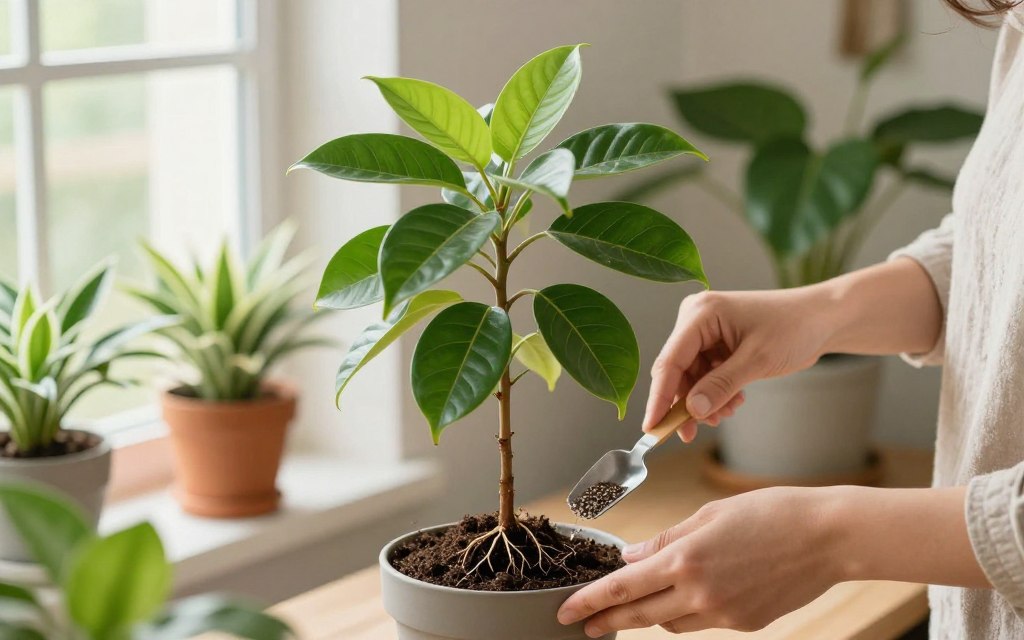
How you apply a feed matters as much as what you use. The right approach keeps roots safe, prevents salt build-up in the soil and stops scorched leaves. Start by following a gentle, repeatable way and reduce risk by hydrating first.
Watering-on for pots: dilution, even coverage and avoiding runoff
For liquid feeds, dilute to label strength or half-strength if unsure. Pour evenly around the base so the solution reaches most of the root zone.
Stop when you see early runoff. That shows the pot is saturated — more water will simply wash nutrients away. For a watering rhythm that pairs with feeding, see our watering rhythm.
Top dressing vs mixing through the soil
Top dressing gives a gentle boost by sitting on the surface and feeding upper roots. It’s handy between repots but can concentrate salts at the top.
Mixing through the potting mix spreads nutrients evenly and is best at repotting or when you rework a mix.
Foliar feeding as an emergency method
Foliar spray is a quick way to correct a specific deficiency. Use heavy dilution and spray young leaf growth for best uptake.
Avoid spraying in bright heat — do this in the morning or late arvo to prevent leaf scorch.
Water first, feed second — a safe default
Always water before you feed. Damp roots take up nutrients steadily and are less likely to burn. If in doubt, follow the product directions and start at half-strength; observe for 1–2 weeks.
For a concise reference on safe application, consult this quick guide.
Get the timing right across the growing season in Australia
Spring is the cue to shift your feeding schedule because light and warmth kickstart active growth. This season is prime time to give pots a gentle boost. ☀️
Spring and warmer months: when indoor plants use nutrients best
As daylight lengthens and indoor temperatures rise, slow-release options break down faster. Warmer conditions speed nutrient release and root uptake across the growing season.
Growth stage feeding: leafy growth vs flowering and fruiting
Use a little extra nitrogen when you want lush leafy growth.
Shift toward higher potassium when buds form and you want more flowers or fruit.
How often to feed: weeks vs months depending on product release speed
Liquid feeds suit a weekly or every-few-weeks rhythm. They act fast and are easy to adjust.
Controlled-release granules or spikes can last many months. Follow the label and match release speed to your watering time.
- Containers leak: pots lose nutrients faster than a garden, so check more often.
- Edibles note: indoor chillies and small vegetables may need more regular feeding than slow foliage growers.
- Waste check: avoid feeding outside the active season — unused nutrients build up in the mix.
| Season / Stage | Recommended nutrient focus | Form | Frequency |
|---|---|---|---|
| Spring / active growth | Nitrogen-led for leaf growth | Liquid or light granules | Weekly–every few weeks |
| Pre-flower / bud set | Increase potassium for blooms | Balanced liquid or slow-release | Every few weeks or months |
| Low light / dormant | Minimal to no feeding | Hold feeds or very light feed | Skip or very infrequent |
Quick self-check: Is your plant pushing new leaves or stems? If yes, it’s usually the right time to feed.
For a deeper look at timing and the optimal feeding time, see our linked guide: optimal feeding time.
Troubleshoot nutrient deficiency and overfeeding before damage sets in
Spotting where yellowing appears helps you know which nutrient is missing or if the mix is at fault. Look at old versus new leaves, edges versus veins, and whether growth has slowed. Diagnose calmly before you treat — many issues look similar. 😊
Yellow older leaves and slow growth
Nitrogen shortage shows as yellowing on older leaves and reduced overall growth. In pots, reserves run out fast so low nitrogen is common. Feed gently after checking drainage and root health.
Edge browning and weak stems
Potassium problems often cause browning along leaf edges. Irregular watering can make this worse even when you add nutrients. Keep a steady watering rhythm and adjust feed amounts slowly.
Interveinal yellowing and pale new growth
Magnesium shows on older leaves, while iron deficiency shows pale new leaves with darker veins. Trace elements like zinc and manganese also affect colour and growth.
Burnt tips, crusty soil and stalled growth
These are classic signs of too much feed. Salt build-up scorches roots and halts growth. If you see this, stop feeding and act fast.
Why pH and potting mix quality matter
Wrong pH can lock up nutrients so the soil has them but the roots can’t use them. Good mix quality supports steady uptake and healthy roots.
- Check symptom patterns (old vs new leaves) before changing amounts.
- If unsure, flush with plain water, pause feeding and check drainage.
- Once stable, resume at a lighter rate and monitor growth.
| Symptom | Likely cause | Quick action |
|---|---|---|
| Older leaves yellow, slow growth | Nitrogen shortage | Check roots, feed lightly, steady watering |
| Leaf-edge browning | Potassium issue / irregular watering | Regular water schedule, balanced feed |
| New leaves pale with green veins | Iron availability (pH related) | Test pH, adjust mix, consider iron supplement |
| Burnt tips, crusty soil | Overfeeding / salt build-up | Flush soil, stop feeding, repot if needed |
Example: pale new leaves with green veins usually point to iron problems before nitrogen. Test pH and soil quality first.
For a clear primer on diagnosing overfeeding and underfeeding, see this quick guide.
Conclusion
Think of feeding as one helpful tool, not a cure-all for poor light or drainage. Match food to what your plants need, use a safe application method and keep routines simple.
In one breath: understand needs → read labels → pick the right form → apply correctly → follow seasonal timing in Australia → troubleshoot early → adjust gently. Steady care always outperforms heavy, rare doses.
Refresh potting soil when needed and add organic matter like compost or composted manure to support long-term health. For quick fixes, synthetics help; for slow builds, organics are kinder to the mix.
If unsure, start lighter, watch for 2–3 weeks and adjust. For a practical how-to, see our guide on how to fertilize houseplants — one clear method and careful timing will prevent most problems. 🌿