
Want bold, heart‑shaped leaves that pop in your garden? The answer depends on the spot you choose, the variety you plant and how harsh your local light is. Most caladium types prefer filtered light with a splash of gentle morning sun, though newer varieties cope with brighter exposure.
Thriving looks like strong plants, large colourful foliage and steady growth through warm months. Too much direct light will wash out leaf colour. Equally bad is cold, waterlogged soil — that stunts tubers fast.
Keep a simple rule in mind: aim for bright, warm conditions with protection from the hottest hours. Pick a variety that suits your patio, pot or garden bed. And a quick safety note: caladium sap can irritate skin and all parts are toxic if eaten, so keep them away from curious kids and pets.
Table of Contents
Key Takeaways
- Light balance matters: filtered light plus morning rays usually works best.
- Look for big, healthy heart‑shaped leaves as a sign of success.
- Avoid prolonged hot glare and waterlogged, cold soil.
- Choose varieties based on where you’ll plant them — beds, pots or indoors.
- All parts of the plant are toxic; handle with care around family and pets.
Understanding caladium light needs in Australia: sun, shade and filtered light
Finding the right light keeps foliage vivid. In most Australian gardens a bright, warm spot with protection from harsh afternoon rays works best.
Why part shade is the sweet spot
Part shade (4–6 hours) helps leaves hold colour and avoids heat stress. This balance suits most varieties planted in patios, beds or pots.
Hours of light explained
- Full shade: less than 4 hours — good for the most shade-loving types.
- Part shade: 4–6 hours — the ideal compromise for colour and growth.
- Full sun: 6+ hours — fine for sun-tolerant selections but watch for scorching.
Fancy leaf vs strap leaf
Fancy leaf types prefer more shelter and softer light; strap leaf types tolerate brighter exposure and are sturdier in hot spots. Match the type to your garden aspect when you grow caladiums.
Too much light: what to watch for
“Colours wash out, edges crisp and leaves can ‘melt’—small holes with brown margins between veins.”
Move plants promptly when you see these signs to stop further damage. Check weekly during heatwaves and seasonal shifts. ☀️
| Light category | Hours | Best for |
|---|---|---|
| Full shade | <4 | Fancy leaf, sheltered beds |
| Part shade | 4–6 | Most varieties; best colour retention |
| Full sun | 6+ | Strap leaf and sun-tolerant selections |
do caladiums need sun or shade for best colour and growth?
A little careful light tuning brings out the brightest leaf colours while keeping plants healthy.
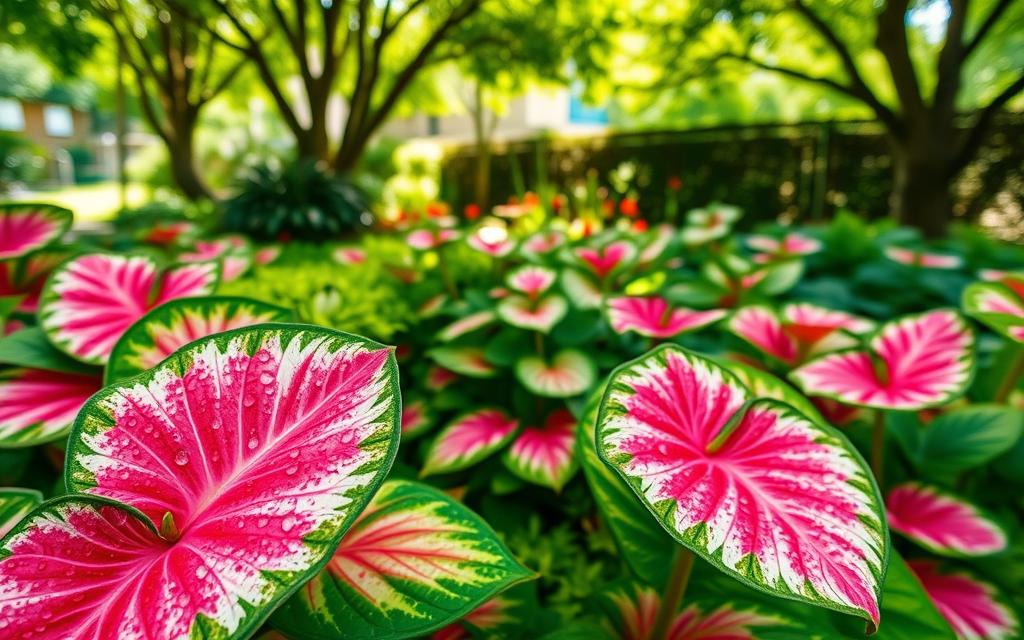
Choosing a sun‑tolerant variety vs a shade‑lover for your spot
For the best foliage colour and steady growth, most caladiums favour bright filtered light with controlled direct warmth.
If your garden area gets long periods of glare, pick sun‑tolerant selections. They handle stronger rays and keep their vivid patterns better.
Conversely, if the spot sits beneath trees or a verandah, choose shade‑loving types to avoid leaf fade and scorch. Match variety to reality and you’ll save time and stress.
Using morning sun to boost colour without scorching
Morning sun (gentle, short bursts) brings out richer colors in the leaves without crisping edges. Newer selections can tolerate a bit more direct light but still prefer protection during hot afternoons.
Try a simple light tweak: move the plant a small step, or add a light cloth for a week. Check colour and vigour after 7–14 days and adjust again if needed.
Remember: the first year often gives the brightest show for tuber‑grown varieties. Set the light early and aim for lasting colour, not a short burst that fades or burns. 🌤️
Where to plant caladiums: garden beds, containers and indoor positions
Pick a spot that shelters from strong afternoon heat while keeping the air warm and humid around the leaves.
Shelter, warmth and humidity are the trio that helps these tropical plants thrive. Use trees, pergolas or a shade cloth to create soft, filtered light that keeps colour bright.
Containers and raised beds
If your soil is heavy clay, favour containers or raised beds. They give control over soil and drainage and cut the risk of soggy tubers and damaged roots.
- Use a free‑draining mix with organic matter.
- Choose pots with good holes and lift them during very heavy rain.
- Remember spacing: allow enough room so mature size won’t crowd other patio plants.
Growing as houseplants
Indoors, keep temperatures above about 18°C (65°F). Place plants near an east‑facing window for bright indirect light. Boost humidity with a pebble tray or light misting and rotate the top growth for even form.
If you want a watering routine, follow an indoor plant watering schedule to match pots versus garden beds and avoid overwatering.
| Position | Best for | Key tip |
|---|---|---|
| Raised bed | Heavy clay yards | Improve drainage with compost |
| Containers / pots | Flexible placement | Use free‑draining mix |
| Indoors | Houseplants | Warm, bright indirect light |
How to grow caladiums from tubers in spring: soil temperature, depth and spacing
Timing matters: plant in spring when overnight temperatures sit around 16°C (60°F) or higher and the soil has warmed to at least 18°C (65°F).
Why wait? Cold, wet soil stalls tubers and invites rot. Warm ground gives fast sprouts and steady establishment.
Planting basics and the right way up
Place tubers with the pointed end or visible eyes facing up. Roots form from the top of the tuber, so planting about 4–5cm deep supports strong root growth.
Bulb size, spacing and expectations
Smaller bulbs need closer spacing; #1 bulbs go 20–25cm apart in beds. Jumbo bulbs perform best at roughly one per square foot in pots or beds.
- Soil: use a warm, free-draining mix so tubers won’t sit cold and wet.
- Growth time: first leaf in ~3 weeks in warm conditions, or 6–8 weeks in cool spring starts.
- Full leaf‑out: expect a good display by about nine weeks into the growing season.
Choose larger size tubers if your warm season window is short; they give a fuller show sooner. Keep water light until shoots appear, and adjust light hours and position as foliage develops. For detailed steps on starting tubers from bulbs, see growing caladiums from bulbs.
Caladium care through the warm season: water, fertiliser, heat and leaf health
Summer care is about balance: steady moisture, light feeding and shelter during heat spikes. Follow a simple routine and check plants weekly to catch stress early.
Watering: pots versus garden soil
Pots dry out faster than in‑ground beds. Use a free‑draining mix in containers and water more often; early morning is best to reduce leaf scorch.
Garden soil holds moisture longer, especially in sheltered spots. In heavy soil, watch for sogginess and reduce how often you water.
Moist, not soggy
Keep soil moist but not waterlogged. Overwatering invites tuber rot and fungal disease. If the top 2–3cm of mix feels dry, it’s time to water.
“Wet at the roots, dry at the crown” — aim for that balance.
Fertiliser basics
Use a light feed—around a quarter strength of what you’d give flowering annuals. Too much fertilizer can burn pale leaf areas.
Apply weekly or fortnightly during active growth, or monthly with slow‑release products. Stop feeding as the season cools toward winter.
Heat, humidity and minor maintenance
These plants love warmth and humidity; avoid extended nights below ~16°C (60°F). Group pots, add mulch and mist foliage to lift humidity in dry climates.
Remove damaged leaves and spathes quickly to focus energy on healthy foliage and steady growth.
Pests, browsing and winter notes
- Pests: watch for aphids and slugs; treat early with hand removal or low‑tox sprays.
- Browsing: they’re moderately resistant to deer and rabbits but keep an eye if wildlife is common.
- Winter: growth slows—treat tender varieties as annuals or lift tubers indoors where nights dip low.
For more indoor watering tips and timing, see this helpful guide on indoor plant care at indoor plant watering. For a detailed species factsheet, check a reliable caladium factsheet.
Conclusion
Bright filtered light, warm ground and regular watering form the reliable recipe for colourful, heart-shaped leaves.
Match variety to light and plant into warm soil. Keep moisture steady, feed lightly and watch leaf colour. Too much sun causes fading and “melting”; more shade often fixes that fast.
Quick checklist: dull colour = a touch more sun; scorch = move to shade; slow growth = warmer nights and better drainage. You’ll need warmth, free-draining soil and gentle feeding to get the best show this season.
Pick a spot, choose a pot or bed, plant at the right time and enjoy. Learn more about varieties and care at colourful caladium varieties.
Please share feedback or tell us which top position gave your plants the best leaves this year. For extra inspiration, explore trialsregional recommendations learngardening, plant programleafjoy houseplantsnational, love create idea, create idea boards, free catalogsonline catalogsphoto, retailershop plants salegift, account professionalenroll connect, campaignupgrade account professionalenroll, find plants love, certificates eventsprofessionals create, professionalenroll connect free and recipe searchdeer proof™.
FAQ
Do caladiums prefer sun, shade or filtered light?
Most caladium varieties flourish in part shade or bright, filtered light. They like some morning or late-afternoon sun but struggle with strong midday rays, which can bleach colours and scorch leaves. Choose a spot that gives dappled light under taller plants or a sheltered veranda.
Why is part shade the sweet spot for many varieties?
Part shade balances light for photosynthesis while protecting delicate pigments. It keeps leaves vivid and prevents the “melting” look that happens under intense radiation. In summer heat, filtered light preserves leaf shape and colour better than direct exposure.
How many hours of sun suit part-shade planting?
Aim for around two to four hours of gentle sun, preferably in the morning. Longer exposure to harsh afternoon sun increases stress. In full shade the foliage may be lush but pale; in full sun many varieties will fade or scorch.
Do fancy-leaf and strap-leaf types differ in light tolerance?
Yes. Strap-leaf caladiums tend to tolerate brighter conditions and handle a little more direct light. Fancy-leaf types usually prefer shadier, sheltered spots to keep their dramatic colour contrasts intact.
What happens if leaves get too much bright light?
Excess light causes colours to wash out, leaf edges to brown and tissue to collapse — often called “melting.” That signals stress and raises water demand. Move plants to a shadier spot or add shade cloth if you see these signs.
How should I choose between a sun-tolerant variety and a shade-lover?
Match the variety to the actual exposure you have. If the site gets bright morning sun or light dappled rays, pick strap-leaf or sun-tolerant hybrids. For deep shade under trees or on the south side of the house, select fancy-leaf types bred for low light.
Can morning sun help boost leaf colour without burning leaves?
Yes. Gentle morning rays enhance pigments and encourage compact growth without the harsh heat of midday. Use morning exposure where possible and shelter plants from hot afternoon conditions.
Where are the best planting spots: beds, containers or indoors?
All three work if you match light and humidity. Garden beds under light canopy, shaded borders, and containers that can be moved are ideal. Indoors, place plants in bright, indirect light near east or north-facing windows and maintain humidity.
How do I pick a sheltered spot considering warmth and humidity?
Look for places protected from strong winds and abrupt temperature drops. Autumn and winter protection matters in cooler zones. Caladiums like warm, humid microclimates — a screened patio or mulched bed under taller plants helps.
Why use containers or raised beds for heavy clay soils?
Containers and raised beds improve drainage and let you use a lighter, friable mix. That prevents waterlogging and tuber rot common in heavy clay. They also let you move plants to better light or warmer spots as seasons change.
How bright should indoor positions be for healthy foliage?
Bright, indirect light is best. Avoid direct western or northern sun that can burn leaves. Increase humidity with a pebble tray, humidifier or grouping plants together to mimic their tropical origins.
When should I plant tubers in Australia?
Wait until nights and soil are consistently warm — usually after the last frost and when soil temperatures are above about 18°C. In many Australian regions this is spring, but timing varies with your climate zone.
How do I plant tubers for strong root development?
Plant tubers with the eyes or growing points up, about 5–7 cm deep. Cover lightly and keep soil warm and evenly moist. Proper depth encourages stable root systems and quicker shoots.
What spacing and bulb size should I use for good seasonal growth?
Space tubers about 20–30 cm apart to allow leaves to spread. Larger tubers generally produce quicker, fuller growth. Expect active foliage through the warm season; growth rate depends on variety, light and care.
How often should I water in pots vs garden soil?
Pots dry faster and need more frequent checks. Keep potting mix evenly moist but never soggy. In garden beds, water deeply when the top few centimetres dry out. Exposure affects water needs — brighter spots require more frequent watering.
How do I prevent tuber rot and fungal issues?
Provide well-draining soil, avoid overwatering, and plant at the correct depth. Raised beds or pots with drainage holes help. Remove soggy soil and diseased foliage promptly and improve air circulation around plants.
What fertiliser routine suits caladium foliage?
Use a balanced, diluted liquid feed every four to six weeks during active growth. Light feeding encourages colour without burning pale leaf areas. Avoid high-salt feeds and follow label rates to prevent tip burn.
What temperature and humidity ranges keep plants thriving?
Caladiums like warm nights above 15°C and daytime warmth. They prefer moderate to high humidity. Cooler or dry conditions slow growth and can cause leaf drop; protect tubers from frost in winter.
What minor maintenance keeps foliage looking its best?
Remove yellowed or damaged leaves to focus energy on healthy growth. Stake or shelter plants in windy sites. Clean up fallen debris to reduce pests and fungal risks.
Which pests and browsing animals target these plants and how to manage them?
Aphids, slugs and snails commonly attack foliage, while deer and rabbits may browse in some regions. Use slug traps, organic sprays for aphids, and fencing or repellents to deter larger animals. Regular inspection helps catch problems early.