
Short answer: You’ll get a clear, Australia-specific reply about whether this popular foliage variety returns year after year or behaves more like an annual where you live.
Classified as a tuberous form, this plant survives underground via tubers. That means the leaves die back after cool weather, but the tuber can sprout again when warmth and moisture return.
Many growers treat it like a seasonal favourite in cooler parts of Australia. In warmer coastal gardens and bright indoor spots, it can perform for longer and feel like a repeat performer.
What you’ll want to know up front: it’s prized for foliage not flowers, it needs warmth, good drainage and winter protection, and it can irritate if eaten—so keep it away from curious pets and kids.
Table of Contents
Key Takeaways
- You’ll learn whether this variety truly returns in your local climate.
- It survives by tubers, not by keeping leaves through winter.
- Warmth, moisture and drainage are key for repeat growth.
- Often treated as an annual in cool regions, lasting longer in mild zones.
- Keep out of reach of pets and children due to irritation risk.
Is heart to heart caladium perennial in Australia?
Practical definition: will this regrow next warm season without buying new tubers? The short answer depends on your local climate and how you treat the underground storage.
Perennial by tubers: how dormancy helps return each season
These plants store energy in tubers, which rest during cool months and resume growth when soil warms in spring. The tubers act like a savings account for the next season’s leaves and colour.
When it behaves like an annual in cooler or frost-prone gardens
Cold snaps, frost and long cool winters can kill foliage and damage tubers. In those situations many gardeners treat them as annuals and replant each year unless tubers are lifted and stored.
What “perennial” means for this type in real-world Australian climates
Think in simple terms: warm, frost-free coastal or tropical areas give better repeat performance. Cooler temperate zones need winter protection, lifting, or dry storage if you want the same tubers back next season.
- Mental model: warm + frost-free = likely repeat growth.
- Cold or frosty sites: behave like annuals unless tubers are saved.
- Key drivers: warm spring soil, summer moisture and protected tubers over winter.
“Protect the tubers in winter and you’ll often see fresh shoots when spring arrives.”
Next, we’ll cover light, heat and humidity for reliable seasonal growth 🌿
Best conditions for repeat growth: light, heat and humidity
Light and warmth control how bold your foliage looks through summer. Choose the right exposure and you’ll see crisp colour and bigger leaves rather than faded or scorched growth.
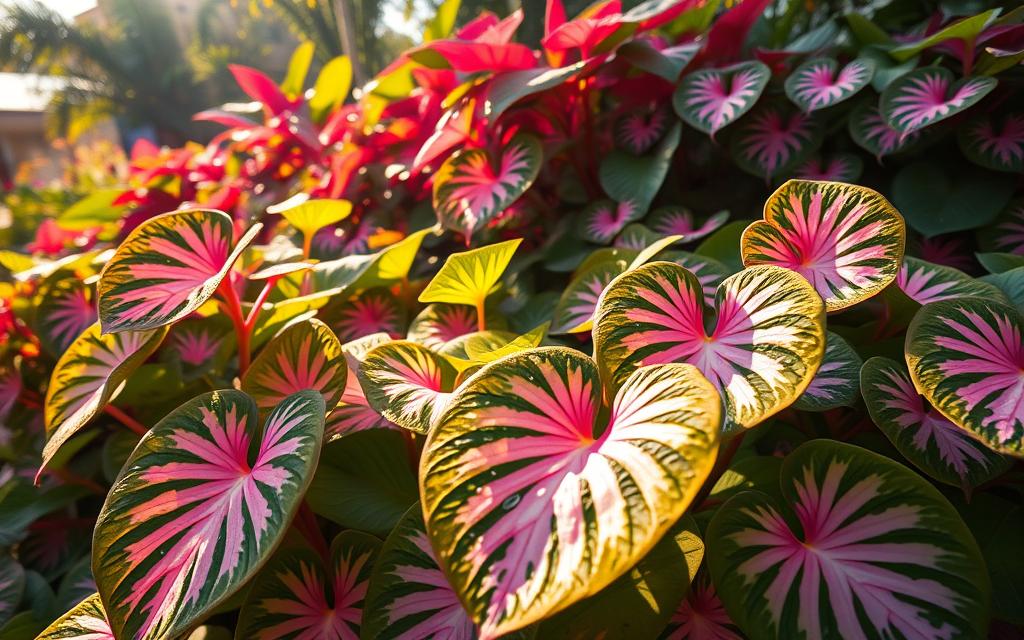
Sun, part shade and full shade: where foliage colour looks best
Full sun suits cooler coastal spots in morning only; avoid brutal afternoon sun that burns white areas on the leaf.
Part shade gives balanced contrast and keeps colour vivid without washout.
Full shade protects delicate markings but may reduce leaf size and boldness.
Temperature thresholds to protect leaves and avoid stunting
Aim for consistent warmth above 65°F (~18°C) for large leaves and steady growth. Protect plants from nights below 50°F (~10°C); chill slows shoots and stunts results.
Humidity tips for lush summer foliage
Humidity is the secret sauce. Misting, grouping pots and a pebble tray raise local humidity and keep summer foliage lush.
For indoor humidity hacks use this short guide: indoor humidity hacks.
| Exposure | Best outcome | Care tip |
|---|---|---|
| Full sun (morning) | Bright colour, medium leaf size | Filter harsh afternoon sun |
| Part shade | Bold colour, large leaves | Ideal for most Australian gardens |
| Full shade | Protected markings, smaller leaves | Increase humidity and feed lightly |
“Heat plus steady humidity gives the tropical look most gardeners want.”
Soil, watering and fertiliser for healthy leaves all season
Start with free-draining earth and a watering routine that avoids extremes. Even moisture brings the best results: not bone-dry and not waterlogged.
Keep soil evenly moist in both garden beds and containers. Beds hold moisture longer, so check less often. Pots dry faster; water more frequently and watch the top layer.
Free-draining mixes stop tuber problems
Use a mix that sheds excess water. That prevents cold, soggy conditions that rot tubers and stall growth.
Light feeding — less is more
Feed with quarter-strength fertiliser during active growth. Apply weekly or fortnightly. Too much feed burns pale sections on the leaves.
Stress signals and quick fixes
Yellowing, sudden leaf drop or scorched white patches mean moisture or feeding issues. If leaves look burned, flush the soil and pause fertiliser.
- Moisture rule: evenly moist, never bone-dry, never waterlogged.
- Pots vs beds: pots need more frequent water; beds may need drainage relief in shade.
- Feeding: ¼ strength, weekly or fortnightly during the season.
“Even soil moisture and light feeding deliver the best summer foliage.”
Planting Heart to Heart caladium tubers and choosing pots or garden beds
Hold off until soil has warmed well; that simple pause saves tubers from failure. Wait for a steady spring warmth near 21°C where possible. Warm soil reduces rot and gives a fast, healthy start. 🌱
When to plant in spring
Don’t rush into the cold ground. In cooler parts, plant later or use pots that warm faster. For varieties like White Wonder many recommend soil around 70°F (21°C) before planting.
Depth and orientation
Place tubers with the pointed end facing up. Plant about 5 cm (2 inches) below the soil surface. This gives roots room and keeps shoots near the surface.
Spacing, size and expected height
Allow space for mature growth: plants typically reach 15–20 inches in height and about 8–10 inches spread.
- Spacing: give each tuber room — avoid crowding for airflow and fuller foliage.
- Pots vs beds: pots warm and drain faster, ideal in cool garden spots.
- Uses: border planting, mass displays, and a container “thriller” in mixed pots work well.
For branded tips see the Proven Winners planting guide or more caladium planting tips for timing and care.
Winter care in Australia: keeping tubers alive for next season
A calm, simple end of season routine gives you the best chance of repeat growth next spring. Watch leaf colour and vigour; those signs tell you when to ease back.
Letting the plant go dormant and cutting back watering at the right time
When leaves yellow and growth slows, reduce water and stop feeding. Let the tubers rest rather than forcing growth.
Tip: keep soil barely moist if foliage remains. If foliage dies back, keep the medium much drier.
Protecting from cold, wet soil — the main winter risk
Cold plus soggy soil wrecks tubers even without frost. Improve drainage or lift tubers in problem zones.
Overwintering: lift and store versus keeping plants in pots
- Lift and store: dry-ish, breathable packing, frost-free for cooler zones.
- Keep in pots: move containers to a sheltered, warm spot and water sparingly.
Spring restart checklist for strong new growth
- Warmth first — wait until heat returns above ~18°C.
- Then add gentle moisture and light gradually.
- Reintroduce feed once new shoots show steady growth.
You’ll learn: when to reduce watering, why cold wet soil is the top risk, and the simple storage rules that improve your odds of a true repeat performance. For variety details see variety details and a handy watering schedule.
“Read the season, protect the tuber, and start spring with warmth — that three-step rhythm wins most years.”
Conclusion
A simple routine at season change gives you the best chance of repeat growth and bold foliage. Protect tubers from cold, keep soil free‑draining, and time planting for warm soil.
Best results come from bright but sheltered light, steady moisture, high humidity and quarter‑strength fertilizer during growth. Place plants where sun and shade balance leaf colour and size.
Flowers may appear, but the leaves are the main attraction. Maintenance stays easy when you follow the basics and avoid overfeeding.
Keep pets safe and plan your overwintering now — choose pots or lift tubers. For step‑by‑step care, see the caladium care guide.
FAQ
Is Heart to Heart caladium a perennial?
In warm, frost-free climates the plant behaves like a true perennial because its underground tubers survive year to year. In cooler areas it often dies back and needs lifting or treating as an annual to preserve the tubers for the next season.
Is Heart to Heart caladium perennial in Australia?
In tropical and subtropical pockets of Australia it will return each year if soils stay warm and frost is absent. In temperate or frost-prone zones plants usually go dormant and must be lifted, stored or treated as seasonal to avoid cold damage.
Perennial by tubers: how dormancy helps it return each season?
The tubers store energy through dormancy. After leaf drop they sit safe underground until soil warms, then produce new shoots. Proper drying and storage during dormancy improves the chance of reliable regrowth.
When it behaves like an annual in cooler or frost-prone gardens?
If frost or prolonged cold hits, foliage will blacken and tubers can rot in wet, cold soils. In those gardens gardeners commonly dig tubers up and store them, or replant fresh tubers each spring.
What “perennial” means for Heart to Heart caladiums in real-world Australian climates?
Perennial in this case means tubers survive and regrow without replanting. In practice, survival depends on local winter lows, soil drainage and microclimate — sheltered, warm sites favour perennial behaviour.
Sun, part shade and full shade: where does foliage colour look best?
Bright, indirect light or morning sun with afternoon shade makes the leaves most vivid. Too much hot sun can scorch, while deep shade dulls colour and slows growth.
Temperature thresholds to protect leaves and avoid stunting?
Keep nights above about 12–15°C for steady growth. Temperatures under 10°C slow development; frost below 0°C will damage leaves and tubers.
Humidity tips for lush summer foliage (especially in dry areas)?
Provide humidity by grouping pots, using pebble trays, or a light mist in the morning. Mulch garden beds to retain moisture and reduce stress in dry spells.
Keep soil consistently moist in garden beds and containers — how often should I water?
Water regularly so the medium feels evenly moist but not wet. In summer that may mean several light waterings weekly in pots; adjust for rainfall and pot size to avoid drying out.
Why is free-draining soil important to prevent soggy conditions and tuber issues?
Free-draining mixes stop waterlogging and root rot. A blend of good garden soil, compost and coarse sand or perlite helps tubers breathe and stay healthy.
Fertiliser “less is more”: how to apply quarter-strength feeds to avoid leaf burn?
Use a balanced liquid feed at quarter strength every 3–4 weeks during active growth. Overfeeding causes leaf scorch and weakens tubers for dormancy.
What are signs of stress like yellowing, leaf drop and scorched white sections?
Yellowing often means overwatering or poor drainage. Sudden leaf drop can signal cold shock or pest pressure. Scorched pale patches point to sunburn or fertiliser burn.
When should I plant tubers in spring to avoid rot?
Wait until soil warms and night temperatures are reliably mild. Planting too early in cool, wet soil raises rot risk. Late spring after last cold snap is usually safe.
What is the correct planting depth and orientation for tubers?
Place tubers with the pointed end up about 5 cm below the surface. This depth encourages quick sprouting while reducing rot risk.
What spacing and mature size should I plan for?
Space plants to allow an 20–50 cm height and a 20–25 cm spread, depending on the variety. Allow room for air circulation and visual impact in groups or borders.
How can I use them in Australian landscapes — borders, massing or containers?
They work well as border accents, mass displays for impact, or as a “thriller” in mixed containers. In pots they add colour and contrast on patios and balconies.
How do I let the plant go dormant and reduce watering at the right time?
After foliage yellows naturally, ease off water and stop feeding. Let leaves dry, then lift tubers or leave them in dry pots if your site stays frost-free.
How do I protect tubers from cold, wet winter soils?
Lift tubers, brush off excess soil and store them dry in peat, vermiculite or paper bags in a cool, frost-free spot. Alternatively, move potted plants to sheltered, heated areas.
What are overwintering options: lifting and storing tubers vs keeping plants in pots?
Lifting and storing gives the best survival in cold regions. Keeping potted plants indoors or in a heated glasshouse works if you can control temperature and light.
What should be on a spring restart checklist for strong new growth?
Inspect tubers, repot with fresh, free-draining mix, plant at correct depth, give bright indirect light, water moderately and feed lightly once new leaves appear.