
Quick answer: Best = bright, indirect light. Okay = low light with slower growth. Avoid = harsh, direct sun that scorches leaves.
This species is famously tough, so it fits many Aussie homes and lifestyles. It stores moisture in thick rhizomes, so overwatering is a more common mistake than low light. Growth slows in dim spots and stems may stretch as they search for light.
Think practical: place it where it gets bright, indirect rays away from hot windows. If your place is shady, you still have options — choose a spot, rotate occasionally and match watering to the light level.
Later sections show step-by-step tips on choosing a spot, adjusting through the seasons and reading the leaves to troubleshoot. You’ll learn what “growing well” looks like in a real home, and simple fixes for common issues. 🌿
Table of Contents
Key Takeaways
- Bright, indirect light is ideal for healthy growth.
- Low light is tolerated but growth slows and stems can elongate.
- Avoid direct sun near hot windows to prevent leaf burn.
- Match watering to light levels — less water in dim spots.
- This is a great choice for busy households and beginner gardeners.
Understanding ZZ Plant light needs in today’s Aussie homes
Start by spotting what makes Zamioculcas zamiifolia such an easy-care choice for Aussie homes. This sculptural plant suits modern interiors and busy routines, so you can relax and still enjoy healthy green forms.
What a Zamioculcas zamiifolia is: rhizomes and roots
The major secret is below the soil. Thick, tuber-like rhizomes let this plant store water and support fleshy stems. Chunky roots and stems keep it resilient when you miss a water day.
Sunlight vs indoor light: why bright indirect light is the sweet spot
Separate direct sun (hot beams on leaves) from gentle room illumination. Bright, indirect light means a well-lit spot near a window but out of the sun’s path.
- Bright indirect light gives fuller, sturdier growth.
- Dim corners slow growth and can make stems stretch.
- Once you match light and watering, general care gets much simpler.
does zz plant need sunlight or can it grow in shade?
A shady corner can work, but it changes how the foliage and stems behave over time.
Think of enough indirect light as a room where you can read without switching on a lamp. That level gives steady growth and fuller leaves. In practice, place the pot near a bright window but out of direct beams most days.
What happens in low light
Under low light, you’ll notice slower growth and smaller leaves. Stems may stretch toward the nearest source, making the silhouette leggy. This is normal, but it alters the plant’s shape and vigor over time.
Can it survive with very little natural light?
Yes — survival is possible in very dim conditions. Expect minimal new shoots and long pauses between growth spurts.
Reality check: if you want steady shoots rather than survival, add a grow light or move to a brighter room.
| Condition | Typical effect | Care tip | Time to notice |
|---|---|---|---|
| Bright indirect light | Steady growth, full leaves | Rotate monthly, water moderately | Weeks |
| Low light | Slower growth, smaller leaves | Water less often, accept legginess | Months |
| Very little natural light | Survival mode, minimal shoots | Use a grow light for steady growth | Months to seasons |
| Low light + dry spells | Long drought tolerance; rhizomes help | Check soil before watering; don’t overdo it | Time varies |
Decide what you want: a feature that actively grows, or a hardy survivor for a shady hall. For more indoor care tips and a simple routine, see ZZ care indoors.
How to choose the best spot indoors for bright indirect light
Pick a place that offers steady brightness without direct beams. Pull the pot back from the window so leaves get diffuse rays, not hot hits that burn glossy foliage.
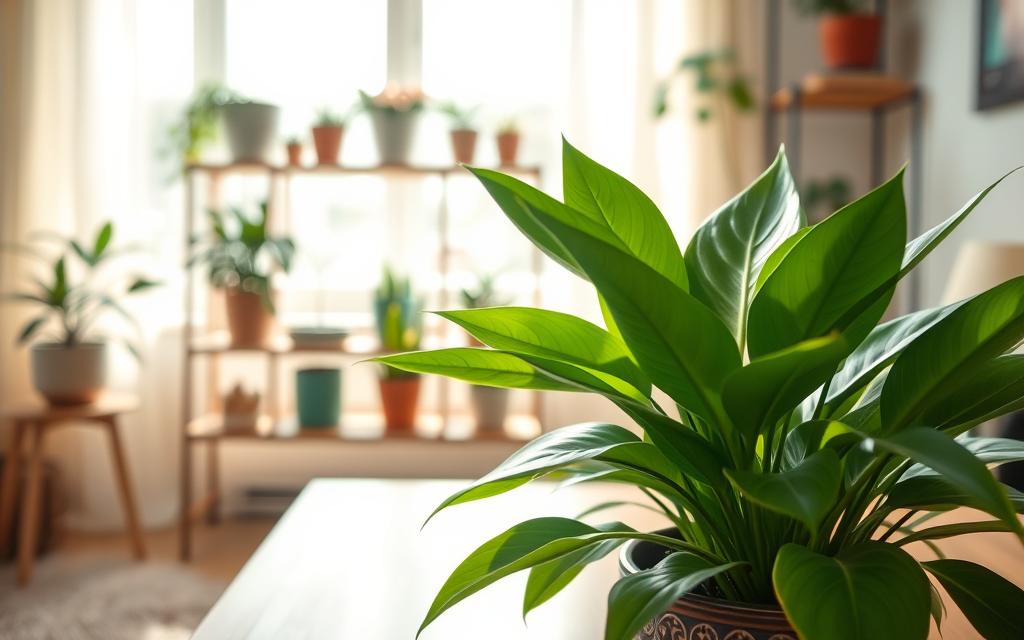
Placing near windows without harsh rays: distance from hot glass matters
In Australia, window panes can heat up fast. Keep pots at least ~6 feet from strong south or west glass to avoid scorched leaves.
For east or shaded aspects you can sit the pot closer. Move gradually to avoid shocking the stems.
Keeping the plant even: rotating the pot every couple of months
Rotate your pot every couple of months so stems grow evenly. This simple habit fixes leaning and gives a symmetrical shape over time.
Office and fluorescent lighting setups: when they work and when they don’t
Fluorescent fittings can support plants if they’re bright and on for long periods. Dim overheads won’t replace a bright room, so check actual conditions before assuming they’re enough.
Quick checklist — make sure the spot has stable temps, no blasting air con, and is visible so you notice changes early. A well-placed houseplant rewards small, regular care over time.
Why direct sunlight can damage ZZ Plants
Strong afternoon rays can turn glossy leaves brittle in a single hot spell. Glass amplifies heat, so what looks like gentle light at the window can become intense behind the pane.
Leaf scorch and sunburn: what to watch for
Sun damage shows fast. Look for bleached or pale patches, brown crisp edges and sections that never return to green. Damaged tissue stays dead—new growth is the only fix.
High-risk spots in Australia
North- and west-facing windows are common danger zones, especially in summer heatwaves. These exposures push temperature and light beyond safe conditions for glossy foliage.
- Why it happens: reflections and hot glass increase local heat.
- How to spot it: sudden bleached areas, dry brown spots, and stunted shoots.
- Quick fixes: move the pot back, use sheer curtains or place it on a side wall for bright, indirect light.
Tip: Sunburn isn’t solved by extra water. Focus on preventing further burn and supporting new shoots. One burnt leaf isn’t the end—adjust placement and carry on with steady low-maintenance care and your plant can recover. 🌿
Adjusting light through the seasons for better growth
As days lengthen and shorten, a few simple moves keep steady, healthy growth through each season.
Spring and summer: the growing season brings faster shoots and fuller leaves. Move your pot into brighter indirect rays but keep it off hot glass. In Australian summers, avoid west-facing windows in afternoon heat to prevent scorched foliage.
Supporting the growing season without overheating
Keep brightness high while preventing hot spots. A sheer curtain or a small shift back from the window is all you need.
Winter light dips: a gentle close-up
When daylight falls, move the specimen a little closer to a bright window for indirect exposure. Check after a week or two and adjust again if growth resumes slowly.
Temperature and drafts
Even perfect placement won’t help if cold drafts or vents stress the foliage. Keep the temperature above about 7°C to avoid shock.
Practical notes:
- One or two seasonal tweaks beat constant rearranging.
- Average indoor humidity suits most houseplants; wipe leaves if winter heating dries the air.
- For more detailed routines and light tips, see a short guide to mastering light needs.
Watering by light level to prevent root rot
Link your watering rhythm to location: brighter spots dry faster, darker corners stay damp. Match water routines to the light and season to protect the tuberous roots and avoid rot.
Let the soil dry out completely
Let the soil dry out completely before you water again. The rhizomes store moisture, so frequent top-ups lead to soggy mix and root rot.
Practical timing guide
Think in simple blocks: water thoroughly every few weeks rather than daily sips. In summer, aim for every 2–3 weeks. In winter, stretch to every 3–4 weeks and watch the pot.
How to water correctly
Water deeply so excess drains from the pot’s holes. Never leave the pot sitting in a saucer of water. Let the drain-through dry out before returning the pot to its tray.
Signs you’re overdoing it and quick rescue
Watch for yellowing leaves, soft or mushy stems and a heavy, wet soil smell. These point to rot starting in the roots.
- Pause watering immediately.
- Improve drainage by tipping out excess water and checking pot holes.
- Repot into fresh, free-draining mix if the soil stays wet for too long.
| Light level | Typical watering cadence | Warning signs | Action |
|---|---|---|---|
| Bright indirect | Every 2–3 weeks | None if drying between waterings | Water deeply; let drain |
| Low light | Every 3–4 weeks | Slow growth; damp mix risk | Wait until soil is dry; reduce water |
| Very dark spots | Every 4+ weeks | Yellowing leaves, soft stems | Move to brighter spot; pause watering |
| Seasonal heat | Every 2 weeks possible | Faster drying of soil | Increase watering cadence; monitor pot |
Tip: If you’re unsure, test the mix with a finger or a moisture probe. For more step-by-step care and timing tailored to low light rooms, see this low-light care guide and general indoor watering advice at Aloe Vera care for similar routines.
Soil, drainage and pots that match ZZ Plant lighting conditions
The right potting and drainage choices protect roots more than any watering trick. Good soil and a free-draining pot stop soggy mix from causing rot, especially in dimmer spots where the mix dries slowly.
Well-draining mixes that work
Use a quality indoor potting soil boosted with cactus/succulent mix or coarse perlite. This creates faster drainage and better airflow around roots.
Why drainage holes are non-negotiable
Drainage holes prevent water pooling at the base. A sealed decorative pot can hide wet soil and lead to root rot before you spot signs above the surface.
Repotting timing and root cues
Repot in spring or summer to reduce stress. Keep the specimen slightly rootbound and only go up one pot size at a time.
- DIY mix: 70% potting soil + 30% cactus/succulent mix or perlite.
- Use a nursery pot inside a cachepot and empty runoff after watering.
- Repot when rhizomes press the pot sides or roots poke from drainage holes — not by calendar alone.
For a simple watering routine that matches light and soil, follow this indoor schedule: indoor watering guide. 🌿
Quick troubleshooting: reading leaves and stems to fine-tune light
Tiny shifts in leaf colour or stem angle tell you more than you think.
Use this quick symptom → cause → fix guide to diagnose common issues in seconds. Each entry points to an easy first step you can try today. ✅
Leggy stems and stretching
Symptom: long, thin stems that lean toward the window.
Cause: too little light making the stems reach.
Fix: increase bright, indirect exposure slowly — move a few metres closer over a week or add a grow lamp. Rotate the pot to encourage even growth.
Yellowing leaves
Symptom: a few lower leaves yellowing or mass yellowing across the crown.
Cause: older leaves age naturally; widespread yellowing usually signals overwatering, poor drainage or stressed roots.
Fix: check soil moisture, lift the pot to smell for rot, and improve drainage if the mix stays wet. Trim soft yellow leaves and pause watering until the mix dries.
Brown tips and dull leaves
Symptom: browning at tips and loss of the glossy finish.
Cause: low humidity, dust build-up or occasional direct sun exposure plus dry indoor air from air‑conditioning or heaters.
Fix: wipe leaves with a damp cloth or give a gentle shower; avoid commercial leaf shine. Raise humidity with a pebble tray or room humidifier if your air is dry.
When growth stalls
Symptom: little to no new shoots for months.
Checklist: is the light adequate? Is the soil old or compact? Have roots filled the pot?
Fix: refresh the topsoil or repot in spring, feed lightly in the growing season, and check roots before increasing water.
Want more specimens?
Propagation note: division at repotting gives faster results. Cuttings and leaf cuttings work too, but they take many months to form new rhizomes and visible growth. Be patient — gardening rewards steady care. 🌿
Conclusion
Treat this as a dry-tolerant housemate: moderate brightness, infrequent watering and solid drainage pay off. Keep it in bright, indirect light for the best shape and steady shoots.
Low light is tolerated but usually means slower growth and legginess. Avoid harsh direct rays that can scorch glossy leaves, and don’t overwater — rot follows wet, compacted soil faster than drought.
Quick care loop: place for indirect light, use a well-draining soil and pot with holes, water only when the mix is dry, and tweak placement by season. In winter bring it a little closer to bright windows; in summer shield from hot glass.
Once you match light and watering, this low-fuss houseplant rewards you with glossy, long-term presence. For a full routine, check the ultimate care guide. 🌿
FAQ
Does the ZZ plant (Zamioculcas zamiifolia) prefer bright light or shade?
The ZZ (Zamioculcas zamiifolia) thrives in bright, indirect light. It stores water in thick rhizomes, so it tolerates lower light than many houseplants, but bright indirect conditions give the best, steady growth without risking leaf scorch.
How much indirect light is “enough” for steady growth?
Aim for several hours of bright indirect light daily. A spot near an east-facing window or a few metres back from a north- or west-facing window usually works well. Even light throughout the day helps produce full, glossy leaves.
Can the ZZ grow in low light or shade, and what are the trade-offs?
Yes — it will survive in low light, which makes it ideal for offices and darker rooms. Expect slower growth, smaller leaves and leggier stems. You may need to accept reduced vigour and occasional pruning or rotation to keep shape.
Where is the best indoor spot for bright indirect light?
Place it near a window that provides filtered light. Keep the pot a comfortable distance from hot glass and direct midday sun. East windows or shaded north/west windows are great. Rotate the pot every few months so all sides get light.
Do office lights or fluorescent fixtures provide enough light?
Many offices with fluorescent or LED panels provide adequate light for survival, especially if combined with some natural light. If growth stalls, consider moving the plant closer to a brighter window or adding a low‑wattage grow light.
Why is direct sunlight harmful to this species?
Direct sun can cause leaf scorch on the glossy foliage, producing brown, bleached patches. In hot Australian summer light, west and north-facing windows without protection are high risk for sunburn and heat stress.
How should I adjust positioning through the seasons?
In spring and summer keep it in bright indirect light but out of harsh midday rays. In winter, move it slightly closer to a light source as daylight shortens. Avoid cold drafts and heating vents that cause temperature swings.
How does light level affect watering frequency?
Light and watering go hand in hand. In brighter, warmer months the soil dries faster so water more often. In lower light or winter, water much less. Always let the potting mix dry out between drinks to prevent root rot.
What soil and pot choices work best with these light conditions?
Use a well‑draining mix — a regular potting mix with added perlite or a cactus/succulent blend. Ensure the pot has drainage holes. ZZs prefer to be slightly rootbound, so only repot in spring or summer and only one size up.
How can I tell if light is the problem when leaves look wrong?
Leggy, stretched stems usually mean insufficient light — move it gradually to a brighter spot. Yellowing leaves can indicate overwatering or poor drainage rather than light. Brown tips and dull leaves often point to direct sun, dry air or dust; clean leaves and adjust position.
What signs indicate overwatering versus low light stress?
Overwatering shows as soft, yellowing leaves and soggy soil; roots may rot. Low light stress causes slow growth, smaller leaves and elongated stems but the soil stays relatively dry. Check soil moisture and the rhizomes before changing routines.
How often should I water based on light and season?
In bright, warm months water every 2–4 weeks depending on pot size and mix. In winter, stretch to every 4–8 weeks. Always let the top few centimetres of mix dry out and avoid scheduled watering if the potting mix still feels damp.
When is repotting necessary and how does light affect timing?
Repot in spring or early summer when growth resumes, usually only every 2–3 years. Since brighter light encourages growth, you may need to repot sooner if the plant becomes rootbound and begins to slow down.
Can you protect the plant from harsh Australian sun while keeping good light?
Yes — use sheer curtains, place the pot further from the window, or provide filtered shade with blinds. These measures keep the foliage safe while maintaining the bright indirect light that supports healthy growth.
How do I increase light without shocking the plant?
Move the pot gradually over a week or two toward a brighter spot. Rotate regularly to ensure even exposure. If adding artificial light, start with short daily periods and slowly extend to avoid sudden change.