
is haworthia an indoor plant — yes. It’s one of the easiest succulents for Australian homes. You’ll find it small, slow-growing and forgiving. It suits apartments, desks and shelves. 🌿
What to expect: We’ll cover the ideal conditions — light, soil, water, pots and temperature — so your zebra-style leaves stay firm and compact.
Care indoors is often simpler than outdoors across much of Australia. You avoid strong weather swings and can control moisture more easily. The biggest gotcha is moisture management. Too wet soil invites rot.
Quick wins: use sandy, well-draining neutral mix, dry the top inch before watering, give bright but not all-day harsh sun, and keep nights cool with good ventilation.
We’ll also show leaf cues so you can spot light stress fast. This guide is friendly for beginners and will help you feel confident caring for these small houseplants.
Table of Contents
Key Takeaways
- Haworthia suits Aussie homes and small spaces.
- Bright light without constant harsh sun is best.
- Use sandy, well-draining soil to prevent rot.
- Water only when top inch is dry; manage moisture carefully.
- Protect from cold around 4°C; ensure night ventilation.
Why Haworthia works so well as an indoor plant in Australian homes
Small, tough and tidy, this genus suits tight Aussie spaces with little fuss. Haworthia includes popular names like zebra cactus, pearl plant and star window, so you’ll recognise it at markets and online listings.
Compact rosettes that stay neat
These succulents form tight rosettes of fleshy green leaves, often with white bands or bumps. At 3–5 inches wide they don’t sprawl, which keeps shelves and desks looking tidy.
Slow growth, low fuss
Slow-growing means fewer repots and less pruning. You’ll mainly manage light and watering, not constant trimming.
Where they fit best
They suit desks, bedside tables, kitchen shelves and office sills — great for rentals and small units. Indoors you avoid harsh heatwaves in summer that can stress outdoor pots.
- Offsets: clusters expand over time, so you get more plants for free.
- Conditions: stable indoor conditions make care predictable and forgiving.
Is haworthia an indoor plant?
Bright but gentle daylight makes a perfect home for this compact succulent most of the year. Yes — it thrives inside when you nail the light and keep moisture steady.
What “bright light without harsh sun” looks like
Bright light means a well-lit room near a window where the pot enjoys strong daylight but not scorching beams. Aim for east- or west-facing glass that gives morning or late-afternoon glow.
Risky direct sunlight is hot, sharp rays that bake the pot and scorch the leaves. Watch for quick heat spots on the soil or bright stripes on foliage — these signal too much exposure.
When to move it outside for summer
Summer mornings on a covered balcony or shaded patio work well for short spells. Keep it away from hot afternoon sun and any north-facing spots that get harsh heat.
- Quick rules: stay inside during heatwaves or if you can’t check soil moisture daily.
- Bring it in before cool nights or any frost risk.
- Learn the leaf language — pale or curled leaves mean change the spot early.
Consistency wins. Stable indoor conditions usually beat wild outdoor swings for most Aussie homes. For more low-maintenance care tips, see low-maintenance plant care.
Choosing the best indoor spot for light without leaf burn
Finding the right light balance keeps leaves firm and colours vivid without risking sunburn.
Pick an east- or west-facing window for the safest bright spot. East windows give gentle morning sunlight that rarely scorches. West windows work well too, as late-day light is often cooler than peak heat.
How much direct sunlight is okay?
Short, cool morning rays are usually fine. Avoid long exposure to hot afternoon sun — that’s the danger zone for burnt leaves and faded markings.
Reading leaf colour cues
Green leaves fading means the light is too low. If foliage shifts to white, red or yellow tones, cut back exposure quickly. These colour changes are your best early warning.
Rotate for even growth
Turn pots weekly or every fortnight so the rosette grows evenly. Even light reduces leaning and keeps stripes crisp.
Quick tip: If you only have a north-facing window, use a sheer curtain, pull the pot a little back from the glass, or move it to a side table for filtered light.
For more on safe spots and light tweaks, check the zz plant light guide.
Pot, containers and drainage holes: setting your plant up for success
A smart pot choice makes moisture control simple and keeps roots healthy. Choose containers that move water away from the base quickly. That one decision prevents most common problems.
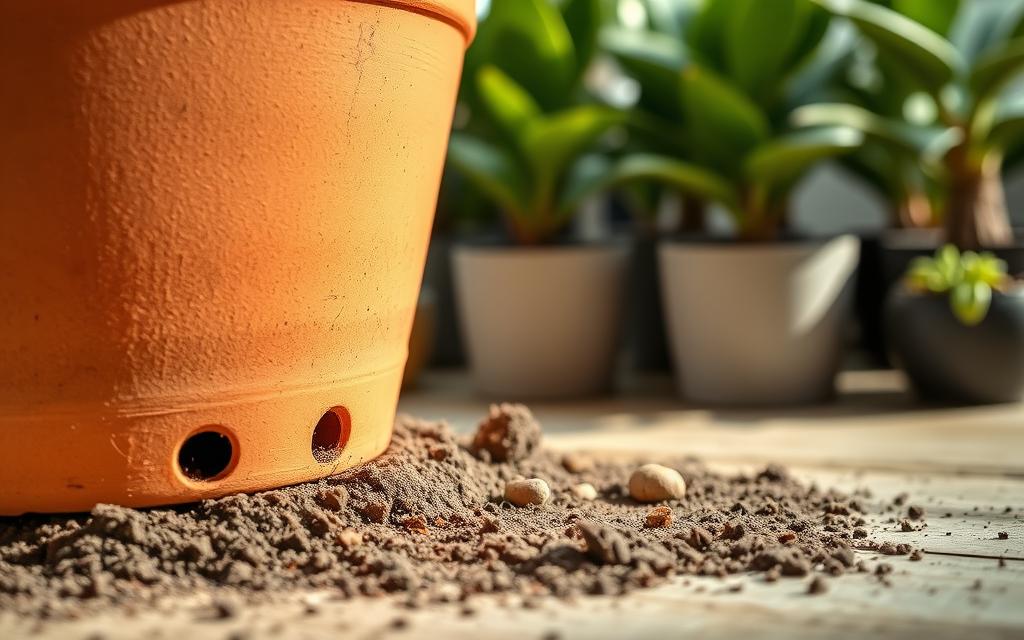
Why drainage holes are non-negotiable
Drainage holes aren’t optional — they stop water pooling at the base. Without holes, excess water sits and the root system suffocates.
Quick rule: Always pick a container with at least one clear exit for runoff. Empty any saucer after watering so the pot doesn’t sit in stale water.
Terracotta vs glazed pots: managing moisture
Unglazed clay lets moisture evaporate through the walls. That helps the soil dry between drinks.
Glazed pots hold moisture longer. They look great, but only use them if your mix drains very fast.
Shallow dish vs deeper pot: what to choose
Wide, shallow dishes suit clusters and offsets. They give pups room to spread sideways.
A slightly deeper pot helps longer roots and gives more soil for growth. Repot every 3–5 years when clusters crowd out the container.
| Container type | Drainage | Best for | Care tip |
|---|---|---|---|
| Small terracotta pot | Good | Beginners, quick drying | Use a coarse, sandy mix |
| Glazed ceramic pot | Moderate | Display pieces, careful watering | Ensure extra drainage layer and fast mix |
| Shallow dish | Good | Clusters and offsets | Wider footprint, repot for pups |
| Deeper pot | Variable | Longer roots, less frequent repotting | Check soil dries between waters |
Tip: If you see many pups, pick a wider container so offsets have space to grow.
Soil and mix that prevents root rot indoors
The right mix lets water pass fast and air reach the root zone. Good drainage keeps roots healthy and cuts the chance of root rot. Aim for a gritty, neutral texture rather than rich, moisture-retentive compost.
What to buy in Australia
Choose a labelled cactus or succulent blend from Bunnings, local nurseries or Aussie online shops. These mixes drain faster than standard potting soil.
Boost drainage simply
Add perlite or pumice to any fast-draining mix. Toss in a handful of aquarium or coarse gravel for structure. A good rule: 70% gritty mix, 30% aeration material.
Neutral, sandy texture and a quick test
Neutral, sandy soil means gritty feel, water runs through quickly and the pot dries predictably. At the sink, water should flow through the pot in seconds — not pool on top for ages. That quick check tells you the moisture dynamics.
| Choice | Use | Benefit |
|---|---|---|
| Cactus/succulent mix | Ready-made | Fast drainage, low effort |
| DIY: mix + perlite/pumice | Custom texture | Extra aeration, fewer wet pockets |
| Mix + gravel layer | Heavy pots or displays | Faster runoff, stable structure |
Goal: maximise drainage and air gaps so roots can breathe and resist rot.
How to water Haworthia indoors without overdoing it
Let the soil signal the next drink: that’s the easiest way to avoid root trouble. Treat watering as a response, not a routine. Check the top of the soil before you reach for the kettle.
Simple rule that works
Don’t water on a schedule — water when the top inch of soil feels dry. That keeps moisture low enough to protect roots and stops overfeeding the leaves.
How to check dryness
Use your finger to the second knuckle. If the top feels dry, you can water. A moisture meter helps in cooler rooms or during low light.
Correct method
Water slowly and thoroughly until it runs from the drainage holes. Empty any saucer so the pot doesn’t sit in spilled liquid.
Let it dry completely
Dry completely before the next session. In air-conditioned or cooler spots that can take longer, so trust the feel rather than counting days.
Protect the rosette
Never let water pool in the rosette — standing water invites rot. Aim the flow at the soil line. A squeeze bottle or narrow spout gives control and keeps leaves dry.
Quick tip: these pots store water in leaves, so slightly dry soil beats constant damp every time.
Managing root rot and moisture issues (the biggest indoor problem)
Root trouble often starts quietly, then your rosette suddenly looks limp and sad. This is the #1 indoor problem you’ll meet.
Early warning signs to spot fast
Watch for mushy leaves, drooping foliage and odd discolouration. If the rosette feels soft or collapses, act quickly.
Why soggy soil kills roots
Soggy soil fills the tiny air pockets roots need. Without air, the root system suffocates and begins to die. It’s not mystery — it’s lack of gas exchange.
Immediate steps if you suspect rot
- Pause watering at once.
- Slide the pot out and check the roots for dark, smelly, mushy sections.
- Trim away rotten bits with clean tools; healthy roots are pale and firm.
- Remove wet mix, let the crown dry, then repot into fast-draining soil.
Act early: even if you lose some root, the rosette often recovers with a dry, gritty mix and careful care. 😊
For step-by-step treatment, see this handy root-rot treatment guide.
Temperature, airflow and humidity for year-round indoor care
Keeping the right room warmth and fresh air makes care much easier year-round. Aim for roughly 15–27°C as a comfy range. This suits most Australian homes and matches mild seasonal cycles.
Ideal indoor ranges and seasonal notes
Summer rooms often run warmer and speed drying. Target higher daytime readings near 21–35°C when active growth happens.
In cooler months let temps fall toward 10°C for rest. Avoid prolonged dips near 4°C — that causes damage and risk of frost.
Protect from cold glass and frost
Leaves pressed against chilly windows can stress during cold months, especially in southern states. Don’t leave pots outside overnight during cold snaps or frost events.
Why ventilation matters
Fresh air helps reduce stale humidity around the pot and cuts fungal risk. Crack a window or use gentle circulation at night — avoid blasting heat directly at the rosette.
Tip: While some gardeners grow these in frost-free zones, keeping them inside gives steady conditions and fewer surprises.
Seasonal care in Australia: summer growth and drier winter habits
Warm months speed drying, so expect to check soil more often than in cooler times.
Adjusting watering in warmer months vs cooler months
In summer the mix usually dries faster. Water more actively when the top inch feels dry, especially during active growth.
In cooler months slow growth means the same pot keeps moisture longer. Reduce watering and wait until the soil dries before you add more.
Dormancy basics: what changes when conditions get hot or cool
Growth slows when it gets very hot or very cool. That means leaves use less water and you must cut back.
Indoor conditions often soften dormancy. Heating or AC can change how quickly your mix loses moisture, so watch the leaves and soil, not the calendar.
How to avoid overwatering during winter indoors
Overwatering is the biggest issue in cooler months. Give smaller drinks and longer gaps; never let the pot sit in standing water.
Time-saver rule: if unsure, wait a few extra days — this plant tolerates slight dryness much better than soggy mix. 😊
| Season | Soil drying speed | Watering frequency | Practical tip |
|---|---|---|---|
| Summer | Fast | More often (when top inch dry) | Check soil every few days in warm rooms |
| Autumn | Moderate | Reduce gradually | Trim back as growth slows |
| Winter | Slow | Sparse, small amounts | Brighten light and lengthen gaps |
| Spring | Moderate to fast | Increase with new growth | Feed lightly if repotted |
Watch firmness of leaves and the dryness of the soil as your green light. If leaves feel plump, you’re doing well.
For a full care guide and seasonal checks see our full care guide.
Feeding Haworthia: fertiliser timing and how much is enough
A little fertiliser goes a long way with these slow, compact succulents. They don’t need heavy feeding, so keep any boost light and deliberate.
When to feed
Fertilise only during active growth in spring and summer. Skip feeding in autumn and winter when growth slows.
What to use and how much
Pick a labelled succulent or cactus fertiliser available from Australian nurseries or hardware stores.
Dilute to half strength (or less) and follow the label. Too much feed causes soft, weak growth.
Simple schedule and safety
- Feed once or twice across the spring–summer months for indoor pots.
- Always water first, then apply diluted fertiliser — never feed a thirsty specimen.
- Feeding is optional but helpful if you want steadier growth and brighter colour over time. 😊
Quick tip: less is better — restrained feeding keeps leaves firm and roots healthy.
Propagation and repotting: growing new plants from offsets (pups)
Offsets are the simplest way to multiply your collection. You get healthy young plants without tricky cuttings. Use spring to early summer — that time encourages quick recovery.
When to divide
Divide when clusters crowd the pot, the pot dries unevenly, or at the 3–5 year repot window. That timing gives each rosette room and fresher soil.
Removing offsets with roots
Gently lift the clump and find the offsets. Cut or twist each free, keeping any attached roots you can. Clean, sharp tools make this neat and quick.
Callousing and potting
Let pups dry in a windy spot for at least 24 hours (often 1–2 days) so cuts callous. This step cuts rot risk.
- Use small containers and a gritty mix.
- Place roots gently, backfill loosely — don’t compact.
- Wait a few days before the first water so wounds seal.
Quick reality check: growth is slow, but offsets establish reliably if kept slightly dry at first. For a fuller overview see the Haworthia overview.
Common problems indoors: pests, leaf tips and light stress
Pests and stress signs usually show on the leaves first, which helps you act fast. Spotting small changes saves time and keeps your pot healthy.
Mealybugs: what to look for and how to remove them
Mealybugs appear as white, cottony patches on the leaves and crevices. Isolate the pot straight away.
Wipe adults off with a cotton bud dipped in alcohol. Repeat checks and use a targeted spray if the infestation persists.
Fungus gnats: a wet soil warning
Small flying gnats mean the mix is staying too damp. Let the pot dry, improve drainage and reduce watering.
Swap to a grittier mix if they keep returning. A sticky trap helps lower adult numbers fast.
Brown leaf tips: causes and fixes
Brown tips come from underwatering, heat stress or too much light. Compare leaf firmness and pot moisture to narrow the cause.
Adjust one thing at a time — move the pot, change watering, or offer shade — then reassess in a week.
Quick tip: This species is generally safe around cats and other pets, so it’s a low‑risk choice for Aussie homes.
| Issue | Sign on leaves | Quick fix | Severity |
|---|---|---|---|
| Mealybugs | Cottony spots | Wipe + isolate; treat if needed | Medium |
| Fungus gnats | Small flies near soil | Dry out mix; improve drainage | Low–Medium |
| Brown tips | Tip browning | Check water, shade from harsh light | Low |
Diagnose → adjust one thing → reassess. Small steps avoid creating a new issue while you fix the old one. 😊
Conclusion
Settle on one sunny shelf and let simple habits do the heavy lifting for healthy growth,
Success formula: bright filtered light, fast-draining soil, gentle care and patience. These steps keep leaves firm and limits rot.
Why this works in Australia: compact size, slow growth and forgiving nature mean less fuss. You’ll often spot issues early by checking leaf colour and feeling the top of the soil.
Keep a routine: pick a spot, rotate the pot now and then, and only change things when your plant shows clear signals.
Propagation via offsets is an easy next step. Avoid needless pruning; treat any damaged stem like a rot risk and keep it dry.
Good to know: this species is generally safe around cats, so it suits shared Aussie spaces. 😊
FAQ
Is Haworthia an indoor plant?
Yes — Haworthia suits indoor life very well. It’s a slow-growing succulent that stays compact, tolerates lower light than many succulents and fits neatly on desks, shelves and windowsills in Australian homes. Give it bright, indirect light and good drainage and it will thrive.
Why does Haworthia work so well indoors in Australian homes?
It stays small, needs little water and tolerates the drier air common in heated or air‑conditioned rooms. The low-maintenance nature means fewer weekly chores, and its tolerance for bright, filtered light makes it ideal for desks and small spaces where stronger succulents might scorch.
What are common names for this succulent and why does it stay compact?
You might hear zebra cactus, pearl plant or star window for different species. Their growth strategy focuses on a tight rosette and slow canopy spread, so they produce offsets (pups) rather than rapid, sprawling growth — perfect for small containers.
What does “slow-growing succulent” mean for ongoing care?
Slow growth means you can repot less often, fertilise lightly and avoid frequent pruning. It also tolerates occasional missed waterings. However, slow growth masks stress, so watch leaves and soil moisture rather than relying on obvious size changes.
Where does Haworthia fit best indoors — which spots should I choose?
Place it on a bright shelf, desk or windowsill that gets morning or late afternoon sun. Avoid hot, direct midday sun through west windows unless filtered. Good light without scorching helps keep leaves healthy and compact.
What does “bright light without harsh sun” look like inside?
Think an east-facing window with morning sun or a west-facing spot with late afternoon rays that are softer. A few hours of gentle direct sun and bright, indirect light the rest of the day is ideal.
When can Haworthia go outside in summer and when should it stay indoors?
Move it outdoors in mild, sheltered spots once night temperatures stay above 10°C and before strong sun hits. Bring it inside during heatwaves, heavy rain or when frosts are possible — Australian winters and cold snaps can damage the leaves.
Which window directions work best for avoiding leaf burn?
East-facing windows are best. West-facing can also work with afternoon shade. North windows in Australia can be strong; provide filtered light or move slightly away from the glass to prevent bleaching or browning.
How much direct sunlight is okay — morning sun vs hot afternoon sun?
Morning sun is safe and beneficial. Avoid prolonged hot afternoon sun, which can cause white, red or yellowed patches and shrivelled leaves. If you only have harsh light, use a sheer curtain or place the pot a little back from the window.
How can I read leaf colour cues — when are green leaves a good sign and when not?
Healthy Haworthia have firm, green leaves. Faded, bleached or yellow leaves indicate too much sun or heat. Red or brown tips often mean stress from strong light, low water or high temperatures. Mushy, translucent leaves point to overwatering or root issues.
Should I rotate the pot for even growth?
Yes. Rotate the pot every couple of weeks so all sides receive light. That prevents leaning and keeps foliage balanced and symmetrical.
Why are drainage holes non-negotiable for indoor growth?
Drainage prevents water from sitting in the bottom of the pot and soaking roots. Haworthia roots need air; constantly wet soil leads to root rot, the most common indoor killer. Always use a pot with holes and discard excess saucer water.
Terracotta vs glazed pots — which works better indoors?
Terracotta breathes and wicks moisture, so it helps prevent over-wet soil. Glazed pots hold moisture longer. For indoor settings where overwatering is a risk, terracotta is often the safer choice.
Should I choose a shallow dish or a deeper pot for roots and offsets?
A shallow pot suits shallow root systems and reduces waterlogged soil. If you expect many pups, choose a slightly wider pot to allow offsets room without needing excessively deep soil that retains moisture.
What soil mix prevents root rot indoors?
A fast-draining cactus or succulent mix is best. Look for mixes in Australian garden centres labelled for cacti and succulents, or amend general potting soil with perlite, pumice or coarse sand to improve drainage.
Cactus mix vs fast-draining potting soil — what should I buy in Australia?
Buy a commercial cactus and succulent mix from brands like Osmocote or Debco, or buy a premium potting mix and add 20–30% perlite or pumice. Avoid heavy peat-rich blends that stay soggy.
How do I boost drainage with perlite, pumice or gravel?
Mix 1 part perlite or pumice to 3–4 parts potting mix. You can add a thin layer of gravel at the base, but focus on improving the whole mix so water drains quickly and roots get oxygen.
What soil texture does Haworthia prefer and why?
Neutral, sandy, gritty soil lets water pass quickly and gives roots air. This mimics its natural habitat and reduces the chance of rot while supporting steady, healthy growth.
How should I water Haworthia indoors without overdoing it?
Wait until the top of the soil dries out, then water thoroughly until it drains. Let the pot dry out completely between waterings. Frequency changes with season — less in winter, more in active growth months.
What watering rule should I follow — finger test or equipment?
Use the finger test to the second knuckle or a moisture meter. If the top 2–3 cm is dry, it’s usually time. A moisture meter removes guesswork in tricky spots.
Why should I water until it runs through drainage holes?
Watering thoroughly ensures the whole root ball gets moistened and salts are flushed. Stopping early leaves dry pockets and uneven root growth; excess should drain away and not be left in a saucer.
Why must the pot dry completely before the next watering?
Dry periods let roots breathe and recover. Constant dampness suffocates roots and invites fungal pathogens that cause rot. Haworthia tolerates dry spells far better than continual moisture.
Why is water sitting in the rosette dangerous?
Water pooled in the rosette can sit against leaf bases and cause rot or fungal spots. When watering, avoid splashing the centre and allow any trapped water to evaporate quickly.
What are early signs of root rot indoors?
Look for mushy or translucent leaves, drooping foliage, darkened leaf bases and a sour or musty smell from the soil. Roots will feel soft and blackened rather than firm and white.
Why does soggy soil suffocate roots?
Water fills air pockets, reducing oxygen available to roots. Without oxygen, roots die and pathogens invade. Good air exchange in the mix keeps roots healthy and resilient.
What should I do immediately if I suspect root rot?
Stop watering, remove the plant from its pot, trim away rotten roots with clean tools, repot in fresh, dry mix and a pot with drainage. Allow the plant to rest for a few days if cuts are fresh before light watering.
What indoor temperature range is ideal in °C for year-round care?
Aim for 15–25°C during the day. Night temps above 10°C are safest. These ranges match common Australian indoor conditions and help steady growth without stress.
How do I protect Haworthia from cold snaps and frost near windows?
Move plants away from cold glass, bring them inside overnight during forecasted frost, or use insulating materials like a secondary curtain. Frost damages leaf cells quickly and can be fatal.
Why does ventilation matter for indoor Haworthia?
Fresh air reduces humidity around the foliage and helps soil dry between waterings. Gentle airflow at night lowers disease risk and supports healthy respiration in roots and leaves.
How should I adjust watering in summer versus winter indoors?
Water more often in warm, actively growing months but still allow drying between waterings. In cooler, darker months reduce frequency — many owners water only once a month depending on indoor warmth and light.
What is dormancy and how does it change care?
Dormancy is a slower growth period, usually in cooler months or extreme heat. Growth and water needs drop; reduce fertiliser and water sparingly to avoid rot while the plant rests.
How do I avoid overwatering during winter indoors?
Cut back by roughly half compared with summer routines, rely on the finger test or moisture meter, and never water on a fixed calendar — let soil dryness guide you.
When should I fertilise and what should I use?
Feed lightly in spring and summer only. Use a balanced cactus fertiliser diluted to half strength. Too much fertiliser causes leggy growth and can damage roots over time.
How do I propagate Haworthia from offsets (pups)?
Remove offsets when they have small roots. Gently separate them with a clean tool, let cut surfaces callous for a day or two, then pot into a fast-draining mix and wait a few days before the first light watering.
When should I divide overcrowded clusters and repot?
Divide when the clump becomes too tight or the pot is crowded, ideally in spring during active growth. Repotting then helps recovery and encourages healthy offsetting.
How long should pups callous before potting?
Let pup bases dry and callous for 24–72 hours depending on humidity. This reduces rot risk when placed into moist soil for root development.
How soon after potting offsets should I water?
Wait 3–7 days to let any cuts seal, then water lightly. This reduces the chance of introducing moisture that could trigger rot before roots establish.
What indoor pests commonly bother Haworthia and how do I remove them?
Mealybugs are common — remove them with a cotton bud dipped in isopropyl alcohol and isolate the plant. Fungus gnats indicate too-wet soil; let the mix dry and consider sticky traps or a soil top dressing of grit.
What causes brown leaf tips — underwatering, too much sun or heat?
Brown tips can be from underwatering, heat stress, or too-intense sun. Check soil moisture, move the plant to gentler light and ensure temperatures are within the comfort range to diagnose and correct the issue.