
Where to place a ZZ plant matters less than many think, but small choices make big differences. This hardy plant (Zamioculcas zamiifolia) loves bright, indirect light and copes with low light if needed. It also dislikes cold drafts and harsh sun.
Think of good placement as steady light, stable warmth, few knocks and watering that fits the spot. Aim for glossy, upright leaves without constant fuss. Keep curious kids and pets away — the foliage is toxic if eaten. 🌿
Quick rule: bright, indirect light is ideal; low light slows growth but won’t kill the plant. Avoid hot glass, direct sun, icy drafts and air vents.
The darker the corner, the longer soil stays moist, so water less often. We’ll give room-by-room guidance and window-direction tips so you can pick a winning spot fast and feel confident.
Table of Contents
Key Takeaways
- Choose steady, bright, indirect light for best results.
- Low light is survivable, but growth slows.
- Keep away from cold drafts, direct sun and vents.
- Less light means less frequent watering.
- Keep out of reach of kids and pets due to toxicity.
Choose the right light for a healthy ZZ plant indoors
Good light choices lead to healthier stems, deeper foliage colour and steadier growth. That simple fix gives big rewards with minimal fuss.
Bright indirect means the area near a window where beams don’t hit leaves directly. If you can read comfortably there during the day, the spot usually works.
How much light works in everyday rooms
In Australian homes, think one to two metres back from a sunny window or beside sheer curtains. That softens harsh sun and keeps leaves safe.
Low light: the trade-off
Low light keeps the specimen alive, but growth slows. Stems may stretch and lean toward light over time. Small moves closer often fix this.
Direct sun and hot windows
Warning: direct sunlight hitting glass on hot days can scorch leaves fast. Avoid spots with full sun on summer afternoons.
No-window solutions
Fluorescent or LED lighting is fine for indoor plants in offices, hallways or rentals. If the pot leans, nudge it a little closer to the light rather than overhauling placement. 🌱
- Quick self-check: if you can read easily in daylight, the light level is workable.
- Payoff: right light = stronger stems and richer foliage.
Where to place a zz plant in each room of your home
Room-by-room choices help your indoor greenery look its best with minimal fuss. Match light, traffic and pot size so foliage stays glossy and growth stays steady.
Living room & open-plan areas
Floor or stand: use a taller pot as an architectural accent. Keep the green away from walkways and vents.
Tip: in open-plan spaces the upright form works as a soft divider. Avoid harsh afternoon sun on west-facing windows.
Bedrooms
Bedrooms suit low-fuss greenery. These houseplants like calm air and normal humidity, so you don’t need extra misting.
Kitchens and dining
Choose a bright, filtered spot near a window. Keep it away from stovetop heat and splashes so leaves stay clean and glossy.
Bathrooms and laundries
These rooms work if light is adequate and airflow is gentle. Otherwise soil can stay damp for too long after watering.
Home offices and desks
Smaller pots do well on desks under ambient or fluorescent light. You can add an LED desk lamp if indirect light is low.
| Room | Best spot | Pot size | Key consideration |
|---|---|---|---|
| Living room | Floor stand near filtered window | Medium–large | Keep out of knock zones |
| Bedroom | Bedside shelf or low stand | Small–medium | Low fuss, normal humidity |
| Kitchen | Near filtered window, away from stove | Small–medium | Avoid heat and splashes |
| Home office | Desk corner or shelf under lamp | Small | Supplement light if needed |
Match size with room: use smaller pots on shelves and larger pots on the floor where the specimen can widen. And please make sure curious pets can’t nibble the leaves—toxicity is real, especially in compact apartments. 🌿
For full care tips, see our ZZ care guide.
Best positions by window direction and distance
Sun angle and nearby surfaces shape how much usable light reaches your pot each day.
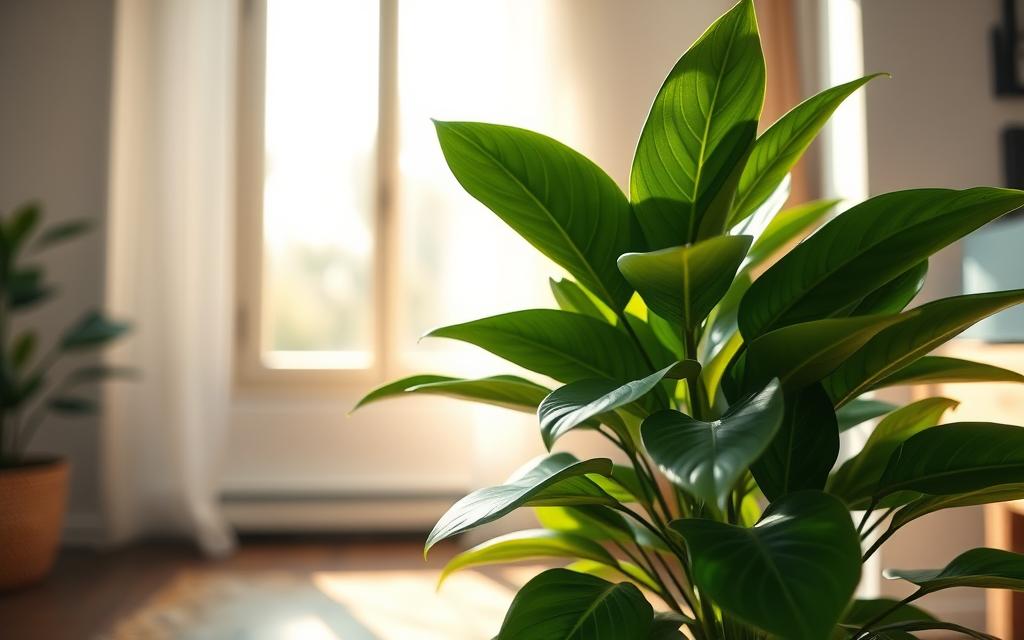
North, east and west windows often give workable indirect light in Australian homes. North glazing offers steady ambient rays. East gives gentle morning sun. West can be strong late in the day—use a sheer curtain or extra distance there.
Start the pot a step or two back from the glass. Watch the leaves for pale patches or scorched tips. If you see sunburn, move the pot further off the sill or add thin shading.
“Small shifts and regular turns keep growth even and make your corner look tidy.”
Turn the pot every couple of weeks. This keeps stems upright and avoids leaning toward bright spots. It also spreads light over all sides so new shoots stay balanced.
| Window direction | Best distance | Quick note |
|---|---|---|
| North | 0.5–1.5 m back | Consistent bright light, low scorch risk |
| East | Near sill to 1 m back | Gentle morning sunlight, good growth |
| West | 1–2 m back or behind sheer | Intense afternoon sun — high-risk for burns |
Practical check-in: if sun patches cross the floor for hours, make sure they don’t sit on your pot. Small, gradual tweaks beat moving every day. These simple tips save leaves and keep growth steady. 🌤️
Spots to avoid so your ZZ plant doesn’t struggle
Some corners look fine but quietly slow growth — here are common trouble spots to dodge.
Cold drafts, doorways and winter chills
Draft traps include external doors, leaky windows and hallways where wind hits the pot repeatedly. Cold damage starts below ~45°F (≈7°C), so don’t let temperatures dip near that overnight.
Air conditioning and heating vents
Quick warning: vents dry air fast. Air con and heaters strip moisture, causing brown tips and tired-looking leaves within a short time.
High-traffic areas and bumped stems
Busy routes mean stems get knocked and splay outward. Repeated knocks make the specimen look messy and slow recovery.
- Style workaround: sit the pot just off the walkway, on a stand, or behind a side table.
- Make sure conditions stay steady — stable warmth and steady humidity mean less stress.
“If you see repeated browning, leaning or leaf damage, check placement first — not complex care.”
Match placement with watering habits and seasonal change
Let the pot’s spot guide how often you water; light and warmth set the pace. A sunny, warm zone dries soil faster than a cool, shady corner. That changes the rhythm you follow.
Let the soil dry fully, then water deeply
Follow a simple rule: let the top and middle soil dry out completely, then water until excess runs from the drainage hole. This “soak and dry” works best for this hardy plant.
Adjust water in low light and winter months
In low light or cooler months, evaporation drops and you’ll water less often. In warmer, brighter conditions you’ll add water more frequently. Check the pot before you add moisture.
Rhizomes store water — why overwatering causes yellow leaves
Rhizomes act like built-in tanks. They keep the plant safe through dry spells. Overwatering fills those stores and floods the roots, which leads to soft stems and yellow leaves.
“Pause watering, lift the pot, and check drainage if you spot yellow leaves or mushy stems.”
- Use a finger or skewer to test dryness before each watering.
- When overwatered: stop watering, increase airflow and move the pot to a warmer, drier conditions.
- Patience helps — it’s safer to wait a few extra days than to top up often. 💧
| Situation | Action | Why it works |
|---|---|---|
| Bright, warm spot | Water when top 3 cm feels dry | Soil dries faster; prevents root rot |
| Shady, cool corner | Water less often; check deeper soil | Evaporation slows; avoids overwatering |
| Winter months | Reduce frequency by half or more | Growth slows; less water needed |
For full care details and schedules, see our ZZ care guide and an indoor watering schedule.
Set up the pot and soil for the spot you’ve chosen
Good roots begin with right pots and a free‑draining mix. Start by matching pot size and soil texture to light and warmth in the chosen spot. This makes daily care much easier.
Choose pots with reliable drainage
Non‑negotiable: use pots with drainage holes so excess water can escape. That simple step prevents waterlogging and rot.
Tip: use a nursery pot with holes inside a decorative pot. Lift the inner pot after watering and let excess drain if needed.
Pick a well‑draining potting mix
Use standard potting soil boosted with perlite or a cactus/succulent mix. This keeps airflow around roots and stops the medium from staying soggy.
If your plant sits in low light, a fast‑draining mix matters even more because drying slows there.
Repot, divide and tidy in growth season
Only repot infrequently. The best time is spring or spring summer when recovery is fastest. If crowded, divide rhizomes during repotting — it’s the quickest way to get new plants.
Leaf cuttings and other cuttings work, but division is faster for most homes. For sprawling growth, remove a full stalk cleanly with gloves and prune carefully. 🪴
“Right pot, fast‑draining soil and gentle timing cut stress and keep leaves glossy.”
For full care details see our Zamioculcas care guide.
Temperature and humidity conditions that influence placement
Comfortable room temperatures and steady air matter more than exact numbers. Most homes keep a cosy range that suits this hardy green friend. Focus on avoiding rapid swings and cold drafts rather than chasing perfect degrees.
Comfortable room temperatures and the cold threshold to watch
Ideal range: roughly 60–75°F (16–24°C). That range matches normal living spaces and keeps growth steady.
If a corner drops toward ~45°F (≈7°C) overnight, move the pot further from the window or doorway. Cold nights slow metabolism, lengthen drying time and raise root‑rot risk when water routines stay the same.
Average household humidity is fine, with support in dry winter air
Average indoor humidity is usually adequate. That low‑fuss tolerance is one reason these indoor plants are popular.
Heating and air conditioning vents are the main humidity culprits. They dry air quickly and cause brown tips or crisping.
Simple supports: group pots together or run a small humidifier nearby during dry months. Keep soil from staying wet — add moisture in the air, not the pot.
“Steady conditions beat constant moving. Small, consistent tweaks help growth more than frequent reshuffling.”
| Condition | Recommended action | Why it helps |
|---|---|---|
| Cool corner (near draft) | Move 1–2 m inward or use insulating curtain | Prevents chilling and slower drying that leads to rot |
| Near heater/vent | Shift sideways; avoid direct airflow | Reduces browning and water stress from dry air |
| Dry winter air | Group pots or run humidifier briefly | Raises local humidity without wetting soil |
Quick sunlight reminder: warmth plus strong sun can scorch leaves. Keep light bright but indirect, and adjust water less often in cooler, shady spots.
For more on cold tolerance and draft effects see cold and draft guide, and for general low‑maintenance care try this care overview.
Placement troubleshooting using what your plant is telling you
Your plant talks through its shape and leaf tone; learning that language makes troubleshooting quick and calm. Read the signs rather than guessing. Small adjustments often fix most issues within weeks.
Leggy, leaning growth
What it means: stems stretch toward light. Move the pot closer to indirect light or add a grow light.
Rotate the pot every couple of weeks so stems grow evenly. This stops one‑sided stretching.
Yellow leaves and mushy stems
Usually too much water and poor drainage. Pause watering and let soil dry. Improve soil mix and consider repotting if roots look soft.
Brown tips
Check three things: dry air, inconsistent watering or too much sunlight. Adjust one variable at a time and watch new growth over months.
Dusty foliage and cleaning
Dust cuts light uptake. Wipe leaves with a damp cloth—never leaf shine. Clean foliage boosts photosynthesis immediately.
Pests and airflow
Look for mealybugs, scale, aphids, fungus gnats and spider mites. Weak, stressed plants attract pests.
- Rinse leaves, use insecticidal soap or neem oil.
- Keep soil drier for gnats and improve airflow.
- Prune damaged stalks; use healthy cuttings for propagation if you want more plants.
“Small placement clues beat panic—watch new shoots for signs that your fixes are working.”
| Symptom | Likely cause | Quick action |
|---|---|---|
| Leggy stems | Low light | Move closer to indirect light; rotate |
| Yellow leaves | Overwatering / poor drainage | Stop water, dry soil, repot if needed |
| Brown tips | Dry air / sun / inconsistent water | Raise humidity, adjust sunlight, steady watering |
| Sticky or webbed leaves | Pests | Rinse, treat with soap or neem; isolate |
Conclusion
A small set of habits will keep your foliage healthy and your home looking fresh.
Best spot formula: steady indirect light, stable temperature and a quiet corner that avoids drafts and vents. This supports steady growth with minimal fuss.
Brighter areas dry soil faster and need less water time. Darker corners slow growth and call for fewer top-ups. Keep stems away from direct sun, cold draughts and hot vents.
Weekly routine: quick leaf check, rotate if leaning, wipe dusty foliage and only water when the medium is fully dry. Style gently—glossy leaves look best dust-free.
Safety: make sure curious kids and pets stay clear—these houseplants are toxic if eaten. Treat your home like a small gardening lab: tweak placement over time and enjoy easy wins. 🌿
For more indoor greenery ideas, see indoor greenery and keep exploring simple gardening tips that fit your space. Happy gardening—it rewards gentle attention and patience.
FAQ
Where is the best spot in your home for a Zamioculcas zamiifolia?
Aim for bright, indirect light — a few metres back from an east or north-facing window works well. Avoid hot, direct sun that can scorch leaves and don’t tuck it into a completely dark corner for long periods.
Why is bright, indirect light ideal for growth?
Bright, indirect light provides energy for steady foliage and root growth without burning the glossy leaves. It supports new stems and helps the rhizomes store water for drier spells.
What happens if the plant sits in low light for months?
In prolonged low light the stems stretch and foliage thins, producing a leggy look. Growth slows and the plant becomes more susceptible to pests and overwatering issues.
Can direct sunlight harm the foliage?
Yes. Hot afternoon sun, especially through west-facing glass, can bleach or burn leaves. If all you have is strong sun, filter it with a sheer curtain or move the pot farther from the window.
Can you use fluorescent or LED lights instead of windows?
Absolutely. Full-spectrum LEDs or cool fluorescent tubes placed 30–60cm above the pot mimic bright, indirect light and keep the plant compact and healthy.
Where does a Zamioculcas work best in living areas?
Living rooms and open-plan spaces are ideal — the plant tolerates floor placement or a stand. Pick a spot with steady light and room for occasional rotation so growth stays even.
Is the bedroom a good location for this houseplant?
Yes. Bedrooms suit ZZs well because they need little fuss and average humidity. Avoid cold drafts near windows and keep it out of direct, hot sunlight.
How about kitchens and dining areas?
Kitchens and dining rooms with steady indirect light are excellent. The plant tolerates the occasional humidity spike from cooking, provided airflow is gentle.
Can you keep it in bathrooms or laundries?
You can if natural light reaches the room. Bathrooms with bright, indirect light and good ventilation are fine; dark, windowless bathrooms will stunt growth.
Does a ZZ suit a home office or desk setup?
Yes — on a desk under ambient light or a task lamp it thrives. Rotate the pot occasionally so leaves grow evenly toward the light source.
Which window directions are safest for this species?
North- and east-facing windows give gentle, indirect light. West-facing can work if the pot sits back from the glass; south-facing windows often need a curtain to prevent sunburn.
How far back from the glass should it sit to avoid burns?
Generally 1–3 metres is safe depending on window strength. If in doubt, move the pot a bit farther until leaf edges show no signs of bleaching.
How often should you rotate the pot?
Rotate every 4–6 weeks. Short, regular turns encourage balanced growth and prevent the plant leaning toward one light source.
Which spots should you avoid indoors?
Avoid cold draughts from doorways, areas near air-conditioning or heating vents, and high-traffic corridors where stems can be knocked and splay outward.
How do heating and cooling vents affect the foliage?
Warm or cold drafts dry out leaves and can cause brown tips. Aim for stable indoor temperatures and keep the pot away from direct airflow.
How should placement link with your watering routine?
Let the top 3–5cm of soil dry fully before a deep water. In low light or winter, reduce frequency — the plant uses less water and wet soil increases root rot risk.
Why do rhizomes matter for where you keep it?
Rhizomes store water, so ZZs tolerate drier spots better than constantly wet ones. Choose a spot where occasional drying is natural and you won’t overwater out of habit.
What type of pot and soil suit the chosen spot?
Use a pot with drainage holes and a well-draining mix — cactus or succulent blends plus perlite work well. That setup prevents waterlogging in dimmer locations.
When should you repot or divide, and how does that affect placement?
Repot or divide in spring or early summer if roots crowd the pot. Doing this before the active growing season reduces shock and helps you find a fresh spot with better light.
What temperature range is comfortable, and what’s the cold threshold?
ZZs prefer 15–26°C. Keep them above about 10°C — prolonged exposure below this can slow growth and damage foliage.
Do you need extra humidity in dry homes?
Average household humidity is fine. In dry winter air, occasional misting or a pebble tray helps, but avoid consistently wet leaf surfaces which invite pests.
How can you read signs that the current spot is wrong?
Leggy, leaning growth means more indirect light is needed. Yellow leaves and soft stems point to overwatering; brown tips suggest dry air or too much sun. Dusty leaves reduce light uptake — wipe them gently.
Which pests are common indoors and how does placement help?
Watch for spider mites, mealybugs and scale. Good airflow, regular leaf checks and clean surroundings reduce infestations. Isolate new plants before introducing them near a ZZ.
How should you clean leaves safely?
Wipe foliage with a soft, damp cloth or give a gentle shower. Cleaning removes dust, improves light absorption and helps you spot pests early.