
This short how-to guide shows you how to do seasonal plant care in Australia so your plants stay steady through summer heat, winter chills and everything in between.
Seasonal plant care means small, timely changes to water, soil, light and routine that cut stress and boost growth across the seasons. It’s about anticipating needs, not just reacting when problems appear.
We keep this mobile-first. Each season has a quick checklist you can skim, save and revisit when the weather shifts.
All-year thriving comes down to roots, soil and timing — not fancy products. Expect practical tips: water smarter, mulch well, shade on extreme days, compost and top-dress, journal your microclimate, frost protection, timely pruning and calm pest management.
Advice is tailored to Australian conditions: hot spells, drying winds and sudden cold snaps. Ready to tune your garden to the local rhythm?
Read a quick desk-garden idea and ask yourself: What season is your garden in right now? 🌿
Table of Contents
Key Takeaways
- Small, timely changes make big differences for plants across the year.
- Focus on roots, soil and timing rather than costly products.
- Use simple seasonal checklists you can save and reuse.
- Advice is tailored for Australian heat, winds and cold snaps.
- Eight practical tips will help your garden stay resilient.
Why seasonal changes matter for Australian gardens
Australian gardens face rapid swings in weather that directly shape growth and soil life. Hot spells drive evaporation and can make leaves wilt fast. Cold snaps slow root activity and may cause frost damage even when the surface soil looks fine.
How heat, frost and shifting light affect growth, soil and plant health
Heat raises evaporation and feeds pest surges in warm conditions. High temperatures also crack and dry soil, reducing nutrient availability.
Cold slows microbial action in the soil so nutrients release more slowly. Lower winter sun means spots that were sunny in summer can become shady and cool, changing watering and feeding needs.
“Monitor forecasts and adjust monthly tasks to avoid weather-driven losses.”
Planning ahead versus reacting to weather swings
Think of planning as low-effort protection. Check the BOM forecast weekly and set simple reminders: mulch top-up, frost cloth ready, irrigation check.
You’re not trying to control the season — you’re timing small actions so growth isn’t shocked by sudden temperatures or extreme sun. Even shifting a pot, changing watering time or adding shade can protect health and keep conditions steady. 😊
Seasonal plant care fundamentals that stay true in every season
Locate beds and pots where light, soil and water naturally support growth, not fight it.
Start with the right site
Right plant, right place. When you match plants to local light, soil and water conditions, routine tasks get easier. CERES notes that correct siting makes success far more likely.
Do a quick light check: note morning sun versus harsh afternoon sun. Morning sun suits many veg and herbs. Afternoon sun favours drought-tolerant ornamentals.
Build resilient soil
Make soil the hero. Add compost and organic matter to improve structure and moisture-holding. This buffers heat stress and winter slow-downs.
Mulch year-round to cool roots in hot months and insulate during cold snaps. Over time mulch improves overall soil quality and reduces water loss.
Keep a simple garden journal
Your journal is a microclimate cheat sheet 📓. Jot what you planted, the month it took off, and where pests appeared.
- What thrived here?
- Where did water pool or run off?
- Which bed dried first?
Consistency beats complexity. A little compost, regular mulching and short notes each season transform plant health over time. For watering timing and routines, see this handy watering schedule.
| Focus | Action | Benefit |
|---|---|---|
| Light | Map morning vs afternoon sun | Match species to true exposure |
| Soil | Add compost and organic matter | Better structure and moisture retention |
| Mulch | Top with 5–8cm organic mulch | Cool roots, insulate, improve quality |
| Journal | Record months, notes, observations | Faster, smarter decisions next time |
Watering strategies that protect roots and stabilise soil moisture
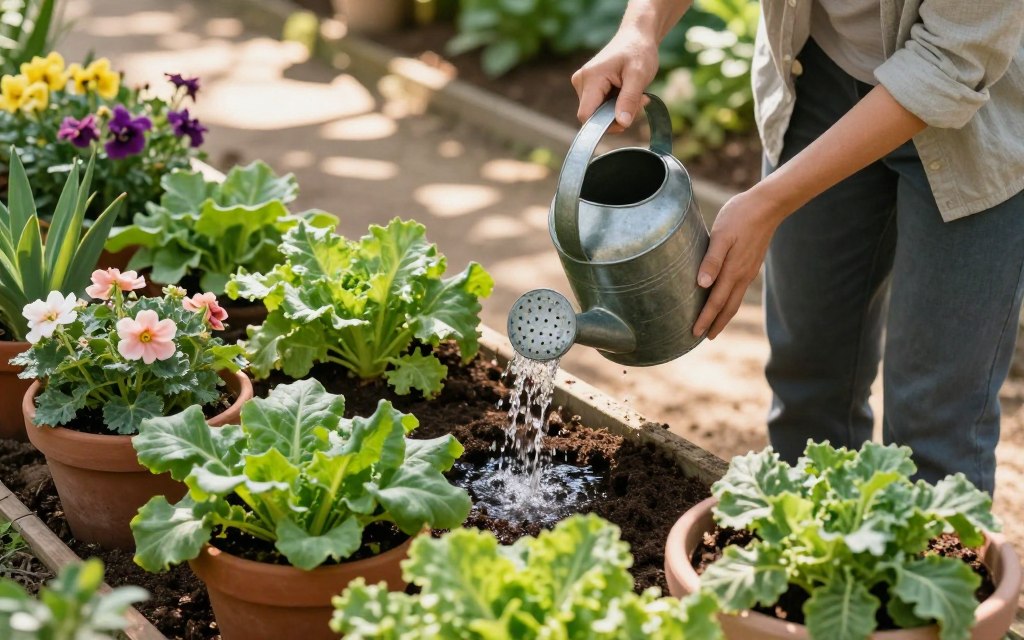
How and when you water makes the biggest difference to root strength and soil moisture. Few, deeper sessions encourage roots to grow down. That builds resilience in hot, dry spells and during cool months.
Deep watering vs frequent sprinkling for stronger root growth
Deep watering means slower, longer soaks that push moisture into the root zone. This promotes strong roots and steadier moisture in the soil.
Frequent sprinkling keeps water near the surface. That produces shallow roots and faster stress when heat or wind hits.
Best time to water in summer heat and during cooler months
Water early morning in summer to cut evaporation and feed roots when temperatures are low. In winter, water only when the soil begins to dry; avoid constantly wet beds.
“Morning or late afternoon watering reduces leaf wetness and fungal risk.”
Water at the base to reduce fungal issues and leaf diseases
Aim jets and hoses at the soil line, not the leaves. Moist foliage helps powdery mildew and other diseases in humid or warm conditions.
Using drip, soaker hoses and mulch to reduce evaporation
Drip lines and soaker hoses deliver slow, targeted water to the root zone. Top with 5–8cm of mulch to lock in moisture and cool the soil.
If water runs off, slow it down with multiple short passes and add organic matter or compost to improve holding capacity. And if you must water at midday because plants are collapsing, give a rescue soak—better than nothing.
Spring plant care for fast growth and healthy new leaves
Spring is the garden’s momentum month — small moves now spark big growth. New light and warmth wake roots and soil life. That makes this the best time to set foundations for strong leaves and steady growth.
Refresh beds with compost before planting
Top up compost on garden beds and lightly fork it through the top 5–10cm. Water the area so soil biology wakes and starts breaking down organic matter.
Plant soon after to capture the growth window. Quick greens, herbs and early flowers respond fastest.
Put supports in early for climbers and crops
Install trellises and stakes before roots and stems thicken. It’s easier now and prevents snapped stems when growth surges.
Repot and feed indoor plants as growth kicks on
Repot only when roots show at the pot edge — one size up. Feed lightly with a balanced mix to avoid foliar burn and keep new leaves healthy.
“A weekly leaf check spots pests and nutrient gaps early.”
- Mini checklist: compost, supports, watering reset, indoor repot/feed, quick weekly look-over.
Summer plant care in Australia: beating heat, sun and drying winds
When the thermometer climbs, simple tactics keep soil cool and roots working so your garden recovers quickly.
Mulch to keep soil cool and protect roots
Mulch is your first line of defence. Lay a 5–8cm organic layer to cut evaporation and reduce soil temperature.
It also improves soil quality over time and helps beneficial life stay active through hot months.
Shade tactics for extreme days
Use 30–50% shade cloth for vulnerable beds or temporary covers like old sheets on very hot days.
These quick moves stop sun-scald and protect fruit from burning. Think of shade as a short-term rescue, not a permanent fix 😅.
Heat-smart watering
Water early morning (best) or late afternoon to lock in soil moisture and avoid wet leaves during heat.
Always aim water at the base and use deep, slow soaks so roots grow down instead of shallow surface feeding.
For more detailed timing and methods, see our summer watering tips.
Managing disease pressure
Reduce humidity by keeping foliage dry. If you spot powdery mildew, prune affected leaves and improve airflow.
Try a diluted milk spray as a gentle management option. Avoid heavy sprays that stress plants in high heat.
Late-summer tidy-up and pruning
Remove spent crops and weeds to free resources and improve airflow around remaining growth.
Prune fruit trees to reduce canopy size and boost air movement. This helps fruit set and reduces pest and disease risks.
“Treat summer as a stress season: protect roots and soil so plants bounce back fast.”
Autumn plant care for planting, soil feeding and seasonal transition
As heat eases, the garden gives you a window to reset beds and feed soil for winter growth. Cooler days make digging and planting easier, while the ground still holds warmth for root establishment.
Clear and compost correctly
Chop and compost healthy spent crops to recycle nutrients. If material shows disease, don’t add it to your cold bin; either bin it or only use a true hot-compost system that reaches high temperatures.
Top-dress and add organic matter
Lightly top-dress beds with compost and well-rotted manures. This boosts structure and feeds cool-season growth without heavy digging.
Turn fallen leaves into carbon
Collect leaves as your brown carbon. Mix leaves with kitchen scraps to balance the pile and speed decomposition into rich humus.
Planting windows and checks
Now is the time to sow cool-season veg, leafy greens and herbs. Keep seedlings evenly moist while roots establish.
Do a quick soil test for pH and key nutrients. If the test suggests, add lime before winter crops go in to avoid uptake problems later.
“Autumn tidy-ups set your garden up for winter resilience and a faster spring.” 🍂
Winter plant care to protect from frost and prep for spring
Winter is a quiet month to protect fragile foliage and build soil strength for spring. Your main goals are simple: shield tender growth from frost, avoid waterlogged roots, and add organic matter so spring wakes to good soil.
Frost protection: covers, moving pots and sheltered spots
Cover vulnerable beds overnight with frost cloth or old sheets. Remove covers once the sun warms the air.
Move potted specimens to a sheltered porch or verandah. Placing pots near a warm wall gives a useful microclimate.
For practical frost tips, see frost protection steps.
Mulch as insulation
Mulch buffers soil temperatures during sharp cold snaps. A 5–8cm layer protects shallow roots from rapid drops in temperatures.
Top with organic matter to both insulate and feed the soil slowly over months.
Pruning and tool care while growth is dormant
Prune dead or diseased wood while shrubs are dormant. This improves shape and airflow for next season.
Clean and sharpen secateurs and saws now. Sharp tools make cuts cleaner and lower disease risk.
Winter soil building and gentle feeding
Add compost and well-rotted manure to beds. Lightly fork through the topsoil so microbes start working.
A gentle, low-nitrogen feed can support root health without forcing late leafy growth.
What to plant now and where to place trees
Sow cool-season crops in garden beds and add winter colour with pansies, violas or primroses to lift the space.
When planting trees or vines, think about winter sun and summer shade. Place new trees so they give summer cooling while letting winter sun through to beds.
“Protect roots, build soil and choose spots that balance winter sun with summer shade.”
| Focus | Action | Benefit |
|---|---|---|
| Frost | Frost cloth / move pots / use walls | Reduces leaf and bud damage |
| Mulch | 5–8cm organic layer | Stabilises soil temperatures |
| Pruning & tools | Remove dead wood; sharpen tools | Cleaner cuts and disease prevention |
| Soil building | Add compost, well-rotted manure | Better structure and spring readiness |
| Planting | Cool-season crops; winter flowers | Productive beds and winter colour |
Small winter moves save time and keep spring simple. If you want a mental lift while you work, pairing these tasks with short, mindful breaks helps — plants and people both benefit: simple garden habits for wellbeing 😊.
Seasonal pest and disease management without overreacting
Pests and disease flare-ups follow shifts in weather and months. You don’t need heavy sprays to keep your garden healthy.
Use steady detection and gentle fixes. Weekly checks in high-risk months catch issues early and save time later. Act with the smallest effective step first.
Integrated pest management basics: cultural, physical and biological controls
IPM is simple: improve soil and spacing, remove weak growth, and support beneficial insects.
- Cultural — healthy soil, correct spacing and watering at the base to boost plant health.
- Physical — netting, hand removal and barriers to stop pests reaching crops.
- Biological — encourage predatory insects and use native allies.
Preventing pest carryover: clean up fallen fruit and old debris
Remove fallen fruit, woody debris and diseased stems from under trees. CERES recommends this to reduce overwintering pests such as codling moth.
Compost healthy material and bin diseased scraps. This cuts the next season’s pest load before it starts.
Seasonal hotspots and quick responses
| Hotspot | Typical sign | Gentle response |
|---|---|---|
| Aphids in warm spells | Sticky leaves, curled growth | Wipe or squish; follow with botanical oil on cool mornings |
| Caterpillars on brassicas | Chewed leaves, frass | Fine netting early; hand-pick when seen |
| Citrus leaf miner | Silvery tunnels in new leaves | Prune affected shoots; eco oil on overcast days |
Reality check: monitor weekly in risky months, pick the gentlest fix first, and keep plants strong with airflow and correct watering. Small, steady action keeps your garden balanced. 😊
Conclusion
A little planning each month cuts stress and makes your garden more resilient all year. Focus on three things: build healthy soil, protect roots, and time small actions to match growth cycles.
Spring sets direction, summer asks for protection and consistency, and winter rewards insulation and prep. Regular short checks keep problems small and wins steady.
Pick one change this week — a mulch top-up, base-watering or a compost top-dress — and let that momentum grow. Note your microclimate (coastal, inland, frost-prone or windy) so your approach fits your yard.
Want a quick how-to to keep this simple? See our seasonal plant care guide for easy steps you can start today. 😊