
Short answer: mostly sun, but not scorching heat behind glass.
Bright light in an Aussie home means a sunny window with some morning rays or a bright spot away from hot glazing. It is not a dim corner, and it is not an oven-like full day of harsh midday rays that can scorch leaves.
This slow-growing plant rewards good exposure. More light usually brings faster new growth and a fuller “ponytail”. Low light is forgiving, but growth will slow and the trunk may thin.
Two big levers matter: light and watering. Change one and adjust the other. Too much water in low light invites root rot. Too much heat at a window invites leaf burn.
Table of Contents
Key Takeaways
- Bright indirect light works well; some direct rays are ideal.
- Avoid hot windows that trap heat and scorch leaves.
- Adjust watering when you change light levels to prevent rot.
- Expect slow growth—light affects how quickly you see new leaves.
- No fancy gear needed; a small grow light helps in darker rentals.
Understanding ponytail palm light needs in Australian homes
The bulbous “elephant foot” is a water store, not just decoration. That swollen base holds moisture so the plant survives dry spells in its native desert areas. Treat the base as a reservoir when you plan light and watering.
The trunk and stem support long, arching leaves while the root system remains compact. Because water is stored low in the base, wet soil combined with low light invites root rot. Bright spots speed growth; dim corners slow it down for years.
Despite the common name, this species is a succulent from Mexico, not a true palm. So you care for it more like a succulent than rainforest palms. That changes your choices of soil and how often you water.
In Australian homes, window light swings with the seasons. Summer glazing can be intense; winter light is weaker. First, find the right light. Then match watering and soil to that light level 👍.
- Quick parts guide: base = water tank; trunk = support; stem = leaf stalks; root = anchors and absorbs moisture.
- Short care rule: dial in bright light, then reduce watering to avoid rot.
Does ponytail palm need sun?
A bright spot by a window is the single best boost for healthy growth in these houseplants. You’ll see the quickest improvement when the crown gets steady daylight plus a little direct exposure each day.
Best-case light
Bright light with some direct sunlight: aim for a couple of gentle hours of direct sunlight in the morning, then bright ambient light for the rest of the day. That balance helps new leaves form and keeps the trunk sturdy.
When shade works
Bright indirect light is perfectly workable if windows are harsh. Growth will slow, but the plant stays healthy. Moderate light tolerance means you can read without a lamp in that spot.
How much direct sunlight is too much?
Too much direct sunlight through hot glass causes leaf bleaching, crisp brown patches and curled tips. Mid-afternoon rays in summer are rougher than morning rays; a sheer curtain helps.
“If you’re unsure, start brighter-indirect and edge it into more sun over a couple of weeks.”
| Condition | What to give | Result |
|---|---|---|
| Bright morning rays | 1–3 hours direct + bright ambient | Firmer leaves, steady growth |
| Bright indirect | Filtered daylight most of the day | Slow growth, healthy plant |
| Harsh afternoon glazing | Use filter or move back | Prevents scorch and brown tips |
Quick tip: start in brighter-indirect light, then nudge the pot closer for a few hours each week to test tolerance. 🌿
Choosing the right spot indoors: windows, direction and distance
A good indoor spot combines steady daylight with a buffer from hot glazing. Start by finding your brightest window, then test for heat and glare before committing the pot.
Where to place it: aim for a west or south-facing window in Australia, but keep the plant back so leaves do not touch the glass. Begin about 30–90 cm from the pane and adjust over 2–3 weeks based on how the foliage responds.
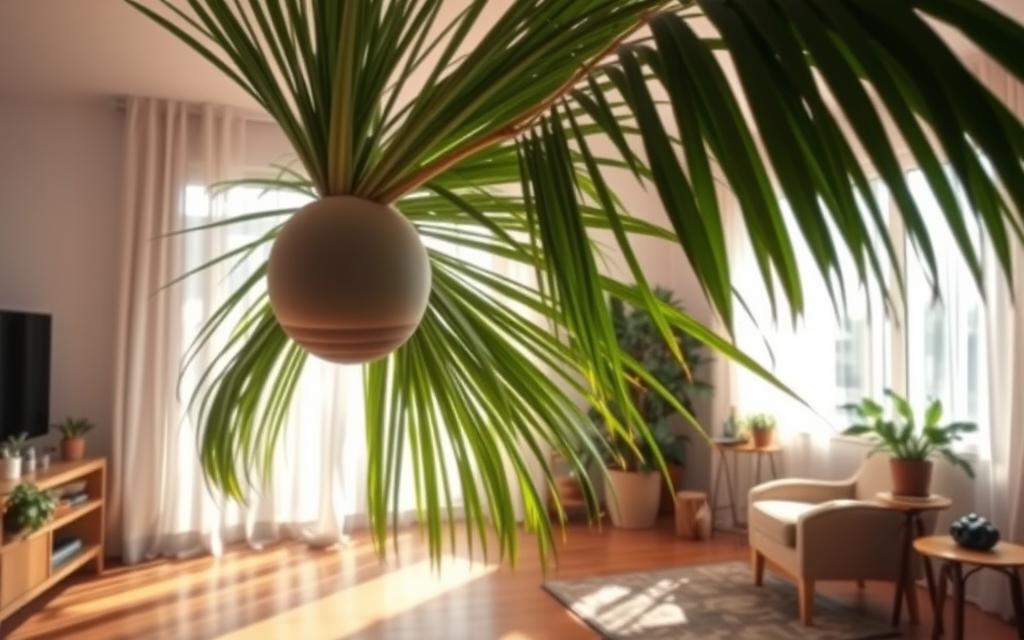
Filtered light setups for steadier growth
East or west windows with a sheer curtain or angled blind give gentle direct rays without harsh heat. A covered patio or dappled light works well for steady development and fuller appearance.
Quick signs your spot is too close
- Scorch marks or brown patches on the leaves
- Curling and crispy tips even when soil is fine
- Rapid browning near the glass
Quick signs it’s too far from light
- Slow growth and pale new leaves
- Leaf drop and thinner foliage
Keep it balanced: rotate the pot every one to two weeks so the plant grows straight and keeps a neat appearance. Also avoid placing the plant where hot air blasts from heaters—dry air will stress the leaf tips.
For a simple next step, try moving your ponytail palm closer in small increments and watch the leaves. If you want deeper tips on indoor placement and care, see our plant care indoors guide.
Moving your ponytail palm outdoors for stronger light
A covered patio or verandah often gives the best balance. Natural daylight outdoors is stronger than indoor light and usually makes the plant firmer and more vigorous.
How to transition to stronger exposure without leaf burn
- Start with a few days in full shade so the plant adjusts to outdoor air and ambient light.
- After 3–4 days, add 30–60 minutes of gentle morning rays each day.
- Gradually increase that time over 7–14 days until it tolerates a couple of morning hours or bright indirect afternoon light.
Outdoor placement: morning rays and bright indirect light on a covered patio
Safe sweet spot: a shaded verandah with brisk ambient light and a dose of early rays. This mimics the gentle morning exposure many Australian gardens provide.
What to do during extreme heat days
Leaves grown indoors are not hardened to strong UV and high heat. A sudden jump to intense daylight can cause brown patches or bleached tips.
Quick actions on hot days: move the pot back under cover, avoid reflective walls, and check the pot’s surface temperature. Dark pots heat fast and can stress roots.
| Situation | Action | Result |
|---|---|---|
| Just moved outside | Shade for 3–4 days, then add morning rays | Leaves harden and growth steadies |
| Hot afternoon or heatwave | Shift to covered spot, avoid reflective surfaces | Prevents scorch and pot overheating |
| Cool nights or low temperatures | Bring inside if temperature drops below 5°C | Protects foliage and roots |
Overall, a slow, staged move outdoors pays off. A few cosmetic marks are normal; with simple adjustments, new growth looks better and the plant rewards your care. 🌿
Seasonal care: keeping light and watering balanced year-round
Across the seasons, matching exposure with watering keeps the plant healthy. A simple routine that changes at spring and winter prevents stress and root issues.
Growing season habits
During the growing season give brighter positions and slightly more warmth. Increase light and let the pot dry a little between deep, infrequent waterings so roots breathe.
Practical tip: soak until water drains, then wait until the top soil feels dry before the next deep water.
Winter strategy
In winter shift the pot closer to a bright window if indoor days are darker. Cooler nights around 13–16°C suit a rest phase and slow growth—this pause is normal.
Winter waterings
Extend the time between waterings and make dry soil your checkpoint. Fewer, dry waterings reduce rot risk when the plant uses far less moisture.
Quick seasonal habit: reassess placement at the start of spring and again at the start of winter. If you want a watering schedule refresher, see a short guide on indoor plant watering and more species detail at the plant profile.
Watering correctly to prevent root rot in high and low light
Too much moisture is the quietest threat to the bulb, trunk and root system. These plants store water low in the base, so a persistently wet pot invites rot before visible signs appear.
Why overwatering starts rot
When soil stays soggy, oxygen levels fall and fungi or bacteria take hold. The bulb or base is first to weaken, then the trunk and stem follow as infection moves downward.
How to water: the soak-and-drain method
Take the pot to the sink or shower. Water deeply until it pours from the drainage holes. Let the pot drain fully, then empty any saucer so there’s no standing water.
Dry-between approach
Let the top 5 cm (about 2 inches) of soil dry out before the next water. Don’t top-up with tiny amounts each week — a full soak when the mix is dry is safer.
Practical timing and factors that change frequency
In bright, warm spots you may water every 2–3 weeks. In low light or cool temps, wait longer. Small pots dry faster; large pots hold moisture for weeks.
| Factor | Effect on watering | Tip |
|---|---|---|
| High light & warmth | Soils dry faster | Water more often; check top 5 cm |
| Low light & cool temperature | Soils stay wet longer | Extend intervals to avoid root rot |
| Pot size & drainage | Big pots keep moisture; blocked holes trap water | Use pots with holes and discard standing water |
Quick notes: a gritty, free-draining mix helps drainage, but it won’t stop rot if you water too often. For more care steps and a broader routine, see our care guide or compare watering tips at this succulent care article. 🌿
Soil and drainage: the potting mix that supports healthy roots
A fast-draining soil often solves more problems than changing light or water routines. Start here and you’ll protect the bulb and the base where moisture gathers.
Best commercial option: use a cactus succulent potting mix. It is airy, gritty and built to move water through quickly. That reduces the chance of rot and keeps growth steady.
What “loose, well-drained” means
Water should pass through in seconds to hours, not days. The mix should not stay soggy around the roots. That allows oxygen into the pot and keeps the base healthy.
DIY potting blend
- Mix 2 parts standard potting medium with 1 part perlite or pumice.
- Add a handful of coarse sand or small gravel for extra grit.
Non-negotiable: use pots with drainage holes. No holes, no deal — unless the plant stays in a nursery pot inside a cover and you monitor moisture closely.
| Mix | Purpose | Practical tip |
|---|---|---|
| Cactus succulent potting mix | Fast drainage, airy roots | Buy ready-made for convenience |
| Potting + perlite/pumice | Improves drainage and aeration | Good DIY alternative |
| Heavy garden mix | Holds moisture — risky | Avoid for indoor palms |
| Large pot + dense mix | Stays wet long | Use smaller pot or amend mix |
Quick check: if soil stays wet for many days after watering, the mix is too dense or the pot is too big. Fixing soil and drainage restores healthy roots and better leaf growth. 🌿
Temperature and humidity: how environment affects light tolerance
A steady room temperature often matters more than perfect humidity when you’re balancing light and watering. If you’re comfortable, your plant usually is too. Aim for stable conditions rather than chasing exact numbers.
Ideal indoor range and short-term tolerance
Comfort rule: keep temperatures around 18–29°C (65–85°F). Brief dips toward ~10°C are tolerated, but avoid prolonged cold or chilly nights. Hot, bright spots dry the pot faster, so reduce watering frequency in cooler rooms and water more cautiously in warm, bright ones.
Humidity and brown leaf tips
These palms cope with dry indoor air, so you don’t need humidifiers in most homes. Still, low humidity can cause brown tips. That’s annoying but common.
Tip management: trim brown tips cleanly if you want a neater look, and focus on steady air and light instead of chasing perfect humidity values. Small changes often fix the problem.
Avoid drafts and vent stress
Keep the plant away from direct heater or air-con blasts and cold drafts. Constant airflow from vents stresses leaves even when light is ideal. Aim for bright light with steady air, not bright light plus constant vent flow.
| Factor | Range / Issue | Action |
|---|---|---|
| Ideal temperature | 18–29°C | Place in usual living room spots |
| Short cold spell | Down to ~10°C briefly | Bring inside if nights stay cold |
| Low humidity | Common indoors | Trim brown tips; avoid overwatering |
| Drafts & vents | Drying and stress | Move to steady-air spot away from vents |
For a quick reference on ideal placement and plant temperature guide, check this short resource. Small, steady changes deliver the best results. 🌿
Conclusion
A few simple choices give this plant a long, low-effort life on your windowsill. Use a strong, simple formula: bright window nearby, no hot glass contact, rotate the pot and adjust by season.
Top care rules: favour bright light with a bit of direct exposure, use fast-draining soil, and water deeply but infrequently to avoid base softening and root rot.
Watch the leaves: scorched tips mean too much harsh light; pale, slow growth means more brightness; a soft base signals overwatering. Light grooming—pruning dead leaves and trimming brown tips—keeps the appearance tidy but is optional.
Give steady light, breathable mix and patient time, and this hardy houseplant will reward your gardening with years of easy, low-fuss growth. 🌿
FAQ
Does a ponytail palm prefer sun or shade indoors?
Bright light with some direct morning or late afternoon sun is ideal, but it tolerates bright indirect light. Avoid prolonged harsh midday rays through hot glass to prevent leaf scorch.
How does the elephant foot base change how the plant handles light?
The swollen base stores water and helps the plant survive bright, dry conditions. That said, the bulb doesn’t make it immune to leaf burn from intense, unfiltered sun or stress from very low light.
Is it true a ponytail palm is a succulent, not a true palm?
Yes. Native to Mexico, it’s a xerophytic plant with water-storing tissues, so its care overlaps with many succulents rather than classic tropical palms.
What is the best-case light situation for steady growth?
A spot with several hours of bright indirect light plus a gentle period of direct sun—morning or late afternoon—produces the best growth and fuller leaves.
When is shade OK for this plant?
Bright indirect light or moderate indoor light works. It tolerates lower light for short periods but will grow slowly and may drop older leaves if kept too dim long-term.
How much direct sunlight becomes too much for indoor leaves?
Prolonged midday sun through glass or unfiltered western exposure on very hot days can cause brown patches, curling and scorched tips. Filter or move the pot back to protect leaves.
Where should I place it near windows—direction and distance?
West or south-facing windows are great if the plant sits a short distance from the glass or has a sheer curtain. East or filtered west light also gives steady, gentler illumination.
What signs show it’s too close to the window?
Leaf scorch, brown patches, crispy edges and curling tips are common when a plant gets too much direct heat from the glass.
What signs show it’s too far from the light?
Slow growth, paler new leaves and gradual leaf drop indicate insufficient light. The plant may lean heavily toward the window.
Should I rotate the pot?
Yes. Rotate regularly to keep growth even and prevent the trunk from leaning toward the light source.
How do I move it outdoors for stronger light?
Acclimatise slowly over 1–2 weeks by increasing daily time outside. Start with a few hours in morning light and gradually lengthen exposure to avoid leaf burn.
Where outdoors is best?
A spot with morning sun and bright indirect light—such as under a pergola or on a covered patio—gives strong light without harsh midday rays.
What to do on extreme heat days outdoors?
Move the pot into shade, provide temporary shade cloth, or bring it indoors. High heat plus direct sun can scorch leaves quickly.
How should I adjust light and water in the growing season?
Give more light and water slightly deeper but less often. Allow the topsoil to dry between thorough waterings to encourage healthy roots.
What’s the winter strategy for light and placement?
Reduce exposure to intense sun and place the plant in the brightest available indoor spot. Cooler, brighter positions help maintain form with lower growth rates.
How often should I water in winter?
Water sparingly. Let the soil dry thoroughly to a few centimetres before the next soak. Shorter days and lower temps reduce water needs.
Why does overwatering cause root and trunk rot?
Saturated soil with poor drainage starves roots of oxygen. The bulb, trunk and roots then become prone to fungal rot, especially in low light or cool conditions.
What’s the correct watering method?
Soak the pot until water drains, then discard excess from saucers. Let the top layer dry before watering again—this dry-between approach limits rot.
How do light, temperature and pot size affect watering frequency?
Brighter light, warmer temps and a smaller pot speed drying, so you water more often. Dim light, cool rooms and large pots hold moisture longer and need less frequent waterings.
What potting mix is best for healthy roots?
A cactus/succulent mix or a loose, well-drained blend with perlite or coarse sand gives aeration and fast drainage that the roots prefer.
Why are drainage holes essential?
Drainage holes prevent waterlogging and sitting water, which lead to root rot even if you use the right light and mix.
How can poor drainage cause rot despite correct light?
Even in bright conditions, compact soil or a pot without holes keeps roots wet and oxygen-poor. Fungal pathogens then take hold and rot develops.
What temperatures does it prefer indoors?
Aim for a comfortable indoor range around 15–25°C. It tolerates short dips slightly below that but avoid prolonged cold under 10°C.
How does low humidity affect leaf tips?
Dry indoor air can cause brown tips. Increase humidity slightly with a pebble tray or grouped plants, but avoid high humidity that encourages rot.
How do drafts and vents affect the plant?
Cold drafts or hot, dry air from heaters and air-conditioners stress leaves and can cause tip burn or drying. Keep the plant away from direct streams of air.