
Beaucarnea recurvata is a sculptural, drought-tolerant plant with a swollen trunk base that stores water. It thrives in full sun to light shade and needs fast-draining soil to avoid rot.
In this short guide you’ll learn a simple, Australia-friendly routine for keeping your ponytail palm healthy, whether it lives inside or outside. We’ll show what really matters and what you can ignore if life gets busy. 😊
Quick wins: bright light, fast drainage and conservative watering habit. These are the make-or-break points for success in hot summers, cooler nights, coastal winds or heated rooms.
Follow a clear roadmap: light → watering → soil → temperature → feeding → repotting → pests. As you read, think about where the plant sits in your home, how often you water, and what pot you use. Small tweaks will make a big difference.
Table of Contents
Key Takeaways
- Bright light and good drainage are essential.
- The swollen trunk stores water—less frequent watering works.
- Use a fast-draining mix and avoid soggy soil.
- Adjust for seasons: more light in winter, shade in peak heat.
- Check your pot and spot for coastal winds or indoor heating.
Meet the Ponytail Palm (Beaucarnea recurvata) in Australian homes and gardens
Beaucarnea recurvata is a showy, slow-moving specimen that suits both pots and warm landscapes. It has a swollen base that stores water and a fountain of narrow, arching leaves that give it a sculptural appearance.
Why it’s called elephant foot and why it’s not a true palm
The chunky base is often called the elephant foot — a trunk-like bulb that thickens as the plant stores moisture. Despite the common name, this is not a true palm; it behaves more like a succulent.
“Looks like a palm, lives like a succulent.”
What size to expect in pots vs outdoors
In pots as a houseplant you can expect about 3–5 feet, with steady annual growth of 2–4 inches indoors. Outdoors in warm, frost-free spots it can reach 3–7 m and grow faster—up to around 1 foot a year.
Growth rate, lifespan and what “slow-growing” really means
“Slow-growing” means you’ll see small, welcome changes each season rather than quick leaps. With bright light and free-draining soil, these plants can live for many years and become a long-term feature.
- Tip: pot choice and repot timing influence final size and how tree-like the specimen becomes.
Choosing the right spot: light and sun exposure
A good home balances bright light with protection from harsh sun. Indoors, place the plant close to a sunny window where it will get steady bright light. Rotate the pot weekly so growth stays even and the trunk doesn’t lean.
Outdoors, aim for full sun to light shade. That mix encourages firm, attractive growth and helps the swollen base stay healthy. If you face blazing west sun, give afternoon shade. Gentle morning sun suits cooler spots.
Safe spring-to-summer transition
Start with part shade for several days, then increase direct sun over 7–14 days. This gradual move prevents scorch and stress from sudden UV jumps.
- Scorch signs: crispy, bleached tips or pale patches on leaves — move it back to shade fast.
- Micro-checklist before moving out: pot drains well, plant is used to brighter light, nights are warm enough.
- Aussie note: harsher UV and heatwaves mean slower acclimatisation is safer 😊
Quick tip: if leaves show stress, reduce direct sun and increase airflow. Small adjustments now save bigger problems later.
Ponytail palm care australia: watering without root rot
Treat the trunk like a reservoir: the swollen base stores moisture, so frequent watering does more harm than good. Let the top ~5 cm of soil dry before you water again. This simple habit reduces the risk of root rot and keeps the base firm.
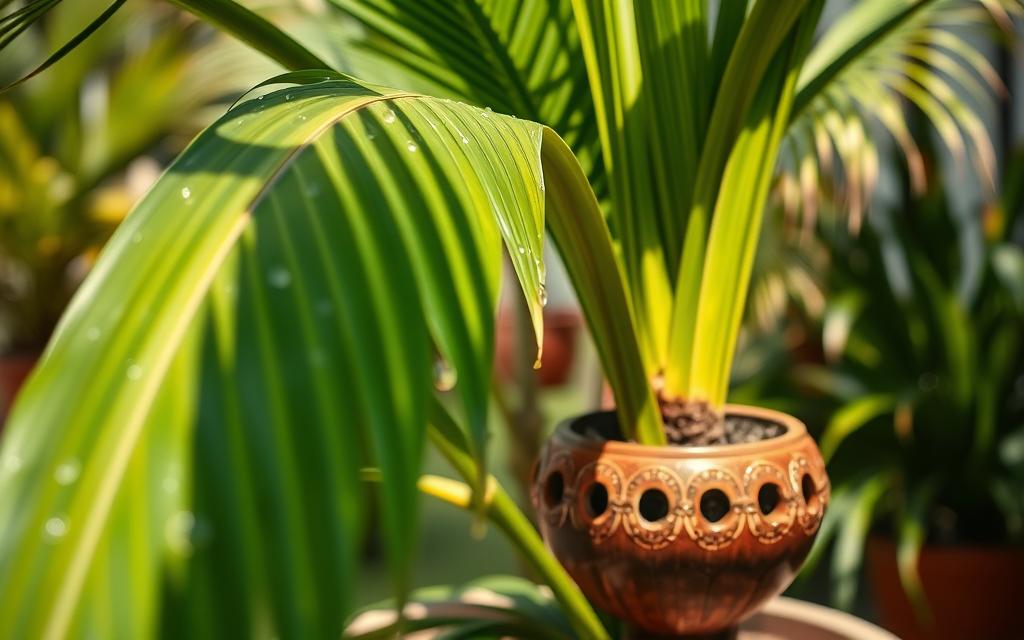
How to test soil and timing
Push a finger into the mix to the first knuckle. If the top 5 cm feels dry, the plant can use water.
Another quick check: lift the pot. A light pot usually means it needs a drink. A heavy pot means wait.
Seasonal watering rhythm
Spring and summer: water deeply but less often. In many Australian homes that means every 2–3 weeks rather than daily sips. Deep watering encourages roots to seek moisture and avoids surface salt build-up.
Winter: mimic the dry season. Cut water back to about once a month or give a deep soak every few weeks if the soil is completely dry.
Signs to watch and drainage rules
Overwatering shows as yellowing leaves, droop, softening at the base or a musty potting mix smell — act fast.
Underwatering looks like curled leaves, mix pulling from pot edges and slowed growth, though the trunk often stays firm.
- Non-negotiable: allow excess water to drain and always empty saucers. Never let the plant sit in pooled water.
- If unsure, wait a few days — these plants tolerate dry more than excess water. 🙂
Soil, potting mix and drainage for a healthy base
Good soil and the right container set the foundation for a long-lived, healthy specimen. Use a gritty, fast-draining approach so the swollen base stays firm and roots breathe.
Best potting mix options
Well-draining means water runs through quickly rather than pooling. Ready-made cactus or succulent potting mix is an easy win for most containers.
DIY option: blend equal parts compost, coarse sand and horticultural grit for a free-draining mix that still holds modest nutrients.
Pot shape and size
Choose a container that is wider than deep. The roots are shallow, so a broad pot reduces the risk of waterlogging.
Always use pots with drainage holes and avoid oversized containers. Too much soil keeps water near roots for longer.
Planting depth and practical tips
Position the plant so most of the bulbous base sits slightly above the soil line. This preserves the classic look and lowers rot risk.
Common mistake: burying the base. That traps moisture around the trunk and invites problems.
| Option | Composition | Best for | Drainage notes |
|---|---|---|---|
| Cactus/succulent mix | Commercial coarse mix | Beginners, quick potting | High — ready to use |
| DIY gritty blend | Compost + coarse sand + grit | Custom control, cost-effective | High — adjust grit for flow |
| Pot selection | Wider-than-deep terracotta or ceramic | Shallow roots, stable base | Holes + grit help airflow |
Quick houseplant note: if kept indoors, check moisture by lifting the pot — a light pot usually means it can wait. Small tweaks now save bigger problems later. 😊
Temperature, humidity and weather: keeping it thriving year-round
Match the plant’s spot to seasonal shifts. Beaucarnea recurvata does best between 15–26°C and dislikes long spells below ~10°C. Use this comfort zone to decide if it stays outside or comes into your home.
What to do when nights drop cool
If spring or winter nights dip, move pots closer to shelter or bring them indoors overnight. Avoid cold draughts and place plants near but not against a warm wall.
Frost and cold snaps
Frost can scorch leaves quickly. For short cold snaps, use a temporary cover, move plants under an eave, or bring them inside until temperatures rise.
Dry indoor air and simple maintenance
These plants tolerate dry homes well. Still, dust leaves regularly to boost photosynthesis and appearance.
Optional: a light mist now and then refreshes foliage in heated rooms, but don’t overdo it — moisture near the crown can invite rot.
Coastal conditions and salt-laden winds
Beaucarnea recurvata copes better than many plants with salty breezes. Rinse leaves occasionally if you notice salt build-up to keep stomata clear and leaves healthy.
“When nights cool, shelter first; water less and clean leaves to help recovery.”
| Condition | Recommended action | Why it helps |
|---|---|---|
| Cool nights (~10–15°C) | Move pots closer to shelter or inside overnight | Prevents chill stress and slows moisture loss |
| Frost risk | Temporary cover or bring under eaves | Protects leaves from irreversible damage |
| Coastal salt spray | Rinse leaves occasionally | Removes salt that blocks leaf pores |
Reminder: weather affects soil drying. In cooler seasons, lower watering frequency so the mix doesn’t stay soggy and roots stay healthy. For more on seasonal habits, see ponytail palms care guide.
Feeding, pruning and everyday maintenance
You don’t need heavy feeding; a light touch with fertiliser and snips goes a long way. Feed sparingly in spring summer when growth is active. Use a balanced, low-strength liquid feed once or twice, or monthly at half strength if you prefer.
Fertiliser timing and why less is more
Fertilise only during the active season. Overfeeding stresses the roots and can cause soft growth.
If the plant is struggling, fix light and drainage first. Feeding a weak plant won’t solve poor soil or wet roots.
Trimming brown tips and removing damaged leaves
Trim brown leaf tips by snipping just the dead part. Don’t cut into healthy green tissue — keep the fountain shape.
Remove damaged leaves at the base with sharp, clean secateurs to reduce infection risk. Wipe tools between cuts.
- Everyday tasks: wipe dust from leaves, rotate the pot weekly and empty saucers after watering.
- Visual cue: brown tips + wet soil = focus on drainage and watering before adjusting nutrients. 🙂
| Task | When | Why |
|---|---|---|
| Light feed | Spring summer (1–2 times) | Supports active growth without stress |
| Trim brown tips | Any time | Improves appearance; prevents spread of disease |
| Remove damaged leaves | As needed | Reduces pest and rot risk |
| Daily tidy | Weekly checks | Keeps leaves clean and drainage clear |
“Less feed, clean snips and good drainage—three small moves that keep plants happy.”
For a simple guide on general seasonal routines, see a related article on best way to care for lavender for ideas on light feeding and tidy habits you can adapt.
Repotting, size control and propagation
Keeping roots a little snug helps these slow growers stay compact and healthy over the years. Repot only when necessary — every 3–4 years for most pots. Signs you need a move include roots out the drainage holes, the plant becoming top-heavy, or old mix breaking down.
When to repot and why being slightly root-bound is fine
These plants prefer being a bit root-bound. That limits excessive growth and reduces watering frequency. Upsizing too quickly encourages fast, soft growth and more maintenance.
How pot size affects height and ‘feet tall’ outcomes
Pot size influences final size. A larger container supports more root expansion and more growth, so outdoors a specimen can reach several feet tall. Kept in a modest pot indoors, it stays far more manageable.
Safe repotting method
- Choose one pot size up and fresh, well-draining mix.
- Gently tease outer roots; remove no more than 10–20% of the old soil.
- Set the bulb slightly above the soil line and firm lightly.
- Water sparingly at first while roots re-establish.
Propagating from pups
Mature specimens may produce pups. Separate in spring or early summer with clean shears. Use a rooting hormone if you like, then pot pups into a gritty mix and keep lightly moist until established.
- Tip: be patient — pups take time to show real growth. Steady light and cautious watering beat fussing.
- For more detail: see a practical guide to grow beaucarnea recurvata.
“A small pot keeps growth in check; a bigger pot lets it stretch.”
Troubleshooting pests and problems in Australian conditions
A simple troubleshooting order helps you fix issues fast: check light, then soil moisture, then drainage holes and saucers, and finally inspect for pests. This approach narrows down causes without guesswork.
Spider mites, mealybugs and scale: spotting early and treating safely
Look for fine webbing (spider mites), white cottony clusters (mealybugs) or small hard bumps (scale). Isolate the affected plant first to stop spread.
Gently wipe leaves with a damp cloth, then use insecticidal soap or horticultural oil as directed. Repeat treatments weekly until clear.
Hot, dry indoor air increases mite activity, so boost airflow and wipe leaves regularly. For real-world tips on pest-proofing indoor jungles, see this pest-proofing guide.
Root rot, leaf spot and bacterial issues linked to excess water
Root rot and leaf spot usually follow wet soil and poor drainage, not bad luck. If the mix stays soggy, lift the pot, check holes and refresh the soil with a grittier mix.
Severe rot may need removing damaged roots and repotting into fresh, fast-draining soil. Cut away affected leaves and allow the plant to dry before watering again.
Common symptoms: yellowing, drooping and scorched leaf tips
Yellowing + drooping + wet mix = reduce watering and improve drainage. Scorched tips often mean too much direct light or sudden light changes—acclimatise slowly.
“Light, soil, drainage, then pests — a simple flow that finds the fix fast.”
- Check light first — is the site too bright or too dim?
- Feel the soil — is the top 5 cm dry or soggy?
- Inspect drainage holes and empty saucers.
- Scan for pests and treat with safe sprays or wipes.
For a practical comparison on houseplant pest habits and routine checks, this spider plant resource has helpful crossover tips you can adapt.
Conclusion
Keep the formula simple: bright light + gritty soil + careful water + excellent drainage. This combo is the fastest route to a happy ponytail palm and a low-fuss home feature.
Treat the plant more like succulents than tropical trees. Let the swollen elephant foot do its job — store moisture and forgive missed drinks.
Adjust seasonally: check more often in summer, go much drier in winter, and shift into sun slowly each spring. Look for a firm base, clean green leaves and slow steady growth as signs of health.
Do a quick self-audit now: where is it sitting, how fast does the pot dry, does water drain freely? For extra tips, see these ponytail palm tips. 😊
FAQ
What is a Ponytail Palm (Beaucarnea recurvata) and why is it called an "elephant foot"?
The plant is Beaucarnea recurvata — a succulent-like houseplant with a swollen, water-storing trunk that resembles an elephant’s foot. It isn’t a true palm; it’s more closely related to succulents and is prized for its distinctive bulbous base and cascading strap-like leaves.
How big will it grow in a pot vs outdoors in warm Australian climates?
In a container at home it usually stays compact — often under 1.5 metres — because root restriction slows top growth. Outdoors in warm, frost-free parts of Australia it can reach several metres over many years. Pot size, light and feeding influence final height.
How fast does a Ponytail Palm grow and what is its lifespan?
Growth is slow to moderate. Expect a few centimetres of trunk or new leaves each year under good conditions. With proper care it can live for decades; many plants become long-term features in homes and gardens.
Where should I place mine for the best light: indoors or outside?
Give bright, indirect light indoors — near an east or north-facing window is ideal. Outdoors, it tolerates full sun to light shade. Avoid sudden exposure to hot midday sun without gradual hardening-off to prevent leaf scorch.
How do I transition my plant outside for spring and summer safely?
Move it gradually over 7–14 days, increasing sun exposure a little each day. Start in a sheltered spot with morning sun and afternoon shade to avoid shock. Bring it back inside before cool nights set in.
How often should I water to avoid root rot?
Let the top few centimetres of soil dry out between waterings. The swollen trunk stores moisture, so only water when the potting mix is dry at depth. Overwatering and poor drainage cause root rot far more often than drought.
What watering rhythm suits Australian spring and summer?
In warm months water more frequently than in winter — typically every 1–2 weeks depending on pot size, temperature and sun. Check soil moisture before watering rather than following a fixed schedule.
How should I change watering in winter?
Cut back watering and let the soil dry out more between drips. Cooler, lower-light conditions mean the plant uses less water; mimic a drier season to prevent soggy roots and rot.
What are signs of overwatering versus underwatering?
Overwatering: soft, blackening base or trunk, yellowing leaves and mushy roots. Underwatering: brown leaf tips, wrinkled trunk and dry, brittle leaves. Check the soil and root health to confirm.
How important is drainage and what should I do with saucers?
Excellent drainage is essential. Use a free‑draining mix and a pot with drainage holes. Empty saucers after watering — standing water leads to “wet feet” and root rot.
What potting mix works best?
Use a cactus or succulent mix, or make a gritty DIY blend: potting mix plus coarse sand and perlite or pumice for fast drainage. Avoid heavy, moisture-retentive garden soils.
What pot shape and size should I choose?
Choose wider-than-deep containers because roots are relatively shallow. Slightly root-bound plants often do better; only step up one pot size when repotting to avoid excess moisture retention.
How deep should I plant it and should the swollen base be exposed?
Plant so the bulbous base (caudex) sits slightly above or level with the soil surface. Keeping a little of the base exposed helps prevent rot and looks natural.
What temperature range is ideal and what if nights get cool?
Aim for daytime temps between 18–27°C and above 10°C at night. If nights drop cooler, move the plant to a protected, frost-free spot or indoors to avoid cold damage.
How do I protect it from frost or cold snaps in southern Australia?
Move potted plants indoors or to a sheltered spot. For larger outdoor specimens use frost cloth and avoid watering before a cold night. Persistent frost can damage leaves and stunt growth.
Is low indoor humidity a problem and how do I maintain foliage health?
Low humidity rarely harms these plants. Dust leaves occasionally and give a light mist now and then if the air is very dry. Good air circulation helps prevent pests like spider mites.
Can this plant handle coastal conditions and salt-laden winds?
It tolerates some coastal exposure but protect it from constant salt spray and fierce winds. Place it in a sheltered position or use windbreaks to reduce leaf damage.
When should I fertilise and what should I use?
Feed sparingly in spring and summer with a balanced, diluted fertiliser suitable for succulents. Too much nitrogen encourages leggy growth; less is often more.
How do I prune brown leaf tips or damaged leaves?
Trim brown tips or whole damaged leaves with clean scissors back to the base. Remove leaves neatly to keep the plant tidy and reduce pest hiding spots.
When should I repot and why do they like being slightly root-bound?
Repot every 2–4 years or when roots emerge from drainage holes. They prefer being a little pot‑bound because tight roots limit top growth and reduce overwatering risk. Increase pot size only one step at a time.
How does pot size influence overall height?
Larger pots allow more root growth and can produce taller plants over time. Smaller pots restrict root space and tend to keep the plant more compact.
How do I propagate from pups or offsets?
Wait until pups are a reasonable size, then gently remove with some roots. Let cut surfaces dry for a day, plant in a free‑draining mix and water sparingly until established.
What pests should I watch for and how do I treat them?
Watch for spider mites, mealybugs and scale. Inspect undersides of leaves regularly. Treat with insecticidal soap, neem oil or a targeted systemic if infestations persist; isolate affected plants.
What diseases occur and how are they linked to watering?
Root rot and bacterial leaf spots often follow excess water and poor drainage. Prevent by improving soil mix, ensuring drainage and reducing watering frequency.
What common symptoms indicate trouble and how should I act?
Yellowing, drooping, scorched tips or soft bases signal stress. Check soil moisture, drainage and root health. Adjust watering, move to better light and treat pests or disease promptly.